


![2-{3-[4-(3-Chlorophenyl)-1-piperazinyl]propyl}[1,2,4]triazolo[4,3-a]pyridin-3(2H)-one hydrochloride (1:1) structure](https://static.chemtradehub.com/structs/253/25332-39-2-496e.webp "2-{3-[4-(3-Chlorophenyl)-1-piperazinyl]propyl}[1,2,4]triazolo[4,3-a]pyridin-3(2H)-one hydrochloride (1:1) structure")
2-{3-[4-(3-Chlorophenyl)-1-piperazinyl]propyl}[1,2,4]triazolo[4,3-a]pyridin-3(2H)-one hydrochloride (1:1)
CAS Number:
25332-39-2
Molecular Formula:
C19H23Cl2N5O
Jianbang Zhuang, Junjie Lin, Zhian Lu, Zhizhong Jiang
Micro-LED displays have been recognized as the next-generation display technology. This review focuses on the pixel-driving technology of micro-LED displays. The performance of pixel driving on micro-LED displays is discussed in terms of brightness uniformity, driving speed, grayscale, and frame rate under various driving architectures. Since the memristors possess characteristics similar to those of biological synaptic neurons due to the ion migration mechanism, the neural network approach which combines the memristor arrays with the pixel driving circuit of micro-LEDs could promote the development of smart and efficient displays.

Environmental Toxicology and Pharmacology

European Journal of Organic Chemistry

Coloration Technology

Molecular Diversity

Journal of Medical Biochemistry

Green Chemistry

Angewandte Chemie International Edition

Advanced Engineering Materials

Current Pharmaceutical Biotechnology

Photochemical & Photobiological Sciences
DOI: 10.1039/C4CP04538F
Nidhi Katyal, Shashank Deep
DOI: 10.1039/C4CP02914C
Cristina Popa, Tianwei Zhu, Ionut Tranca, Payam Kaghazchi, Emiel J. M. Hensen
DOI: 10.1039/C4CP01761G
Sigismund Teunis Alexander George Melissen, Frédéric Labat, Philippe Sautet, Tangui Le Bahers
DOI: 10.1039/C4CP04666H
Hemayat Shekaari, Amir Kazempour, Maryam Khoshalhan
DOI: 10.1039/C4CP04432K
Adrien A. P. Chauvet, André Al Haddad, Wei-Chun Kao, Frank van Mourik, Carola Hunte, Majed Chergui
DOI: 10.1039/C4CP04805A
Keren Keinan-Adamsky, Jordan H. Chill, Hugo E. Gottlieb, Gil Goobes
DOI: 10.1039/C4CP04312J
Goutam Prasanna Kar, Sourav Biswas, Suryasarathi Bose
DOI: 10.1039/C4CP04481A
Aoran Xu, George E. Sterbinsky, Dario A. Arena, Ziying Wang, Peter W. Stephens
DOI: 10.1039/C4CP04451G
Ethyl 3-cyclohexylpropanoate is a clear, colorless to light yellow liquid with a...
Waste containing 2-(Hydroxymethyl)-5-(methoxycarbonyl)-6-methyl-4-(2-nitrophenyl...
Waste containing 2,4,6-Tris(pentafluoroethyl)-1,3,5-triazine (CAS: 858-46-8) sho...
When handling Chloroac-nle-oh (CAS: 56787-36-1), it is essential to wear appropr...
Ethyl 6-phenylimidazo[2,1-b][1,3]thiazole-3-carboxylate is primarily used in the...
Alternatives to alpha-(2-Bromophenyl)benzylamine (CAS: 55095-15-3) in synthesis ...
Waste containing 2-Chloro-5-methoxypyridine (CAS: 139585-48-1) should be managed...
1-(4-Methoxyphenyl)-2,5-dimethyl-1H-pyrrole (CAS: 5044-27-9) is used in various ...
There are alternative reagents and compounds that can be used in the synthesis o...
Tungsten(IV) oxide, also known as tungsten dioxide, is a chemical compound with ...
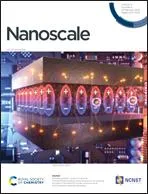
Nanoscale is a high-impact international journal, publishing high-quality research across nanoscience and nanotechnology. Nanoscale publishes a full mix of research articles on experimental and theoretical work, including reviews, communications, and full papers. Highly interdisciplinary, Nanoscale appeals to scientists, researchers and professionals interested in nanoscience and nanotechnology, quantum materials and quantum technology, including the areas of physics, chemistry, biology, medicine, materials, energy/environment, information technology, detection science, healthcare and drug discovery, and electronics. For publication in Nanoscale, papers must report high-quality reproducible new work that will be of significant general interest to the journal's wide international readership. Nanoscale is a collaborative venture between the Royal Society of Chemistry Publishing and a leading nanoscience research centre, the National Center for Nanoscience and Technology (NCNST) in Beijing, China. image block The journal publishes weekly issues, complementing and building on the nano content already published across the Royal Society of Chemistry Publishing journal portfolio. Since its launch in late 2009, Nanoscale has established itself as a platform for high-quality, cross-community research that bridges the various disciplines involved with nanoscience and nanotechnology, publishing important research from leading international research groups.


![Bis[(1,2,3,4,5-eta)-1-(diphenylphosphino)cyclopentadienyl]iron structure](https://static.chemtradehub.com/structs/121/12150-46-8-ecd2.webp "Bis[(1,2,3,4,5-eta)-1-(diphenylphosphino)cyclopentadienyl]iron structure")
![3-[(4-Nitrobenzyl)oxy]-3-oxopropanoic Acid structure](https://static.chemtradehub.com/structs/773/77359-11-6-0d04.webp "3-[(4-Nitrobenzyl)oxy]-3-oxopropanoic Acid structure")



