












A silicon-doped carbon dot-based multivariate fluorometric and colorimetric probe for the simultaneous detection of heavy metal ions and dopamine
Literature Information
Publication Date
2023-12-07
DOI
10.1039/D3NJ04627C
Impact Factor
3.591
Authors
Yunqi Hao, Tingting Li, Miaomiao Tian, Qijun Dai, Fang Zhang, Fang Chai
View Original
Abstract
The effective and accurate determination of heavy metals and significant biomolecules is crucial for environmental protection and human health. A novel carbon dot (Si-CDs)-based multivariate sensing method was established for monitoring Cu2+, Mn2+, Co2+ and dopamine (DA) concomitantly. The Si-doped CDs were favorably synthesized using p-phenylenediamine (PPD) and (3-aminopropyl) trimethoxysilane (APTMS) as precursors with a quantum yield of 23.3% and a lifetime of 23.4 μs. The optimal emission of Si-CDs was determined at 500 nm with an excitation at 390 nm with an excellent aqueous dispersibility and environmental tolerance. Moreover, the proposed Si-CDs exhibited sensitive FL quenching toward Cu2+, Mn2+ and DA, and a colorimetric response towards Co2+, thus a multiple dual-mode sensing platform was constructed. The similar FL responses for Cu2+, Mn2+ and DA could be distinguished by different colorimetric variations, which enabled the multivariate detection of these three analytes via dual-mode FL and colorimetric integration. Also, the colorimetric mode that solely recognized Co2+ also realized an excellent linearity correlation between absorption and concentration. Furthermore, the heavy metals in real water samples and DA in serum could be quickly and directly analyzed by visual detection with reliable accuracy. To the best of our knowledge, this is the first report based on CDs for the simultaneous detection of three heavy metal ions and DA by a dual-mode method, opening a new avenue for the ultrasensitive sensing of multiple metal ions and biomolecules in environment protection and biomedical fields.
Related Literature
Low bandgap poly(thienylenemethine) derivatives bearing terarylene moieties in the side chains
Sangbum Ahn, Kazuki Yabumoto, Yongsoo Jeong, Kazuo Akagi
2014-08-26
Paper
DOI: 10.1039/C4PY00849A
Poly(N-isopropylacrylamide) coated gold nanoparticles as colourimetric temperature and salt sensors
Samarendra Maji, Belgin Cesur, Zhiyue Zhang, Bruno G. De Geest, Richard Hoogenboom
2016-01-28
Communication
DOI: 10.1039/C5PY01959A
Suzuki–Miyaura catalyst-transfer polycondensation with Pd(IPr)(OAc)2 as the catalyst for the controlled synthesis of polyfluorenes and polythiophenes
Xincui Shi, Hongkun Tian, Yanhou Geng, Fosong Wang
2014-08-28
Paper
DOI: 10.1039/C4PY00917G
Construction of efficacious hepatoma-targeted nanomicelles non-covalently functionalized with galactose for drug delivery
Hao Yu, Yucheng Liu, Xinyu Hu, Junjian Li, Aming Xie, Jianfa Zhang
2014-09-03
Paper
DOI: 10.1039/C4PY01022A
BODIPY-based macromolecular photosensitizer with cation-enhanced antibacterial activity
Zhentan Lu, Xinge Zhang, Yu Zhao, Yinan Xue, Tingting Zhai, Zhongming Wu, Chaoxing Li
2014-10-06
Paper
DOI: 10.1039/C4PY00715H
Multiple responsive hydrogel films based on dynamic Schiff base linkages‡
Lin Zhou, Mao Chen, Ying Guan, Yongjun Zhang
2014-08-28
Paper
DOI: 10.1039/C4PY00868E
pH dependent thermoresponsive behavior of acrylamide–acrylonitrile UCST-type copolymers in aqueous media
Beatriz A. Pineda-Contreras, Holger Schmalz, Seema Agarwal
2016-02-12
Paper
DOI: 10.1039/C6PY00162A
Semi-conjugated acceptor-based polyimides as electrets for nonvolatile transistor memory devices
Lei Dong, Yu-Cheng Chiu, Chu-Chen Chueh, An-Dih Yu, Wen-Chang Chen
2014-08-12
Paper
DOI: 10.1039/C4PY00988F
You might also like
Compound Q&A
How should waste containing (6-Bromo-2-naphthyl)oxy](dimethyl)(2-methyl-2-propanyl)silane be handled?
Waste containing (6-Bromo-2-naphthyl)oxy](dimethyl)(2-methyl-2-propanyl)silane (...
100751-65-3[(6-Bromo-2-naphthyl...
Compound Q&A
How is 7-Fluoro-4-isoquinolinecarboxylic acid (CAS: 1841081-40-0) typically synthesized?
7-Fluoro-4-isoquinolinecarboxylic acid can be synthesized via a multi-step proce...
1841081-40-07-Fluoro-4-isoquinol...
Compound Q&A
What are the physical and chemical properties of 2,3,5,6-Tetrabromothieno[3,2-b]thiophene (CAS: 124638-53-5)?
2,3,5,6-Tetrabromothieno[3,2-b]thiophene is a crystalline compound with a high m...
124638-53-52,3,5,6-Tetrabromoth...
Compound Q&A
Is 1-[4-(Benzylamino)-7,8-dihydro-5H-pyrano[4,3-d]pyrimidin-2-yl]-2-methyl-1H-indole-4-carboxamide (CAS: 1542705-92-9) safe?
1-[4-(Benzylamino)-7,8-dihydro-5H-pyrano[4,3-d]pyrimidin-2-yl]-2-methyl-1H-indol...
1542705-92-91-[4-(Benzylamino)-7...
Compound Q&A
What is the market or research trend for imidazo[5,1-d]-1,2,3,5-tetrazine-8-carboxylic acid, 3,4-dihydro-3-methyl-4-oxo- (CAS: 113942-30-6)?
The market for imidazo[5,1-d]-1,2,3,5-tetrazine-8-carboxylic acid, 3,4-dihydro-3...
113942-30-6Imidazo[5,1-d]-1,2,3...
Compound Q&A
What is 3-(Triisopropylsilyl)propiolaldehyde (CAS: 163271-80-5)?
3-(Triisopropylsilyl)propiolaldehyde is a synthetic organic compound with the CA...
163271-80-53-(Triisopropylsilyl...
Compound Q&A
What regulatory guidelines apply to 6-Nitro-2H-1,4-benzoxazin-3(4H)-one (CAS: 81721-87-1)?
6-Nitro-2H-1,4-benzoxazin-3(4H)-one (CAS: 81721-87-1) is subject to various regu...
81721-87-16-Nitro-2H-1,4-benzo...
Compound Q&A
How should waste containing (3-Fluorophenyl)(4-{[(2-methyl-2-propanyl)oxy]carbonyl}-1-piperazinyl)acetic acid (CAS: 885272-91-3) be handled?
Waste containing (3-Fluorophenyl)(4-{[(2-methyl-2-propanyl)oxy]carbonyl}-1-piper...
885272-91-3(3-Fluorophenyl)(4-{...
Compound Q&A
What are the physical and chemical properties of N,N'-4,4'-Biphenyldiyldiisonicotinamide (CAS: 55119-40-9)?
N,N'-4,4'-Biphenyldiyldiisonicotinamide is a white crystalline solid with a mole...
55119-40-9N,N'-4,4'-Biphenyldi...
Compound Q&A
What industries use 6-Bromo-8-fluoro-2-quinazolinol (CAS: 1036756-15-6)?
6-Bromo-8-fluoro-2-quinazolinol is primarily used in the pharmaceutical industry...
1036756-15-66-Bromo-8-fluoro-2-q...
Source Journal
New Journal of Chemistry

CiteScore:
5.3
Self-citation Rate:
3.7%
Articles per Year:
2153
NJC (New Journal of Chemistry) is a broad-based primary journal encompassing all branches of chemistry and its sub-disciplines. It contains full research articles, communications, perspectives and focus articles. This well-established journal, owned by the Centre National de la Recherche Scientifique (CNRS) of France, has been co-published with the Royal Society of Chemistry since January 1998. NJC is the forum for the publication of high-quality, original and significant work that opens new directions in chemistry or other scientific disciplines. In addition to having a significant chemical component, work published in NJC must demonstrate that it will have an impact on areas of research other than that of the reported work.
Recommended Compounds
![N-[(E)-Phenylmethylene]benzenesulfonamide structure](https://static.chemtradehub.com/structs/139/13909-34-7-8167.webp "N-[(E)-Phenylmethylene]benzenesulfonamide structure")
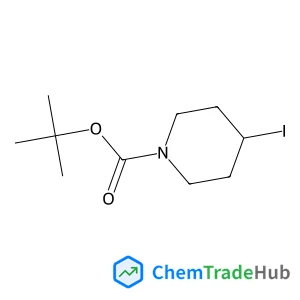
2-Methyl-2-propanyl 4-iodo-1-piperidinecarboxylate
CAS Number:
301673-14-3
Molecular Formula:
C10H18INO2

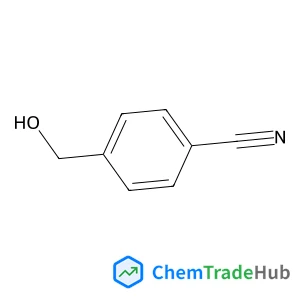
Recommended Suppliers



Disclaimer
This page provides academic journal information for reference and research purposes only. We are not affiliated with any journal publishers and do not handle publication submissions. For publication-related inquiries, please contact the respective journal publishers directly.
If you notice any inaccuracies in the information displayed, please contact us at support@chemtradehub.com. We will promptly review and address your concerns.