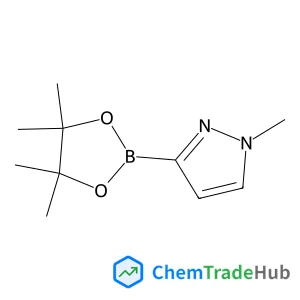
1-Methyl-3-(4,4,5,5-tetramethyl-1,3,2-dioxaborolan-2-yl)-1H-pyrazole
CAS Number:
1020174-04-2
Molecular Formula:
C10H17BN2O2
Yaqing Zhang, Liang Zhao, Zhimin Yang, Yunpeng Xing, Congcong Xin, Zefeng Wei, Teng Fei, Sen Liu, Tong Zhang
Reduced graphene oxide (rGO)-based materials are deemed as promising candidates for fabrication of room-temperature gas sensors, while a tougher challenge is to develop an effective strategy for improving gas responses. Here, a noble metal decoration strategy is developed to enhance NO2 responses of α-Fe2O3/SnO2–rGO hybrids. Noble metal decorated α-Fe2O3/SnO2–rGO hybrids were prepared by depositing noble metals onto α-Fe2O3/SnO2–rGO hybrids through reduction of noble metal ions by NaBH4. Most importantly, Pt modified α-Fe2O3/SnO2–rGO hybrids (designated as Pt-FSR) exhibit the highest response value of 21.3 toward 5 ppm NO2, which is much higher than that of α-Fe2O3/SnO2–rGO (8.8). Combined characterization studies indicate that the enhanced NO2 response of Pt-FSR is attributed to the narrow band gap of Pt-FSR, small particle size and excellent catalytic activity of Pt. The NO2 sensing mechanism is also investigated by FT-IR spectroscopy. The findings proposed in this work not only broaden the study of room-temperature gas sensors, but also provide suggestions for discovering the gas sensing mechanism.
Yosslen Aray, Antonio Díaz Barrios
DOI: 10.1039/C8CP03387K
Douglas P. Linder, Brett E. Baker, Kenton R. Rodgers
DOI: 10.1039/C8CP03121E
Sebastian Schwalbe, Jana Schaber, Simon Krause, Irena Senkovska, Stefan Kaskel, Eike Brunner, Jens Kortus, Gotthard Seifert
DOI: 10.1039/C8CP04025G
Yingxiang Cai, Li Zeng, Yu Zhang, Xuechun Xu
DOI: 10.1039/C8CP03447H
Eszter Mádai, Bartłomiej Matejczyk, András Dallos, Mónika Valiskó
DOI: 10.1039/C8CP03918F
Jiajun Wang, Baozeng Zhou, Fang Wang, Yinping Miao, Junqing Wei, Baojun Zhang, Kailiang Zhang
DOI: 10.1039/C8CP04337J
Kareem M. Gameel, Icell M. Sharafeldin, Amr U. Abourayya, Ahmed H. Biby, Nageh K. Allam
DOI: 10.1039/C8CP04253E
G. K. Gueorguiev, A. Kakanakova-Georgieva
DOI: 10.1039/C8CP02786B
K. Mirabbaszadeh, M. Davoudiniya, M. Yarmohammadi
DOI: 10.1039/C8CP04446E
When handling 4-(2-Furylmethyl)thiomorpholine 1,1-dioxide (CAS: 79206-94-3), it ...
When handling 4-Chloro-N-[2-(4-morpholinyl)ethyl]benzamide (CAS: 71320-77-9), it...
Waste containing this compound (CAS: 62921-74-8) should be handled according to ...
Waste containing (S)-Methyl 2-amino-3-cyclohexylpropanoate should be collected i...
This compound can be synthesized using a multi-step process involving the conjug...
There are several alternatives to (2E)-3-(3,4-Dichlorophenyl)acrylic acid in syn...
Ethyl 6-(2-nitrophenyl)imidazo[2,1-b][1,3]thiazole-3-carboxylate (CAS: 925437-84...
Waste containing 2-(1,3-Thiazol-2-yl)ethanamine (CAS: 18453-07-1) should be coll...
Methyl 5-iodo-2-methylbenzoate can be synthesized through the iodination of meth...
5-Chloro[1,2,4]triazolo[1,5-a]pyridine is commonly synthesized via the condensat...

NJC (New Journal of Chemistry) is a broad-based primary journal encompassing all branches of chemistry and its sub-disciplines. It contains full research articles, communications, perspectives and focus articles. This well-established journal, owned by the Centre National de la Recherche Scientifique (CNRS) of France, has been co-published with the Royal Society of Chemistry since January 1998. NJC is the forum for the publication of high-quality, original and significant work that opens new directions in chemistry or other scientific disciplines. In addition to having a significant chemical component, work published in NJC must demonstrate that it will have an impact on areas of research other than that of the reported work.