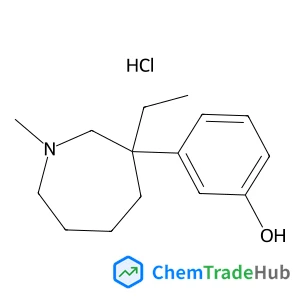
3-(3-Ethyl-1-methyl-3-azepanyl)phenol hydrochloride (1:1)
CAS Number:
59263-76-2
Molecular Formula:
C15H24ClNO
Jiajun Wang, Baozeng Zhou, Fang Wang, Yinping Miao, Junqing Wei, Baojun Zhang, Kailiang Zhang
A Janus MoSSe monolayer, synthesized recently though the chemical vapor deposition method [A. Y. Lu, H. Zhu, J. Xiao, C. P. Chuu, Y. Han, M. H. Chiu, C. C. Cheng, C. W. Yang, K. H. Wei Y. Yang, Y. Wang, D. Sokaras, D. Nordlund, P. Yang, D. A. Muller, M. Y. Chou, X. Zhang and L. J. Li, Nat. Nanotechnol., 2017, 12, 744–749], has drawn considerable attention as a new two-dimensional (2D) material owing to its fascinating electronic and optical properties. In this study, based on first-principles calculations, we systematically explore for the first time the performance of Janus MoSSe monolayers as a channel material contacting with graphene to form van der Waals (vdW) heterostructures. Our calculations show that the intrinsic electronic properties of both the graphene and MoSSe monolayer are preserved well in our proposed two graphene/MoSSe heterostructures (i.e. G/SMoSe and G/SeMoS heterostructures), and n-type Schottky contacts with a small Schottky barrier height (SBH) are formed at their respective interfaces. An analytical model is presented for the barrier heights. Moreover, the n-type Schottky barrier at the G/SMoSe heterostructure interface can be reduced by increasing the interlayer distance and can even be changed to an Ohmic contact by applying a negative electric field. More interestingly, varying the interlayer distance or applying an external electric field can effectively modulate the Schottky barrier and the Schottky contact (n-type and p-type) of the G/SeMoS heterostructure interface. These theoretical findings not only provide insights into the fundamental properties of the graphene/MoSSe interfaces but also open the possibility of designing high-performance field-effect transistors (FETs) based on the graphene/MoSSe heterostructures.
Tatsuro Nakao, Yutaka Kazoe, Emi Mori, Hisashi Shimizu
DOI: 10.1039/C9AN01491H
Rini Majumder, Yeasmin Sarkar, Suresh K. Jewrajka, Ambarish Ray, Partha Pratim Parui
DOI: 10.1039/C6AN00582A
Luca Guerrini
DOI: 10.1039/C9AN02040C
M. Omair Noor, Ulrich J. Krull
DOI: 10.1039/C6AN00129G
Fubing Xiao, Hui Tan, Yan Wu, Shuzhen Liao, Zhaoyang Wu, Guoli Shen, Ruqin Yu
DOI: 10.1039/C6AN00504G
Yu Zong Chen
DOI: 10.1039/C6AN00678G
Angela Shore
DOI: 10.1039/C9AN01163C
Lingfeng Xu, Ling Ni, Lihe Sun, Fang Zeng, Shuizhu Wu
DOI: 10.1039/C9AN01582E
Jing Wang, Xu Xu, Xiaolin Qiu, Shuaishuai Zhang, Yinxian Peng
DOI: 10.1039/C9AN01541H
When handling 4-(2-Furylmethyl)thiomorpholine 1,1-dioxide (CAS: 79206-94-3), it ...
When handling 4-Chloro-N-[2-(4-morpholinyl)ethyl]benzamide (CAS: 71320-77-9), it...
Waste containing this compound (CAS: 62921-74-8) should be handled according to ...
Waste containing (S)-Methyl 2-amino-3-cyclohexylpropanoate should be collected i...
This compound can be synthesized using a multi-step process involving the conjug...
There are several alternatives to (2E)-3-(3,4-Dichlorophenyl)acrylic acid in syn...
Ethyl 6-(2-nitrophenyl)imidazo[2,1-b][1,3]thiazole-3-carboxylate (CAS: 925437-84...
Waste containing 2-(1,3-Thiazol-2-yl)ethanamine (CAS: 18453-07-1) should be coll...
Methyl 5-iodo-2-methylbenzoate can be synthesized through the iodination of meth...
5-Chloro[1,2,4]triazolo[1,5-a]pyridine is commonly synthesized via the condensat...

Physical Chemistry Chemical Physics (PCCP) is an international journal co-owned by 19 physical chemistry and physics societies from around the world. This journal publishes original, cutting-edge research in physical chemistry, chemical physics and biophysical chemistry. To be suitable for publication in PCCP, articles must include significant innovation and/or insight into physical chemistry; this is the most important criterion that reviewers and Editors will judge against when evaluating submissions. The journal has a broad scope and welcomes contributions spanning experiment, theory, computation and data science. Topical coverage includes spectroscopy, dynamics, kinetics, statistical mechanics, thermodynamics, electrochemistry, catalysis, surface science, quantum mechanics, quantum computing and machine learning. Interdisciplinary research areas such as polymers and soft matter, materials, nanoscience, energy, surfaces/interfaces, and biophysical chemistry are welcomed if they demonstrate significant innovation and/or insight into physical chemistry. Joined experimental/theoretical studies are particularly appreciated when complementary and based on up-to-date approaches.