












The confusion about S-scheme electron transfer: critical understanding and a new perspective
Literature Information
Publication Date
2023-12-07
DOI
10.1039/D3EE03282E
Impact Factor
38.532
Authors
Fang Li, Zhaohui Fang, Zhihua Xu, Quanjun Xiang
View Original
Abstract
Charge separation is a crucial process that is closely related to the field of information and energy applications such as optoelectronics, photovoltaics, and artificial photosynthesis. The S-scheme electron transfer is widely used to regulate carrier separation due to its unique superiority. However, as our understanding of this field continues to evolve, there remain many controversial and ambiguous issues that are not well addressed. Focusing on the S-scheme electron transfer, this perspective delves into the reasons behind the confusion between the mechanisms of type-II and S-scheme transfer and clearly affords the theoretical criteria for the establishment of type-II transfer and S-scheme transfer. Considering the Fermi level alignment in a heterojunction is only applicable to the ideal situation, but not to the actual situation. The theory of Fermi level bending is further elaborated. To answer the question of whether the S-scheme driving force can be sustained, the phenomenon of Fermi level pinning is discussed intensively. Finally, the current problems and future development directions of S-scheme electron transfer are summarized and prospected.
Recommended Journals
Related Literature
Characterization of the H2 sensing mechanism of Pd-promoted SnO2 by XAS in operando conditions
Thomas Neisius, Bernard Chenevier, Aleksandre M. Gaskov, Michel Labeau
2005-09-19
Communication
DOI: 10.1039/B509826B
Synthesis of pyrroles: reaction of chromium N-alkylaminocarbene complexes with α,β-unsaturated aldehydes
Kohei Fuchibe, Daisuke Ono, Takahiko Akiyama
2006-04-26
Communication
DOI: 10.1039/B602924H
Biomimetic approaches to diazonamide A. Direct synthesis of the indole bis-oxazole fragment by oxidation of a TyrValTrpTrp tetrapeptide
Jonathan Sperry
2006-05-09
Communication
DOI: 10.1039/B604294E
Bond length and bond multiplicity: σ-bond prevents short π-bonds
R. Bruce King, Henry F. Schaefer III
2006-04-18
Communication
DOI: 10.1039/B602116F
Effect of tetrabutylphosphonium cation on the physico-chemical properties of amino-acid ionic liquids
Junko Kagimoto, Kenta Fukumoto, Hiroyuki Ohno
2006-04-25
Communication
DOI: 10.1039/B600771F
Synthesis and spectroscopic observation of dendrimer-encapsulated gold nanoclusters
M. Linh Tran, Andrei V. Zvyagin, Taras Plakhotnik
2006-05-03
Communication
DOI: 10.1039/B602079H
Unusual variations in the incidence of Z′ > 1 in oxo-anion structures
Kirsty M. Anderson, Andres E. Goeta, Kirsty S. B. Hancock, Jonathan W. Steed
2006-04-04
Communication
DOI: 10.1039/B602492K
Construction of superhydrophobic surfaces by fibrous aggregation of perfluoroalkyl chain-containing organogelators
Motoshi Yamanaka, Kazuki Sada, Mikiji Miyata, Kenji Hanabusa, Kazunori Nakano
2006-04-24
Communication
DOI: 10.1039/B601485B
Sandwich-shaped silver(i) metallomacrocycles encapsulating a XF62− (X = Si, Ge and Sn) anion
Masahiko Maekawa, Susumu Kitagawa, Takayoshi Kuroda-Sowa, Megumu Munakata
2006-03-17
Communication
DOI: 10.1039/B518411H
PAMAM dendrimers for efficient siRNA delivery and potent gene silencing
Jiehua Zhou, Nadia Hafdi, Jean-Paul Behr, Patrick Erbacher
2006-05-10
Communication
DOI: 10.1039/B601381C
You might also like
Compound Q&A
What are the main uses of 1H-Indazole-6-carbonitrile (CAS: 141290-59-7)?
1H-Indazole-6-carbonitrile finds applications in pharmaceuticals, where it serve...
141290-59-71H-Indazole-6-carbon...
Compound Q&A
How should waste containing Dioctyl (2E)-2-butenedioate (CAS: 2997-85-5) be handled?
Waste containing Dioctyl (2E)-2-butenedioate (CAS: 2997-85-5) should be collecte...
2997-85-5Dioctyl (2E)-2-buten...
Compound Q&A
What industries use Sodium [(1,2-benzoxazol-3-ylmethyl)sulfonyl]azanide (CAS: 68291-98-5)?
Sodium [(1,2-benzoxazol-3-ylmethyl)sulfonyl]azanide is primarily used in pharmac...
68291-98-5Sodium [(1,2-benzoxa...
Compound Q&A
Are there alternatives to Dimethyl 4-(4,4,5,5-tetramethyl-1,3,2-dioxaborolan-2-yl)-2,6-pyridinedicarboxylate (CAS: 741709-66-0) in synthesis?
Dimethyl 4-(4,4,5,5-tetramethyl-1,3,2-dioxaborolan-2-yl)-2,6-pyridinedicarboxyla...
741709-66-0Dimethyl 4-(4,4,5,5-...
Compound Q&A
How should waste containing 2-Fluoro-6-hydrazinopyridine (CAS: 80714-39-2) be handled?
Waste containing 2-Fluoro-6-hydrazinopyridine (CAS: 80714-39-2) should be manage...
80714-39-22-Fluoro-6-hydrazino...
Compound Q&A
What is 6-Formyl-2-pyridinecarboxylic acid (CAS: 499214-11-8)?
6-Formyl-2-pyridinecarboxylic acid is an organic compound with the molecular for...
499214-11-86-Formyl-2-pyridinec...
Compound Q&A
What is the market or research trend for 3-(3,4-dimethoxyphenyl)-2,5-dimethyl-N-(2-morpholin-4-ylethyl)pyrazolo[1,5-a]pyrimidin-7-amine (CAS: 900874-91-1)?
Research trends for this compound indicate a focus on its potential applications...
900874-91-13-(3,4-dimethoxyphen...
Compound Q&A
How is 9H-Tribenzo[b,d,f]azepine (CAS: 29875-73-8) typically synthesized?
9H-Tribenzo[b,d,f]azepine is typically synthesized via a multi-step process invo...
29875-73-89H-Tribenzo[b,d,f]az...
Compound Q&A
How is 1-Cyclopropyl-7-ethoxy-6-fluoro-8-methoxy-4-oxo-1,4-dihydro-3-quinolinecarboxylic acid (CAS: 1797982-51-4) typically synthesized?
1-Cyclopropyl-7-ethoxy-6-fluoro-8-methoxy-4-oxo-1,4-dihydro-3-quinolinecarboxyli...
1797982-51-41-Cyclopropyl-7-etho...
Compound Q&A
How should waste containing Methyl 3-oxo-1,2,3,4-tetrahydro-6-quinoxalinecarboxylate (CAS: 671820-52-3) be handled?
Waste containing Methyl 3-oxo-1,2,3,4-tetrahydro-6-quinoxalinecarboxylate (CAS: ...
671820-52-3Methyl 3-oxo-1,2,3,4...
Source Journal
Energy & Environmental Science
CiteScore:
32.34
Self-citation Rate:
3.4%
Articles per Year:
481
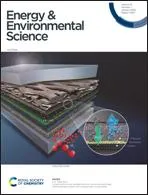
Energy & Environmental Science is an international journal dedicated to publishing exceptionally important and high quality, agenda-setting research tackling the key global and societal challenges of ensuring the provision of energy and protecting our environment for the future. The scope is intentionally broad and the journal recognises the complexity of issues and challenges relating to energy conversion and storage, alternative fuel technologies and environmental science. For work to be published it must be linked to the energy-environment nexus and be of significant general interest to our community-spanning readership. All scales of studies and analysis, from impactful fundamental advances, to interdisciplinary research across the (bio)chemical, (bio/geo)physical sciences and chemical engineering disciplines are welcomed. Topics include, but are not limited to, the following: Solar energy conversion and photovoltaics Solar fuels and artificial photosynthesis Fuel cells Hydrogen storage and (bio) hydrogen production Materials for energy systems Capture, storage and fate of CO2, including chemicals and fuels from CO2 Catalysis for a variety of feedstocks (for example, oil, gas, coal, biomass and synthesis gas) Biofuels and biorefineries Materials in extreme environments Environmental impacts of energy technologies Global atmospheric chemistry and climate change as related to energy systems Water-energy nexus Energy systems and networks Globally applicable principles of energy policy and techno-economics
Recommended Compounds


Trichloro(3,3,4,4,5,5,6,6,7,7,8,8,8-tridecafluorooctyl)silane
CAS Number:
78560-45-9
Molecular Formula:
C8H4Cl3F13Si

Recommended Suppliers






Disclaimer
This page provides academic journal information for reference and research purposes only. We are not affiliated with any journal publishers and do not handle publication submissions. For publication-related inquiries, please contact the respective journal publishers directly.
If you notice any inaccuracies in the information displayed, please contact us at support@chemtradehub.com. We will promptly review and address your concerns.