












Achieving a high open-circuit voltage of 1.339 V in 1.77 eV wide-bandgap perovskite solar cells via self-assembled monolayers
Literature Information
Publication Date
2023-11-10
DOI
10.1039/D3EE02839A
Impact Factor
38.532
Authors
Zongjin Yi, Rui He, Jingwei Zhu, Wenbo Jiao, Yi Luo, Yuliang Xu, Yunfan Wang, Zixin Zeng, Kun Wei, Jinbao Zhang, Sai-Wing Tsang, Cong Chen, Dewei Zhao
View Original
Abstract
Severe open-circuit voltage (VOC) loss significantly hinders the performance improvement of wide-bandgap (WBG) perovskite solar cells (PSCs) and their application in perovskite-based tandem devices. Herein, we develop a novel self-assembled monolayer of (4-(5,9-dibromo-7H-dibenzo[c,g]carbazol-7-yl)butyl)phosphonic acid (DCB-BPA) as the hole-selective layer for WBG PSCs with a 1.77 eV perovskite absorber. DCB-BPA facilitates the subsequent growth of WBG perovskite with improved buried-interface quality. Compared with that of poly(triarylamine) PTAA-based control devices, a substantially enhanced average VOC from 1.18 V to 1.31 V of DCB-BPA-based devices has been realized due to reduced interfacial nonradiative recombination and enhanced energy level alignment. Our certified device delivers an impressive VOC of up to 1.339 V and a power conversion efficiency (PCE) of 18.88%, corresponding to a very low VOC loss of 431 mV (with respect to the bandgap). This enables us to fabricate efficient 4-terminal all-perovskite tandem solar cells with a PCE of 26.9% by combining with a 1.25 eV low-bandgap PSC, demonstrating the promising application of DCB-BPA in tandem devices.
Related Literature
Electronic structure investigation of the evanescent AtO+ ion
André Severo Pereira Gomes, Florent Réal, Nicolas Galland, Celestino Angeli, Renzo Cimiraglia, Valérie Vallet
2014-02-20
Paper
DOI: 10.1039/C3CP55294B
Unusual electroluminescence from n-ZnO@i-MgO core–shell nanowire color-tunable light-emitting diode at reverse bias
Xiaoming Mo, Guojia Fang, Hao Long, Songzhan Li, Haoning Wang, Zhao Chen, Huihui Huang, Wei Zeng, Yupeng Zhang, Chunxu Pan
2014-02-26
Paper
DOI: 10.1039/C3CP55505D
Efficiency enhancement of black dye-sensitized solar cells by newly synthesized D–π–A coadsorbents: a theoretical study
Yavar T. Azar, Mahmoud Payami
2014-04-03
Paper
DOI: 10.1039/C4CP00598H
Thermal boundary conductance between Al films and GaN nanowires investigated with molecular dynamics
Xiao-wang Zhou, Reese E. Jones, Patrick E. Hopkins, Thomas E. Beechem
2014-03-26
Paper
DOI: 10.1039/C4CP00261J
Revisiting electroaccepting and electrodonating powers: proposals for local electrophilicity and local nucleophilicity descriptors
Christophe Morell, Alberto Vela, Frédéric Guégan, Henry Chermette
2014-10-03
Paper
DOI: 10.1039/C4CP03167A
Direct observation of key photoinduced dynamics in a potential nano-delivery vehicle of cancer drugs
Samim Sardar, Siddhi Chaudhuri, Prasenjit Kar, Soumik Sarkar, Samir Kumar Pal
2014-10-28
Paper
DOI: 10.1039/C4CP03749A
An ab initio study of the CrHe diatomic molecule: the effect of van der Waals distortion on a highly magnetic multi-electron system
Johann V. Pototschnig, Martin Ratschek, Andreas W. Hauser, Wolfgang E. Ernst
2014-03-25
Paper
DOI: 10.1039/C4CP00559G
A comparative structural study in monolayers of GPI fragments and their binary mixtures
C. Stefaniu, I. Vilotijevic, G. Brezesinski
2014-03-18
Paper
DOI: 10.1039/C4CP00567H
Effect of water on the transport properties of protic and aprotic imidazolium ionic liquids – an analysis of self-diffusivity, conductivity, and proton exchange mechanism
N. Yaghini, L. Nordstierna, A. Martinelli
2014-03-18
Paper
DOI: 10.1039/C4CP00527A
Interaction of gold nanoparticles mediated by captopril and S-nitrosocaptopril: the effect of manganese ions in mild acid medium
Emilia Iglesias, Rafael Prado-Gotor
2014-11-07
Paper
DOI: 10.1039/C4CP03969F
You might also like
Compound Q&A
What are the main uses of 1H-Indazole-6-carbonitrile (CAS: 141290-59-7)?
1H-Indazole-6-carbonitrile finds applications in pharmaceuticals, where it serve...
141290-59-71H-Indazole-6-carbon...
Compound Q&A
How should waste containing Dioctyl (2E)-2-butenedioate (CAS: 2997-85-5) be handled?
Waste containing Dioctyl (2E)-2-butenedioate (CAS: 2997-85-5) should be collecte...
2997-85-5Dioctyl (2E)-2-buten...
Compound Q&A
What industries use Sodium [(1,2-benzoxazol-3-ylmethyl)sulfonyl]azanide (CAS: 68291-98-5)?
Sodium [(1,2-benzoxazol-3-ylmethyl)sulfonyl]azanide is primarily used in pharmac...
68291-98-5Sodium [(1,2-benzoxa...
Compound Q&A
Are there alternatives to Dimethyl 4-(4,4,5,5-tetramethyl-1,3,2-dioxaborolan-2-yl)-2,6-pyridinedicarboxylate (CAS: 741709-66-0) in synthesis?
Dimethyl 4-(4,4,5,5-tetramethyl-1,3,2-dioxaborolan-2-yl)-2,6-pyridinedicarboxyla...
741709-66-0Dimethyl 4-(4,4,5,5-...
Compound Q&A
How should waste containing 2-Fluoro-6-hydrazinopyridine (CAS: 80714-39-2) be handled?
Waste containing 2-Fluoro-6-hydrazinopyridine (CAS: 80714-39-2) should be manage...
80714-39-22-Fluoro-6-hydrazino...
Compound Q&A
What is 6-Formyl-2-pyridinecarboxylic acid (CAS: 499214-11-8)?
6-Formyl-2-pyridinecarboxylic acid is an organic compound with the molecular for...
499214-11-86-Formyl-2-pyridinec...
Compound Q&A
What is the market or research trend for 3-(3,4-dimethoxyphenyl)-2,5-dimethyl-N-(2-morpholin-4-ylethyl)pyrazolo[1,5-a]pyrimidin-7-amine (CAS: 900874-91-1)?
Research trends for this compound indicate a focus on its potential applications...
900874-91-13-(3,4-dimethoxyphen...
Compound Q&A
How is 9H-Tribenzo[b,d,f]azepine (CAS: 29875-73-8) typically synthesized?
9H-Tribenzo[b,d,f]azepine is typically synthesized via a multi-step process invo...
29875-73-89H-Tribenzo[b,d,f]az...
Compound Q&A
How is 1-Cyclopropyl-7-ethoxy-6-fluoro-8-methoxy-4-oxo-1,4-dihydro-3-quinolinecarboxylic acid (CAS: 1797982-51-4) typically synthesized?
1-Cyclopropyl-7-ethoxy-6-fluoro-8-methoxy-4-oxo-1,4-dihydro-3-quinolinecarboxyli...
1797982-51-41-Cyclopropyl-7-etho...
Compound Q&A
How should waste containing Methyl 3-oxo-1,2,3,4-tetrahydro-6-quinoxalinecarboxylate (CAS: 671820-52-3) be handled?
Waste containing Methyl 3-oxo-1,2,3,4-tetrahydro-6-quinoxalinecarboxylate (CAS: ...
671820-52-3Methyl 3-oxo-1,2,3,4...
Source Journal
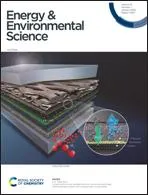
Energy & Environmental Science
CiteScore:
32.34
Self-citation Rate:
3.4%
Articles per Year:
481
Energy & Environmental Science is an international journal dedicated to publishing exceptionally important and high quality, agenda-setting research tackling the key global and societal challenges of ensuring the provision of energy and protecting our environment for the future. The scope is intentionally broad and the journal recognises the complexity of issues and challenges relating to energy conversion and storage, alternative fuel technologies and environmental science. For work to be published it must be linked to the energy-environment nexus and be of significant general interest to our community-spanning readership. All scales of studies and analysis, from impactful fundamental advances, to interdisciplinary research across the (bio)chemical, (bio/geo)physical sciences and chemical engineering disciplines are welcomed. Topics include, but are not limited to, the following: Solar energy conversion and photovoltaics Solar fuels and artificial photosynthesis Fuel cells Hydrogen storage and (bio) hydrogen production Materials for energy systems Capture, storage and fate of CO2, including chemicals and fuels from CO2 Catalysis for a variety of feedstocks (for example, oil, gas, coal, biomass and synthesis gas) Biofuels and biorefineries Materials in extreme environments Environmental impacts of energy technologies Global atmospheric chemistry and climate change as related to energy systems Water-energy nexus Energy systems and networks Globally applicable principles of energy policy and techno-economics
Recommended Compounds
![Sodium (2Z)-7-{[(2R)-2-amino-2-carboxyethyl]sulfanyl}-2-({[(1S)-2,2-dimethylcyclopropyl]carbonyl}amino)-2-heptenoate structure](https://static.chemtradehub.com/structs/811/81129-83-1-441c.webp "Sodium (2Z)-7-{[(2R)-2-amino-2-carboxyethyl]sulfanyl}-2-({[(1S)-2,2-dimethylcyclopropyl]carbonyl}amino)-2-heptenoate structure")
Sodium (2Z)-7-{[(2R)-2-amino-2-carboxyethyl]sulfanyl}-2-({[(1S)-2,2-dimethylcyclopropyl]carbonyl}amino)-2-heptenoate
CAS Number:
81129-83-1
Molecular Formula:
C16H25N2NaO5S

Trichloro(3,3,4,4,5,5,6,6,7,7,8,8,8-tridecafluorooctyl)silane
CAS Number:
78560-45-9
Molecular Formula:
C8H4Cl3F13Si
Recommended Suppliers






Disclaimer
This page provides academic journal information for reference and research purposes only. We are not affiliated with any journal publishers and do not handle publication submissions. For publication-related inquiries, please contact the respective journal publishers directly.
If you notice any inaccuracies in the information displayed, please contact us at support@chemtradehub.com. We will promptly review and address your concerns.