












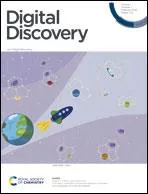
Discovering life's directed metabolic (sub)paths to interpret human biochemical markers using the DSMN tool
Literature Information
Publication Date
2023-10-10
DOI
10.1039/D3DD00069A
Impact Factor
0
Authors
Denise Slenter, Egon L. Willighagen
View Original
Abstract
Metabolomics data analysis for phenotype identification commonly reveals only a small set of biochemical markers, often containing overlapping metabolites for individual phenotypes. Differentiation between distinctive sample groups requires understanding the underlying causes of metabolic changes. However, combining biomarker data with knowledge of metabolic conversions from pathway databases is still a time-consuming process due to their scattered availability. Here, we integrate several resources through ontological linking into one unweighted, directed, labeled bipartite property graph database for human metabolic reactions: the Directed Small Moleicules Network (DSMN). This approach resolves several issues currently experienced in metabolic graph modeling and data visualization for metabolomics data, by generating (sub)networks of explainable biochemical relationships. Three datasets measuring human biomarkers for healthy aging were used to validate the results from shortest path calculations on the biochemical reactions captured in the DSMN. The DSMN is a fast solution to find and visualize biological pathways relevant to sparse metabolomics datasets. The generic nature of this approach opens up the possibility to integrate other omics data, such as proteomics and transcriptomics.
Related Literature
A TiO2 nanotube network electron transport layer for high efficiency perovskite solar cells
Jianyang Li, Sam Gollon, Ming Qiu, Dongsheng Guan, Xiaoru Guo, Junhong Chen
2017-02-02
Communication
DOI: 10.1039/C6CP07733A
Packing energetics determine the folding routes of the RNase-H proteins
Shachi Gosavi
2017-03-10
Paper
DOI: 10.1039/C6CP08940B
Hierarchical porous Ni@boehmite/nickel aluminum oxide flakes with enhanced microwave absorption ability
Junwei Liu, Xiaoqin Guo, Wanyu Zhao, Luyang Liang, Chao Ma, Rui Zhang
2017-03-06
Paper
DOI: 10.1039/C7CP00629B
Infrared spectra of HSCS+, c-HSCS, and HCS2− produced on electron bombardment of CS2 in solid para-hydrogen
Masashi Tsuge
2017-03-13
Paper
DOI: 10.1039/C7CP00988G
Complex rovibrational dynamics of the Ar·NO+ complex
Dóra Papp, János Sarka, Tamás Szidarovszky, Attila G. Császár, Edit Mátyus, Majdi Hochlaf, Thierry Stoecklin
2017-02-22
Paper
DOI: 10.1039/C6CP07731E
In search of the best DFT functional for dealing with organic anionic species
José L. Borioni, Marcelo Puiatti, D. Mariano A. Vera, Adriana B. Pierini
2017-03-03
Paper
DOI: 10.1039/C6CP06163J
Spectroscopic evidence for the origin of odd–even effects in self-assembled monolayers and effects of substrate roughness
Jian Liu, Ian D. Tevis, Richard S. Andino, Christina M. Miller, Lawrence D. Ziegler, Xin Chen
2017-02-15
Paper
DOI: 10.1039/C6CP07580K
In situ spectroscopic studies on vapor phase catalytic decomposition of dimethyl oxalate
Shweta Hegde, Kalsang Tharpa, Satyanarayana Reddy Akuri, Rakesh K., Ajay Kumar, Raj Deshpande, Sreejit A. Nair
2017-02-23
Paper
DOI: 10.1039/C6CP07769B
Dense ionization and subsequent non-homogeneous radical-mediated chemistry of femtosecond laser-induced low density plasma in aqueous solutions: synthesis of colloidal gold
Hakim Belmouaddine, Minghan Shi, Paul-Ludovic Karsenti, Ridthee Meesat, Léon Sanche, Daniel Houde
2017-02-15
Paper
DOI: 10.1039/C6CP08080D
You might also like
Compound Q&A
What are the main uses of 1H-Indazole-6-carbonitrile (CAS: 141290-59-7)?
1H-Indazole-6-carbonitrile finds applications in pharmaceuticals, where it serve...
141290-59-71H-Indazole-6-carbon...
Compound Q&A
How should waste containing Dioctyl (2E)-2-butenedioate (CAS: 2997-85-5) be handled?
Waste containing Dioctyl (2E)-2-butenedioate (CAS: 2997-85-5) should be collecte...
2997-85-5Dioctyl (2E)-2-buten...
Compound Q&A
What industries use Sodium [(1,2-benzoxazol-3-ylmethyl)sulfonyl]azanide (CAS: 68291-98-5)?
Sodium [(1,2-benzoxazol-3-ylmethyl)sulfonyl]azanide is primarily used in pharmac...
68291-98-5Sodium [(1,2-benzoxa...
Compound Q&A
Are there alternatives to Dimethyl 4-(4,4,5,5-tetramethyl-1,3,2-dioxaborolan-2-yl)-2,6-pyridinedicarboxylate (CAS: 741709-66-0) in synthesis?
Dimethyl 4-(4,4,5,5-tetramethyl-1,3,2-dioxaborolan-2-yl)-2,6-pyridinedicarboxyla...
741709-66-0Dimethyl 4-(4,4,5,5-...
Compound Q&A
How should waste containing 2-Fluoro-6-hydrazinopyridine (CAS: 80714-39-2) be handled?
Waste containing 2-Fluoro-6-hydrazinopyridine (CAS: 80714-39-2) should be manage...
80714-39-22-Fluoro-6-hydrazino...
Compound Q&A
What is 6-Formyl-2-pyridinecarboxylic acid (CAS: 499214-11-8)?
6-Formyl-2-pyridinecarboxylic acid is an organic compound with the molecular for...
499214-11-86-Formyl-2-pyridinec...
Compound Q&A
What is the market or research trend for 3-(3,4-dimethoxyphenyl)-2,5-dimethyl-N-(2-morpholin-4-ylethyl)pyrazolo[1,5-a]pyrimidin-7-amine (CAS: 900874-91-1)?
Research trends for this compound indicate a focus on its potential applications...
900874-91-13-(3,4-dimethoxyphen...
Compound Q&A
How is 9H-Tribenzo[b,d,f]azepine (CAS: 29875-73-8) typically synthesized?
9H-Tribenzo[b,d,f]azepine is typically synthesized via a multi-step process invo...
29875-73-89H-Tribenzo[b,d,f]az...
Compound Q&A
How is 1-Cyclopropyl-7-ethoxy-6-fluoro-8-methoxy-4-oxo-1,4-dihydro-3-quinolinecarboxylic acid (CAS: 1797982-51-4) typically synthesized?
1-Cyclopropyl-7-ethoxy-6-fluoro-8-methoxy-4-oxo-1,4-dihydro-3-quinolinecarboxyli...
1797982-51-41-Cyclopropyl-7-etho...
Compound Q&A
How should waste containing Methyl 3-oxo-1,2,3,4-tetrahydro-6-quinoxalinecarboxylate (CAS: 671820-52-3) be handled?
Waste containing Methyl 3-oxo-1,2,3,4-tetrahydro-6-quinoxalinecarboxylate (CAS: ...
671820-52-3Methyl 3-oxo-1,2,3,4...
Source Journal
Recommended Compounds
![Sodium 3-[(E)-(4-anilinophenyl)diazenyl]benzenesulfonate structure](https://static.chemtradehub.com/structs/587/587-98-4-035f.webp "Sodium 3-[(E)-(4-anilinophenyl)diazenyl]benzenesulfonate structure")
Sodium 3-[(E)-(4-anilinophenyl)diazenyl]benzenesulfonate
CAS Number:
587-98-4
Molecular Formula:
C18H14N3NaO3S

Recommended Suppliers







Disclaimer
This page provides academic journal information for reference and research purposes only. We are not affiliated with any journal publishers and do not handle publication submissions. For publication-related inquiries, please contact the respective journal publishers directly.
If you notice any inaccuracies in the information displayed, please contact us at support@chemtradehub.com. We will promptly review and address your concerns.