![4-[2-(Trichlorosilyl)ethyl]benzenesulfonyl chloride structure](https://static.chemtradehub.com/structs/797/79793-00-3-de16.webp "4-[2-(Trichlorosilyl)ethyl]benzenesulfonyl chloride structure")
4-[2-(Trichlorosilyl)ethyl]benzenesulfonyl chloride
CAS Number:
79793-00-3
Molecular Formula:
C8H8Cl4O2SSi
Ahmed Mahmoud Idris, Song Zheng, Meng Zhang, Xinyan Jiang, Jin Wang
Metal–support-interactions (MSIs) are critical in catalyst design and optimization toward enhancing the solar-driven photocatalytic hydrogen-evolution-reaction (HER). Transition metal phosphates (TMPs) have been predicted as promising catalysts for the photocatalytic HER owing to their high chemical diversity and superior optical properties. However, it has been found that TMPs suffer from strong hydrogen adsorption and weak desorption, leading to unbalanced hydrogen absorption/desorption behavior and a sluggish photocatalytic HER process. Herein, an MSI was delicately designed by embedding Pt-nanoparticles into porous iron phosphide nanorods (MSI Pt–Fe2P) via a facile metal–organic-framework (MOF)-derived approach assisted by phosphating treatment. Experimental characterization and theoretical calculations disclose that the formation of MSI resulted in regulating the electronic structure and balancing the hydrogen absorption/desorption behavior of Fe2P. Benefiting from the alteration of the electronic structure, the resultant Pt–Fe2P featuring an MSI enables a remarkable photocatalytic HER rate of 6 mmol g−1 h−1 with a high apparent quantum efficiency of 20% at 500 nm wavelength. This finding may pave the way for developing more efficient TMP-based catalysts for various solar energy applications.
J. Lawrence, E.-C. Yang, D. N. Hendrickson, S. Hill
DOI: 10.1039/B908460F
Ulrich Sternberg, Stephan L. Grage, Raiker Witter
DOI: 10.1039/B908236K
Manoj K. Singh
DOI: 10.1039/B821632K
O. G. Poluektov, S. V. Paschenko, L. M. Utschig
DOI: 10.1039/B906521K
Artur P. Terzyk, Piotr A. Gauden, Sylwester Furmaniak, Radosław P. Wesołowski, Piotr Kowalczyk
DOI: 10.1039/C003894F
Giuseppe Brancato, Nadia Rega
DOI: 10.1039/C003005H
Amgalanbaatar Baldansuren, Rüdiger-A. Eichel, Emil Roduner
DOI: 10.1039/B903870A
Jennifer L. M. Rupp, Barbara Scherrer, Ludwig J. Gauckler
DOI: 10.1039/B920971A
David N. Mueller, Roger A. De Souza, Daniel Roehrens, Joachim Mayer, Manfred Martin
DOI: 10.1039/C0CP00004C
I. Mayer, E. Matito
DOI: 10.1039/C004427J
When handling 2-Chloro-1,2-bis(4-methylphenyl)ethanone (CAS: 71193-32-3), it is ...
4-Ethoxy-3-(5-methyl-4-oxo-7-propyl-1,4-dihydroimidazo[5,1-f][1,2,4]triazin-2-yl...
Methyl 3-Oxo-4-Androsten-17-Carboxylate (CAS: 2681-55-2) should be stored in a c...
(R)-3-Amino-4-(3-hexylphenylamino)-4-oxobutylphosphonic acid is primarily used i...
2-Methyl-2-propanyl 3-amino-3-carbamoyl-1-azetidinecarboxylate (CAS: 1254120-14-...
There are alternative reagents that can be used in synthesis instead of (E)-4-(t...
[2-(3-Chlorophenyl)-1,3-thiazol-4-yl]methanol (CAS: 121202-20-8) is a crystallin...
The market and research trends for Methyl (2S)-[(4S)-2,2-dimethyl-1,3-dioxolan-4...
The market for 1-Bromo-2-isocyanatoethane (CAS: 42865-19-0) is driven by its use...
4-Nitro-D-phenylalanine hydrochloride (CAS: 147065-06-3) is primarily used in re...
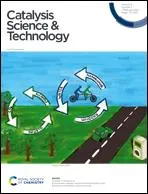
Catalysis Science & Technology is committed to publishing research reporting high-quality, cutting-edge developments across the catalysis community at large. The journal places equal focus on publications from the heterogeneous, homogeneous, thermo-, electro-, photo-, organo- and biocatalysis communities. Works published in the journal feature a balanced mix of fundamental, technology-oriented, experimental, computational, digital and data-driven original research, thus appealing to catalysis practitioners in both academic and industrial environments. Original research articles published in the journal must demonstrate new catalytic discoveries and/or methodological advances that represent a significant advance on previously published work, from the molecular to the process scales. We welcome rigorous research in a wide range of timely or emerging applications related to the environment, health, energy and materials. Catalysis Science & Technology publishes Communications, Articles, Reviews and Perspectives. More details regarding manuscript types may be found in the Information for Authors section.