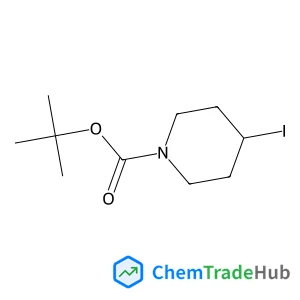
2-Methyl-2-propanyl 4-iodo-1-piperidinecarboxylate
CAS Number:
301673-14-3
Molecular Formula:
C10H18INO2
Jiali Nie, Ying Li, Dongyue Gao, Yi Fang, Jing Lin, Chengchun Tang, Zhonglu Guo
The electrochemical NO reduction reaction (NORR) towards NH3 is considered a promising strategy to cope with both NO removal and NH3 production. Currently, the research on NORR electrocatalysts mainly focuses on metal-based catalysts, while metal-free catalysts are quite scarce. In this work, we have systematically investigated the properties of pristine and C/O doped h-BN for efficient NO capture and reduction. Our results reveal that the basal plane of pristine h-BN is inert to the adsorption of NO, while doping C or O can significantly enhance the NO capture abilities of h-BN. Then, we highlight that C-doped h-BN exhibits excellent NORR catalytic performance with a relatively low limiting potential of −0.28 V. Further analysis shows that the suitable adsorption strength of NO on the C-doped h-BN surface is the prime reason for its excellent NO reduction activity, which is shown to be due to appropriate electronic interactions between the active site and NO. Last but not least, the catalytic selectivity of h-BN towards the NORR is confirmed by inhibiting the competing hydrogen evolution reaction. Our findings not only provide deeper insight into the essential effect of element doping on the catalytic activities of h-BN, but also propose general design principles for high-performance metal-free NORR electrocatalysts.

Journal of Enzyme inhibition and Medicinal Chemistry

CrystEngComm

Current Pharmaceutical Biotechnology

Angewandte Chemie International Edition

Journal of Medical Biochemistry

Advanced Engineering Materials

Contact Lens & Anterior Eye

European Journal of Organic Chemistry

Molecular Diversity

Nature Reviews Drug Discovery
Sanford A. Asher
DOI: 10.1039/B101083M
DOI: 10.1039/A808208A
Juan Antonio González, José Carlos Cobos, Francisco Javier Carmona, Isaías García De La Fuente, Venkat R. Bhethanabotla, Scott W. Campbell
DOI: 10.1039/B100765N
Fazil Rajabalee, Valérie Metivaud, Harry A. J. Oonk, Denise Mondieig, Peter Waldner
DOI: 10.1039/A909731G
Brian Brocklehurst, Ronald N. Young
DOI: 10.1039/B103730G
Claude Schweitzer, Zahra Mehrdad, Farokh Shafii, Reinhard Schmidt
DOI: 10.1039/B102621F
Wolfgang Quapp, Vladlen Melnikov
DOI: 10.1039/B102053F
J. B. Davey, A. C. Legon
DOI: 10.1039/B103351B
Toshiyuki Fujii, Takafumi Hirata, Yuji Shibahara, Kazushige Nishizawa
DOI: 10.1039/B102823P
DOI: 10.1039/A807013J
When considering alternatives to 1-(4-Chlorophenyl)-N-hydroxymethanimine (CAS: 3...
This compound should be stored in a cool, dry place away from direct sunlight. I...
3-(4-Bromophenyl)-5-(2-fluorophenyl)-1,2,4-oxadiazole is synthesized through a m...
5-Chloro-2-(4-chlorophenyl)-4-methyl-6-[3-(1-piperidinyl)propoxy]pyrimidine (CAS...
2-Chloro-4-(difluoromethoxy)pyridine is used in the pharmaceutical industry for ...
3-Chloro-6-methylpyridazine (CAS: 1121-79-5) is classified under the Globally Ha...
Several alternatives can be used in the synthesis of Methyl 4,5-dimethyl-2-nitro...
Alternatives to (2E,2'E)-3,3'-(1,4-Phenylene)bisacrylaldehyde include other acry...
3-Amino-5-chloropyridin-2-ol hydrochloride is an organic compound with the CAS n...
When handling 6,7-Difluoro-2,3-dihydro-4H-chromen-4-one, it is essential to wear...

Physical Chemistry Chemical Physics (PCCP) is an international journal co-owned by 19 physical chemistry and physics societies from around the world. This journal publishes original, cutting-edge research in physical chemistry, chemical physics and biophysical chemistry. To be suitable for publication in PCCP, articles must include significant innovation and/or insight into physical chemistry; this is the most important criterion that reviewers and Editors will judge against when evaluating submissions. The journal has a broad scope and welcomes contributions spanning experiment, theory, computation and data science. Topical coverage includes spectroscopy, dynamics, kinetics, statistical mechanics, thermodynamics, electrochemistry, catalysis, surface science, quantum mechanics, quantum computing and machine learning. Interdisciplinary research areas such as polymers and soft matter, materials, nanoscience, energy, surfaces/interfaces, and biophysical chemistry are welcomed if they demonstrate significant innovation and/or insight into physical chemistry. Joined experimental/theoretical studies are particularly appreciated when complementary and based on up-to-date approaches.

![5-Bromoimidazo[1,2-a]pyridine structure](https://static.chemtradehub.com/structs/692/69214-09-1-d8e2.webp "5-Bromoimidazo[1,2-a]pyridine structure")