













Thermodynamics of mixtures containing alkoxyethanols. Part XV. DISQUAC characterization of systems of alkoxyethanols with n-alkanes or cyclohexane‡
Literature Information
Publication Date
2001-06-20
DOI
10.1039/B100765N
Impact Factor
3.676
Authors
Juan Antonio González, José Carlos Cobos, Francisco Javier Carmona, Isaías García De La Fuente, Venkat R. Bhethanabotla, Scott W. Campbell
View Original
Abstract
Binary mixtures of alkoxyethanols, CH3–(CH2)n–O–(CH2CH2O)mOH, and n-alkanes or cyclohexane are characterized in terms of DISQUAC. The corresponding dispersive (DIS) and quasichemical (QUAC) interchange coefficients, Ceh,lDIS/QUAC, for the (e,h) contacts (type e, –O–; type h, –OH) are given. In comparison with the values for 1-alkanol + monooxalkane systems, the proximity effects in CH3–(CH2)n–O–CH2–CH2–OH + n-alkane mixtures lead to an increase in the Ceh,lDIS and Ceh,lQUAC (l = 1,2) coefficients and to a decrease in Ceh,2DIS. For other hydroxyethers (3-methoxypropanol, 4-methoxybutanol), the Ceh,lQUAC (l = 1,2) coefficients approach those of 1-alkanol + monooxalkane mixtures with increasing separation between the –O– and OH– groups. However, the Ceh,2DIS coefficient is still lower than in alcoholic solutions, indicating that proximity effects in the framework of DISQUAC remain. DISQUAC yields a consistent description of the vapor–liquid equilibria, VLE, and of liquid–liquid equilibria, LLE. Good results are obtained for azeotropic data. The coordinates of the critical points are represented over a reasonable range of composition and temperature. Excess molar enthalpies HmE and the excess molar heat capacity at constant pressure, CpmE, are well reproduced. The typical large deviations for properties at infinite dilution, excess molar partial enthalpies, HmE,∞, and natural logarithms of activity coefficients, ln γi∞, of the associated compound are found. Thermodynamic properties of alkoxyethanol + alkane mixtures are determined by the self-association of the polar compound ia both inter- and intramolecular H-bonds, as well as by dipole–dipole interactions between alkoxyethanol molecules. These interactions are analyzed in terms of the effective dipole moments () and are more important than in 1-alkanol + alkane mixtures. The dipole–dipole interactions in systems with alkoxyethanols decrease along a homologous series, and are enhanced by the presence of two ether atoms. Intramolecular H-bonds are more relevant than the intermolecular H-bonds and become weakened with the separation between the –O– and –OH groups of the hydroxyethers.
Related Literature
Dimethylaniline functionalised pyrene fluorophores; dual colour pH switching in solution and self-assembled monolayers
Darragh O’Connor, Carolin Müller, Nirod Kumar Sarangi, Aisling Byrne, Tia E. Keyes
2019-09-26
Paper
DOI: 10.1039/C9CP04948G
Correction: The use of ion-selective membranes to study cation transport in hybrid organic–inorganic perovskites
Emily C. Smith, Christie L. C. Ellis, Hamza Javaid, Blaise G. Arden, D. Venkataraman
2019-10-02
Correction
DOI: 10.1039/C9CP90245G
An XAFS study of Cs adsorption by the precipitation bands of Mn–Fe-based Prussian blue analogues spontaneously formed in agarose gel
Hisashi Hayashi, Saya Aoki, Mao Takaishi, Yui Sato
2019-10-01
Paper
DOI: 10.1039/C9CP03661J
Rotational quenching of an interstellar gas thermometer: CH3CN⋯He collisions
E. Quintas-Sánchez, R. Dawes, K. Hammami, L. Wiesenfeld
2020-07-23
Paper
DOI: 10.1039/D0CP02985H
Structure of water and polymer at the buried polymer/water interface unveiled using heterodyne-detected vibrational sum frequency generation
Sanat Ghosh, Shu-hei Urashima, Shoichi Yamaguchi, Takashi Aoki
2020-07-07
Communication
DOI: 10.1039/D0CP02618B
A type-II C2N/α-Te van der Waals heterojunction with improved optical properties by external perturbation
Zhuang Ma, Yusheng Wang, Yuting Wei, Chong Li, Xiuwen Zhang, Fei Wang
2019-09-11
Paper
DOI: 10.1039/C9CP04234B
A useful valence-alterable optical probe for the prediction of material characteristics based on theoretical calculations
Guoqiang Peng, Yujiang Wang, Tiejun Li, Dan Wang, Lili Han
2020-08-05
Paper
DOI: 10.1039/D0CP02606A
Two-dimensional CaFCl: ultra-wide bandgap, strong interlayer quantum confinement, and n-type doping
Xiao-Juan Ye, Zhen-Xue Zhu, Lan Meng, Chun-Sheng Liu
2020-07-08
Paper
DOI: 10.1039/D0CP02804E
You might also like
Compound Q&A
Are there alternatives to 1-(4-Chlorophenyl)-N-hydroxymethanimine (CAS: 3848-36-0) in synthesis?
When considering alternatives to 1-(4-Chlorophenyl)-N-hydroxymethanimine (CAS: 3...
3848-36-01-(4-Chlorophenyl)-N...
Compound Q&A
How should (1R,9S,10S,12S,14E,16S,19R,20R,21S,22R)-3,9,21-Trihydroxy-5,10,12,14,16,20,22-heptamethyl-23,24-dioxatetracyclo[17.3.1.1~6,9~.0~2,7~]tetracosa-2,5,7,14-tetraen-4-one (CAS: 183202-73-5) be stored?
This compound should be stored in a cool, dry place away from direct sunlight. I...
183202-73-5(1R,9S,10S,12S,14E,1...
Compound Q&A
How is 3-(4-Bromophenyl)-5-(2-fluorophenyl)-1,2,4-oxadiazole (CAS: 419553-16-5) typically synthesized?
3-(4-Bromophenyl)-5-(2-fluorophenyl)-1,2,4-oxadiazole is synthesized through a m...
419553-16-53-(4-Bromophenyl)-5-...
Compound Q&A
How is 5-Chloro-2-(4-chlorophenyl)-4-methyl-6-[3-(1-piperidinyl)propoxy]pyrimidine (CAS: 1639220-19-1) typically synthesized?
5-Chloro-2-(4-chlorophenyl)-4-methyl-6-[3-(1-piperidinyl)propoxy]pyrimidine (CAS...
1639220-19-15-Chloro-2-(4-chloro...
Compound Q&A
What industries use 2-Chloro-4-(difluoromethoxy)pyridine (CAS: 1206978-15-5)?
2-Chloro-4-(difluoromethoxy)pyridine is used in the pharmaceutical industry for ...
1206978-15-52-Chloro-4-(difluoro...
Compound Q&A
What regulatory guidelines apply to 3-Chloro-6-methylpyridazine (CAS: 1121-79-5)?
3-Chloro-6-methylpyridazine (CAS: 1121-79-5) is classified under the Globally Ha...
1121-79-53-Chloro-6-methylpyr...
Compound Q&A
Are there alternatives to Methyl 4,5-dimethyl-2-nitrobenzoate in synthesis?
Several alternatives can be used in the synthesis of Methyl 4,5-dimethyl-2-nitro...
90922-74-0Methyl 4,5-dimethyl-...
Compound Q&A
Are there alternatives to (2E,2'E)-3,3'-(1,4-Phenylene)bisacrylaldehyde in synthesis?
Alternatives to (2E,2'E)-3,3'-(1,4-Phenylene)bisacrylaldehyde include other acry...
63405-68-5(2E,2'E)-3,3'-(1,4-P...
Compound Q&A
What is 3-Amino-5-chloropyridin-2-ol hydrochloride (CAS: 1261906-29-9)?
3-Amino-5-chloropyridin-2-ol hydrochloride is an organic compound with the CAS n...
1261906-29-93-Amino-5-chloropyri...
Compound Q&A
What precautions should be taken when handling 6,7-Difluoro-2,3-dihydro-4H-chromen-4-one (CAS: 1092349-93-3)?
When handling 6,7-Difluoro-2,3-dihydro-4H-chromen-4-one, it is essential to wear...
1092349-93-36,7-Difluoro-2,3-dih...
Source Journal
Physical Chemistry Chemical Physics

CiteScore:
5.5
Self-citation Rate:
10.3%
Articles per Year:
3036
Physical Chemistry Chemical Physics (PCCP) is an international journal co-owned by 19 physical chemistry and physics societies from around the world. This journal publishes original, cutting-edge research in physical chemistry, chemical physics and biophysical chemistry. To be suitable for publication in PCCP, articles must include significant innovation and/or insight into physical chemistry; this is the most important criterion that reviewers and Editors will judge against when evaluating submissions. The journal has a broad scope and welcomes contributions spanning experiment, theory, computation and data science. Topical coverage includes spectroscopy, dynamics, kinetics, statistical mechanics, thermodynamics, electrochemistry, catalysis, surface science, quantum mechanics, quantum computing and machine learning. Interdisciplinary research areas such as polymers and soft matter, materials, nanoscience, energy, surfaces/interfaces, and biophysical chemistry are welcomed if they demonstrate significant innovation and/or insight into physical chemistry. Joined experimental/theoretical studies are particularly appreciated when complementary and based on up-to-date approaches.
Recommended Compounds
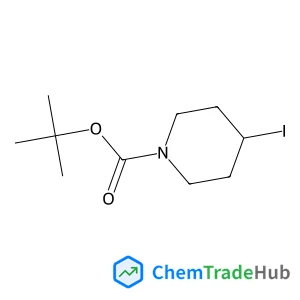
2-Methyl-2-propanyl 4-iodo-1-piperidinecarboxylate
CAS Number:
301673-14-3
Molecular Formula:
C10H18INO2
Recommended Suppliers




Disclaimer
This page provides academic journal information for reference and research purposes only. We are not affiliated with any journal publishers and do not handle publication submissions. For publication-related inquiries, please contact the respective journal publishers directly.
If you notice any inaccuracies in the information displayed, please contact us at support@chemtradehub.com. We will promptly review and address your concerns.