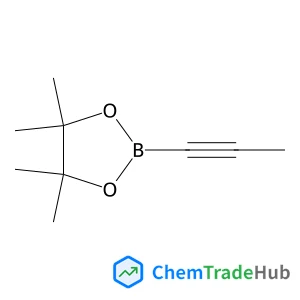
4,4,5,5-Tetramethyl-2-(1-propyn-1-YL)-1,3,2-dioxaborolane
CAS Number:
347389-75-7
Molecular Formula:
C9H15BO2
Amin Bakhshandeh, Yan Levin
We present a Monte Carlo approach for performing titration simulations in the canonical ensemble. The standard constant pH (cpH) simulation methods are intrinsically grand canonical, allowing us to study the protonation state of molecules only as a function of pH in the reservoir. Due to the Donnan potential between a system and an (implicit) reservoir of a semi-grand canonical simulation, the pH of the reservoir can be significantly different from that of an isolated system, for an identical protonation state. The new titration method avoids this difficulty by using the canonical reactive Monte Carlo algorithm to calculate the protonation state of macromolecules as a function of the total number of protons present inside the simulation cell. The pH of an equilibrated system is then calculated using a new surface insertion Widom algorithm, which bypasses the difficulties associated with the bulk Widom particle insertion for intermediate and high pH values. To properly treat the long range Coulomb force, we use the Ewald summation method, showing the importance of the Bethe potential for calculating the pH of canonical systems.
Malay Pramanik, Jaewoo Lee, Toshiaki Takei, Yusuke Ide, Md. Shahriar A. Hossain, Jung Ho Kim
DOI: 10.1039/C6CP08827A
Jamie C. Wang, Kyle Violette, Omotola O. Ogunsolu
DOI: 10.1039/C6CP07939C
Pawel Strak, Konrad Sakowski, Stanislaw Krukowski
DOI: 10.1039/C7CP00235A
Solmaz Saboohi, Hans J. Griesser
DOI: 10.1039/C6CP08630F
Masashi Tsuge
DOI: 10.1039/C7CP00988G
Adam Pockett, Nobuya Sakai, Henry J. Snaith, Laurence M. Peter, Petra J. Cameron
DOI: 10.1039/C6CP08424A
Robert A. Lazenby, Kiran Bano, Jie Zhang, Alan M. Bond, Julie V. Macpherson, Patrick R. Unwin
DOI: 10.1039/C7CP00968B
Yu. Akimov
DOI: 10.1039/C7CP00151G
Wei-Qing Huang, Zhong Xie, Wangyu Hu, Ping Peng, Gui-Fang Huang
DOI: 10.1039/C6CP08853H
Maneesha Esther Mohanty, Chakali Madhu, Vanammoole Lakshmi Reddy, Mahalingavelar Paramasivam, Prakriti Ranjan Bangal, Vaidya Jayathirtha Rao
DOI: 10.1039/C7CP00261K
2-Methylbenzene-1,4-diamine dihydrochloride (CAS: 615-45-2) should be stored in ...
(1S,4S)-2,5-Diazabicyclo[2.2.1]heptane dihydrobromide is generally considered sa...
(6-Chloropyridazin-3-YL)methanamine finds applications in the pharmaceutical ind...
2-Fluoro-3-methylphenol is primarily used in the synthesis of pharmaceuticals, p...
When handling 3-Methoxy-4-nitrobenzonitrile, it is important to wear appropriate...
When handling 1,3-Oxazolo[4,5-b]pyridine-2(3H)-thione (CAS: 211949-57-4), it is ...
4-Ethynylbenzamide (CAS: 90347-86-7) falls under various regulatory guidelines i...
3-(2-Ethylphenyl)-2-thioxo-4-imidazolidinone is primarily used as an intermediat...
(2-Fluoro-6-methoxyphenyl)acetic acid, also known as 4-fluoro-3-methoxybenzoic a...
Market trends for 2-[4-(Hydroxymethyl)phenoxy]ethanol (CAS: 102196-18-9) indicat...

Physical Chemistry Chemical Physics (PCCP) is an international journal co-owned by 19 physical chemistry and physics societies from around the world. This journal publishes original, cutting-edge research in physical chemistry, chemical physics and biophysical chemistry. To be suitable for publication in PCCP, articles must include significant innovation and/or insight into physical chemistry; this is the most important criterion that reviewers and Editors will judge against when evaluating submissions. The journal has a broad scope and welcomes contributions spanning experiment, theory, computation and data science. Topical coverage includes spectroscopy, dynamics, kinetics, statistical mechanics, thermodynamics, electrochemistry, catalysis, surface science, quantum mechanics, quantum computing and machine learning. Interdisciplinary research areas such as polymers and soft matter, materials, nanoscience, energy, surfaces/interfaces, and biophysical chemistry are welcomed if they demonstrate significant innovation and/or insight into physical chemistry. Joined experimental/theoretical studies are particularly appreciated when complementary and based on up-to-date approaches.
![trans-2-{[(Tert-butoxy)carbonyl]amino}cyclobutane-1-carboxylic acid structure](https://static.chemtradehub.com/structs/951/951173-25-4-27cd.webp "trans-2-{[(Tert-butoxy)carbonyl]amino}cyclobutane-1-carboxylic acid structure")
![3-[(3R,4R)-3-[(6-aminopyrimidin-4-yl)-methyl-amino]-4-methyl-1-piperidyl]-3-oxo-propanenitrile structure](https://static.chemtradehub.com/structs/164/1640971-60-3-83a4.webp "3-[(3R,4R)-3-[(6-aminopyrimidin-4-yl)-methyl-amino]-4-methyl-1-piperidyl]-3-oxo-propanenitrile structure")