


Weyl semimetal mediated epsilon-near-zero hybrid polaritons and the induced nonreciprocal radiation
Literature Information
Publication Date
2023-10-23
DOI
10.1039/D3CP04183B
Impact Factor
3.676
Authors
Sicheng Xu, Liming Qian, Mengran Sun
View Original
Abstract
Polaritonic excitation and management in ultra-thin polar crystals has recently received significant attention and holds new promise for epsilon-near-zero (ENZ) modes. However, manipulation of the ENZ mode via anisotropic magneto-optic (MO) material remains elusive. Herein, we provide an effective strategy for constructing an ENZ polar thin film with dependence on Weyl semimetals (WSM). The thermal radiation of the proposed device is explored with electromagnetic (EM) simulations that utilize the anisotropic rigorous coupled-wave analysis (aRCWA) method. Strong coupling of the ENZ mode to WSM polaritons has been demonstrated, and the structural parameters hold tolerance on the order of hundreds of nanometers, which is highly favorable for low-cost fabrication and high-performance application. By changing both the azimuthal angle (ϕ) and angle of incidence (θ), the nonreciprocity (η) can be effectively influenced. The distribution of η is symmetrical with ϕ = 180°, η = 0 when ϕ = 90° and ϕ = 270°. The mechanism of this proposal is owing to the hybrid polaritons supported by the polar thin film and nonreciprocal radiation of WSM, which is validated by examining the amplitude distribution of the magnetic field. The nonreciprocal emitter described herein allows simultaneous control of spectral distribution and polarization of radiation, which will facilitate the active design and application of mid-infrared (MIR) thermal emitters.
Recommended Journals

Journal of Physical Organic Chemistry

Advanced Composite Materials

Main Group Metal Chemistry

Cement and Concrete Composites

Bio-Medical Materials and Engineering

Journal of Computer-Aided Molecular Design

Current Medicinal Chemistry

Advances in Cement Research

Diamond and Related Materials

Heterocyclic Communications
Related Literature
The role of sequence in altering the unfolding pathway of an RNA pseudoknot: a steered molecular dynamics study
Asmita Gupta, Manju Bansal
2016-09-22
Paper
DOI: 10.1039/C6CP04617G
The influence of the dianhydride precursor in hyper-cross-linked hybrid polyPOSS-imide networks
Michiel J. T. Raaijmakers, Nieck E. Benes
2016-09-30
Paper
DOI: 10.1039/C6CP06184B
Mobility and association of ions in aqueous solutions: the case of imidazolium based ionic liquids
Marija Bešter-Rogač, Marina V. Fedotova, Sergey E. Kruchinin, Marco Klähn
2016-09-22
Paper
DOI: 10.1039/C6CP05010G
RIDME spectroscopy on high-spin Mn2+ centers
D. Akhmetzyanov, H. Y. V. Ching, V. Denysenkov, L. C. Tabares, T. F. Prisner, S. Un
2016-10-13
Paper
DOI: 10.1039/C6CP05239H
Temperature dependence of acoustic vibrations of CdSe and CdSe–CdS core–shell nanocrystals measured by low-frequency Raman spectroscopy
A. Jolene Mork, Elizabeth M. Y. Lee, William A. Tisdale
2016-10-05
Paper
DOI: 10.1039/C6CP05683K
A new sodiation–desodiation mechanism of the titania-based negative electrode for sodium-ion batteries
Changsheng Ding, Toshiyuki Nohira, Rika Hagiwara
2016-10-31
Paper
DOI: 10.1039/C6CP05944A
Development of type-I/type-II hybrid dye sensitizer with both pyridyl group and catechol unit as anchoring group for type-I/type-II dye-sensitized solar cell
Yousuke Ooyama, Kensuke Furue, Toshiaki Enoki, Masahiro Kanda, Yohei Adachi, Joji Ohshita
2016-10-21
Paper
DOI: 10.1039/C6CP06513A
Study of entropic characteristics of strongly correlated systems using VO2 as a model case
Asaya Fujita, Yoshiaki Kinemuchi, Wataru Yamaguchi
2016-10-18
Paper
DOI: 10.1039/C6CP06200H
Relationships between elastic anisotropy and thermal expansion in A2Mo3O12 materials
Carl P. Romao
2016-10-24
Paper
DOI: 10.1039/C6CP06356J
Magneto-conductance characteristics of trapped triplet–polaron and triplet–trapped polaron interactions in anthracene-based organic light emitting diodes
Weiyao Jia, Qiusong Chen, Yingbing Chen, Lixiang Chen, Zuhong Xiong
2016-10-10
Paper
DOI: 10.1039/C6CP06322E
You might also like
Compound Q&A
Are there alternatives to 1-(4-Chlorophenyl)-N-hydroxymethanimine (CAS: 3848-36-0) in synthesis?
When considering alternatives to 1-(4-Chlorophenyl)-N-hydroxymethanimine (CAS: 3...
3848-36-01-(4-Chlorophenyl)-N...
Compound Q&A
How should (1R,9S,10S,12S,14E,16S,19R,20R,21S,22R)-3,9,21-Trihydroxy-5,10,12,14,16,20,22-heptamethyl-23,24-dioxatetracyclo[17.3.1.1~6,9~.0~2,7~]tetracosa-2,5,7,14-tetraen-4-one (CAS: 183202-73-5) be stored?
This compound should be stored in a cool, dry place away from direct sunlight. I...
183202-73-5(1R,9S,10S,12S,14E,1...
Compound Q&A
How is 3-(4-Bromophenyl)-5-(2-fluorophenyl)-1,2,4-oxadiazole (CAS: 419553-16-5) typically synthesized?
3-(4-Bromophenyl)-5-(2-fluorophenyl)-1,2,4-oxadiazole is synthesized through a m...
419553-16-53-(4-Bromophenyl)-5-...
Compound Q&A
How is 5-Chloro-2-(4-chlorophenyl)-4-methyl-6-[3-(1-piperidinyl)propoxy]pyrimidine (CAS: 1639220-19-1) typically synthesized?
5-Chloro-2-(4-chlorophenyl)-4-methyl-6-[3-(1-piperidinyl)propoxy]pyrimidine (CAS...
1639220-19-15-Chloro-2-(4-chloro...
Compound Q&A
What industries use 2-Chloro-4-(difluoromethoxy)pyridine (CAS: 1206978-15-5)?
2-Chloro-4-(difluoromethoxy)pyridine is used in the pharmaceutical industry for ...
1206978-15-52-Chloro-4-(difluoro...
Compound Q&A
What regulatory guidelines apply to 3-Chloro-6-methylpyridazine (CAS: 1121-79-5)?
3-Chloro-6-methylpyridazine (CAS: 1121-79-5) is classified under the Globally Ha...
1121-79-53-Chloro-6-methylpyr...
Compound Q&A
Are there alternatives to Methyl 4,5-dimethyl-2-nitrobenzoate in synthesis?
Several alternatives can be used in the synthesis of Methyl 4,5-dimethyl-2-nitro...
90922-74-0Methyl 4,5-dimethyl-...
Compound Q&A
Are there alternatives to (2E,2'E)-3,3'-(1,4-Phenylene)bisacrylaldehyde in synthesis?
Alternatives to (2E,2'E)-3,3'-(1,4-Phenylene)bisacrylaldehyde include other acry...
63405-68-5(2E,2'E)-3,3'-(1,4-P...
Compound Q&A
What is 3-Amino-5-chloropyridin-2-ol hydrochloride (CAS: 1261906-29-9)?
3-Amino-5-chloropyridin-2-ol hydrochloride is an organic compound with the CAS n...
1261906-29-93-Amino-5-chloropyri...
Compound Q&A
What precautions should be taken when handling 6,7-Difluoro-2,3-dihydro-4H-chromen-4-one (CAS: 1092349-93-3)?
When handling 6,7-Difluoro-2,3-dihydro-4H-chromen-4-one, it is essential to wear...
1092349-93-36,7-Difluoro-2,3-dih...
Source Journal
Physical Chemistry Chemical Physics

CiteScore:
5.5
Self-citation Rate:
10.3%
Articles per Year:
3036
Physical Chemistry Chemical Physics (PCCP) is an international journal co-owned by 19 physical chemistry and physics societies from around the world. This journal publishes original, cutting-edge research in physical chemistry, chemical physics and biophysical chemistry. To be suitable for publication in PCCP, articles must include significant innovation and/or insight into physical chemistry; this is the most important criterion that reviewers and Editors will judge against when evaluating submissions. The journal has a broad scope and welcomes contributions spanning experiment, theory, computation and data science. Topical coverage includes spectroscopy, dynamics, kinetics, statistical mechanics, thermodynamics, electrochemistry, catalysis, surface science, quantum mechanics, quantum computing and machine learning. Interdisciplinary research areas such as polymers and soft matter, materials, nanoscience, energy, surfaces/interfaces, and biophysical chemistry are welcomed if they demonstrate significant innovation and/or insight into physical chemistry. Joined experimental/theoretical studies are particularly appreciated when complementary and based on up-to-date approaches.
Recommended Compounds

1-(3-Bromo-4-fluorophenyl)methanamine hydrochloride (1:1)
CAS Number:
202865-68-7
Molecular Formula:
C7H8BrClFN
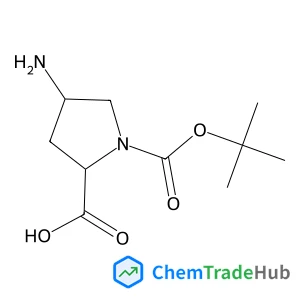
(2R,4R)-1-Boc-4-Aminopyrrolidine-2-carboxylic acid
CAS Number:
132622-98-1
Molecular Formula:
C10H18N2O4
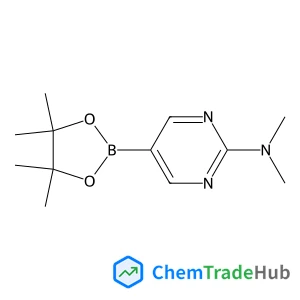
N,N-Dimethyl-5-(4,4,5,5-tetramethyl-1,3,2-dioxaborolan-2-yl)-2-pyrimidinamine
CAS Number:
1032759-30-0
Molecular Formula:
C12H20BN3O2
Recommended Suppliers





Disclaimer
This page provides academic journal information for reference and research purposes only. We are not affiliated with any journal publishers and do not handle publication submissions. For publication-related inquiries, please contact the respective journal publishers directly.
If you notice any inaccuracies in the information displayed, please contact us at support@chemtradehub.com. We will promptly review and address your concerns.