












![N-[(E)-Phenylmethylene]benzenesulfonamide structure](https://static.chemtradehub.com/structs/139/13909-34-7-8167.webp "N-[(E)-Phenylmethylene]benzenesulfonamide structure")
Effect of heat treatment on boron impurity in Vycor. Part I. Near infrared spectra and ab initio calculations of the vibrations of model molecules for surface boranols
Literature Information
Publication Date
2000-03-29
DOI
10.1039/A909397D
Impact Factor
3.676
Authors
Cédric Carteret, André Burneau
View Original
Abstract
Near infrared spectra of surface boranol groups on a preheated Vycor silica glass were observed and interpreted with the help of ab initio calculations of the vibrational properties of BOH groups anchored to silica or to B2O3 clusters. The spectra of deuterated samples were also obtained. A set of narrow lines corresponds to overtone and combination transitions for normal modes involving mainly the hydroxy group, that is the νOH stretching, the δOH bending and the τOH torsion around BO bond. Hot bands at 25°C, whose origin is the τOH level at 530 cm−1, are revealed by cooling the sample at −173°C. A sample evacuated at 760°C displays mainly isolated boranol groups and some very weakly perturbed species, likely vicinal groups, bonded to silica. A thorough analysis of the anharmonic properties of isolated boranol is given. The spectrum assignment is extrapolated to transitions hidden by the very strong absorptions of the bulk material. Fermi resonances appear in diads for species (SiO)2BOH because the 2τOH overtone is close to δOH, near 1030 cm−1.
Related Literature
Ab initio investigation of the role of transition-metal dopants in the adsorption properties of ethylene glycol on doped Pt(100) surfaces
Raquel C. Bezerra, Paulo C. D. Mendes, Raimundo R. Passos, Juarez L. F. Da Silva
2020-07-22
Paper
DOI: 10.1039/D0CP01403F
Solvation and diffusion of poly(vinyl alcohol) chains in a hydrated inorganic ionic liquid
Parvin Karimineghlani, Jin Zheng, Svetlana Sukhishvili
2020-07-22
Paper
DOI: 10.1039/D0CP02679D
Serendipity of a topological nontrivial band gap in the 2D borophene subunit lattice with broken mirror symmetry
Lei Shen, Mingwen Zhao, Xiaoming Zhang, Tao He, Weifeng Li, Yuanping Feng
2019-09-28
Paper
DOI: 10.1039/C9CP01931F
Positron annihilation spectroscopic characterization of free-volume defects and their correlations with the mechanical and transport properties of SBR–PMMA interpenetrating polymer networks
George V. Thomas, Akhil Punneri Madathil, P. M. G. Nambissan
2020-07-16
Paper
DOI: 10.1039/D0CP01417F
Bilayer thickness determines the alignment of model polyproline helices in lipid membranes
Stephan L. Grage
2019-09-18
Paper
DOI: 10.1039/C9CP02996F
Rotational quenching of an interstellar gas thermometer: CH3CN⋯He collisions
E. Quintas-Sánchez, R. Dawes, K. Hammami, L. Wiesenfeld
2020-07-23
Paper
DOI: 10.1039/D0CP02985H
The absorption and fluorescence spectra of 4-(3-methoxybenzylidene)-2-methyl-oxazalone interpreted by Franck–Condon simulation in various pH solvent environments
Yu-Hui Liu, Ya-Jing Peng, Hang Su, Sheng-Hsien Lin
2020-07-09
Paper
DOI: 10.1039/D0CP01980A
Reaction probability and kinetics of water splitting on the penta-NiAs2 monolayer from an ab initio molecular dynamics investigation
Viet Q Bui, Hung M. Le
2020-07-21
Paper
DOI: 10.1039/D0CP02418J
NbB12−: a new member of half-sandwich type doped boron clusters with high stability
Mengxue Ren, Siyu Jin, Donghe Wei, Yuanyuan Jin, Yonghong Tian, Gennady L. Gutsev
2019-09-09
Paper
DOI: 10.1039/C9CP03496J
CO2 adsorption on hydroxylated In2O3(110)
Alvaro Posada-Borbón, Henrik Grönbeck
2019-08-20
Paper
DOI: 10.1039/C9CP04097H
You might also like
Compound Q&A
Are there alternatives to 1-(4-Chlorophenyl)-N-hydroxymethanimine (CAS: 3848-36-0) in synthesis?
When considering alternatives to 1-(4-Chlorophenyl)-N-hydroxymethanimine (CAS: 3...
3848-36-01-(4-Chlorophenyl)-N...
Compound Q&A
How should (1R,9S,10S,12S,14E,16S,19R,20R,21S,22R)-3,9,21-Trihydroxy-5,10,12,14,16,20,22-heptamethyl-23,24-dioxatetracyclo[17.3.1.1~6,9~.0~2,7~]tetracosa-2,5,7,14-tetraen-4-one (CAS: 183202-73-5) be stored?
This compound should be stored in a cool, dry place away from direct sunlight. I...
183202-73-5(1R,9S,10S,12S,14E,1...
Compound Q&A
How is 3-(4-Bromophenyl)-5-(2-fluorophenyl)-1,2,4-oxadiazole (CAS: 419553-16-5) typically synthesized?
3-(4-Bromophenyl)-5-(2-fluorophenyl)-1,2,4-oxadiazole is synthesized through a m...
419553-16-53-(4-Bromophenyl)-5-...
Compound Q&A
How is 5-Chloro-2-(4-chlorophenyl)-4-methyl-6-[3-(1-piperidinyl)propoxy]pyrimidine (CAS: 1639220-19-1) typically synthesized?
5-Chloro-2-(4-chlorophenyl)-4-methyl-6-[3-(1-piperidinyl)propoxy]pyrimidine (CAS...
1639220-19-15-Chloro-2-(4-chloro...
Compound Q&A
What industries use 2-Chloro-4-(difluoromethoxy)pyridine (CAS: 1206978-15-5)?
2-Chloro-4-(difluoromethoxy)pyridine is used in the pharmaceutical industry for ...
1206978-15-52-Chloro-4-(difluoro...
Compound Q&A
What regulatory guidelines apply to 3-Chloro-6-methylpyridazine (CAS: 1121-79-5)?
3-Chloro-6-methylpyridazine (CAS: 1121-79-5) is classified under the Globally Ha...
1121-79-53-Chloro-6-methylpyr...
Compound Q&A
Are there alternatives to Methyl 4,5-dimethyl-2-nitrobenzoate in synthesis?
Several alternatives can be used in the synthesis of Methyl 4,5-dimethyl-2-nitro...
90922-74-0Methyl 4,5-dimethyl-...
Compound Q&A
Are there alternatives to (2E,2'E)-3,3'-(1,4-Phenylene)bisacrylaldehyde in synthesis?
Alternatives to (2E,2'E)-3,3'-(1,4-Phenylene)bisacrylaldehyde include other acry...
63405-68-5(2E,2'E)-3,3'-(1,4-P...
Compound Q&A
What is 3-Amino-5-chloropyridin-2-ol hydrochloride (CAS: 1261906-29-9)?
3-Amino-5-chloropyridin-2-ol hydrochloride is an organic compound with the CAS n...
1261906-29-93-Amino-5-chloropyri...
Compound Q&A
What precautions should be taken when handling 6,7-Difluoro-2,3-dihydro-4H-chromen-4-one (CAS: 1092349-93-3)?
When handling 6,7-Difluoro-2,3-dihydro-4H-chromen-4-one, it is essential to wear...
1092349-93-36,7-Difluoro-2,3-dih...
Source Journal
Physical Chemistry Chemical Physics

CiteScore:
5.5
Self-citation Rate:
10.3%
Articles per Year:
3036
Physical Chemistry Chemical Physics (PCCP) is an international journal co-owned by 19 physical chemistry and physics societies from around the world. This journal publishes original, cutting-edge research in physical chemistry, chemical physics and biophysical chemistry. To be suitable for publication in PCCP, articles must include significant innovation and/or insight into physical chemistry; this is the most important criterion that reviewers and Editors will judge against when evaluating submissions. The journal has a broad scope and welcomes contributions spanning experiment, theory, computation and data science. Topical coverage includes spectroscopy, dynamics, kinetics, statistical mechanics, thermodynamics, electrochemistry, catalysis, surface science, quantum mechanics, quantum computing and machine learning. Interdisciplinary research areas such as polymers and soft matter, materials, nanoscience, energy, surfaces/interfaces, and biophysical chemistry are welcomed if they demonstrate significant innovation and/or insight into physical chemistry. Joined experimental/theoretical studies are particularly appreciated when complementary and based on up-to-date approaches.
Recommended Compounds
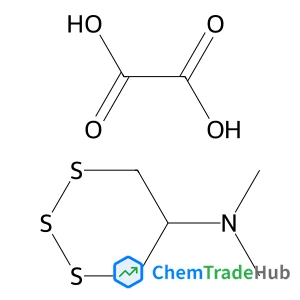
Oxalic acid compound with cyclohexylsulfamothioic O-acid (11)
CAS Number:
31895-22-4
Molecular Formula:
C7H13NO4S3
Recommended Suppliers






Disclaimer
This page provides academic journal information for reference and research purposes only. We are not affiliated with any journal publishers and do not handle publication submissions. For publication-related inquiries, please contact the respective journal publishers directly.
If you notice any inaccuracies in the information displayed, please contact us at support@chemtradehub.com. We will promptly review and address your concerns.