













An oxygen vacancy-modulated bifunctional S-NiMoO4 electrocatalyst for efficient alkaline overall water splitting
Literature Information
Publication Date
2024-01-03
DOI
10.1039/D3CC05444F
Impact Factor
6.222
Authors
Jiarong Mu, Ping Bai, Peng Wang, Zhinan Xie, Yihua Zhao, Jianfang Jing, Yiguo Su
View Original
Abstract
S-doped nickel molybdate nanorods grown on nickel foam (S-NiMoO4/NF) were fabricated by a two-step hydrothermal method. The resultant S-NiMoO4/NF exhibited remarkable bifunctional electrocatalytic activity, with overpotentials of 235 mV for the hydrogen evolution reaction and 150 mV for the oxygen evolution reaction at a current density of 50 mA cm−2. Assembled into the two-electrode S-NiMoO4/NF electrolyzer in alkaline electrolytes for overall water splitting, it required only low cell voltages of 1.55 V and 1.63 V to drive 50 mA cm−2 and 100 mA cm−2, respectively. No significant performance degradation occurred during the water electrolysis process. The experimental results confirmed that S-doping induced the increase of the oxygen vacancies, accelerating the reaction kinetics and thus improving the electrocatalytic performance. Meanwhile, more active sites exposure on the surface of S-NiMoO4/NF enhanced the reactivity. This work may guide the development of efficient bifunctional catalysts in alkaline electrolysis through oxygen vacancy regulation.
Recommended Journals
Related Literature
Self-templated and self-assembled synthesis of nano/microstructures of Gd-based rare-earth compounds: morphology control, magnetic and luminescence properties
2010-08-02
Paper
DOI: 10.1039/C0CP00169D
Exchangeable oxygens in the vicinity of the molybdenum center of the high-pH form of sulfite oxidase and sulfite dehydrogenase
Andrei V. Astashkin, Eric L. Klein, Dmitry Ganyushin, Kayunta Johnson-Winters, Frank Neese, Ulrike Kappler, John H. Enemark
2009-07-13
Paper
DOI: 10.1039/B907029J
Hyperpolarized 19F-MRI: parahydrogen-induced polarization and field variation enable 19F-MRI at low spin density
Ute Bommerich, Thomas Trantzschel, Samir Mulla-Osman, Gerd Buntkowsky, Joachim Bargon, Johannes Bernarding
2010-07-07
Paper
DOI: 10.1039/C001265C
2H and 19F solid-state NMR studies of the ionic liquid [C2Py][BTA]-d10 confined in mesoporous silica materials
Maria Waechtler, Martin Sellin, Annegret Stark, Dilek Akcakayiran, Gerhard Findenegg, Anna Gruenberg, Hergen Breitzke, Gerd Buntkowsky
2010-08-16
Paper
DOI: 10.1039/B926836G
Computational study of oxygen atom (3P and 1D) reactions with CF3CN
Jingyu Sun, Yizhen Tang, Xiujuan Jia, Fang Wang, Yunju Zhang, ShuWei Tang, Fengdi Wang, Yingfei Chang, Yongji Lu, Xiumei Pan, Jingping Zhang, Rongshun Wang
2010-07-26
Paper
DOI: 10.1039/C004284F
The effect of the NH2 substituent on NH3: hydrazine as an alternative for ammonia in hydrogen release in the presence of boranes and alanes
Saartje Swinnen, Myrna H. Matus, David A. Dixon
2009-05-29
Paper
DOI: 10.1039/B823358F
Photochemistry of carbon monoxide and methanol in water and nitric acid hydrate ices: A NEXAFS study
C. Laffon, J. Lasne, F. Bournel, K. Schulte, S. Lacombe, Ph. Parent
2010-07-26
Paper
DOI: 10.1039/C0CP00229A
Refractive indices for molecular crystals from the response of X-ray constrained Hartree–Fock wavefunctions
Dylan Jayatilaka, Parthapratim Munshi, Michael J. Turner, Judith A. K. Howard, Mark A. Spackman
2009-06-10
Paper
DOI: 10.1039/B906072C
Activated carbon immersed in water—the origin of linear correlation between enthalpy of immersion and oxygen content studied by molecular dynamics simulation
Artur P. Terzyk, Piotr A. Gauden, Sylwester Furmaniak, Radosław P. Wesołowski, Piotr Kowalczyk
2010-07-29
Paper
DOI: 10.1039/C003894F
The influence of concentration on the molecular surface structure of simple and mixed aqueous electrolytes
Niklas Ottosson, Jan Heyda, Erik Wernersson, Wandared Pokapanich, Svante Svensson, Bernd Winter, Gunnar Öhrwall, Pavel Jungwirth, Olle Björneholm
2010-07-08
Paper
DOI: 10.1039/C0CP00365D
You might also like
Compound Q&A
What precautions should be taken when handling 2-Chloro-1,2-bis(4-methylphenyl)ethanone (CAS: 71193-32-3)?
When handling 2-Chloro-1,2-bis(4-methylphenyl)ethanone (CAS: 71193-32-3), it is ...
71193-32-32-Chloro-1,2-bis(4-m...
Compound Q&A
What industries use 4-Ethoxy-3-(5-methyl-4-oxo-7-propyl-1,4-dihydroimidazo[5,1-f][1,2,4]triazin-2-yl)benzenesulfonyl chloride (CAS: 224789-26-8)?
4-Ethoxy-3-(5-methyl-4-oxo-7-propyl-1,4-dihydroimidazo[5,1-f][1,2,4]triazin-2-yl...
224789-26-84-Ethoxy-3-(5-methyl...
Compound Q&A
How should Methyl 3-Oxo-4-Androsten-17-Carboxylate (CAS: 2681-55-2) be stored?
Methyl 3-Oxo-4-Androsten-17-Carboxylate (CAS: 2681-55-2) should be stored in a c...
2681-55-2Methyl 3-Oxo-4-Andro...
Compound Q&A
What are the main uses of (R)-3-Amino-4-(3-hexylphenylamino)-4-oxobutylphosphonic acid (CAS: 909725-61-7)?
(R)-3-Amino-4-(3-hexylphenylamino)-4-oxobutylphosphonic acid is primarily used i...
909725-61-7(R)-3-Amino-4-(3-hex...
Compound Q&A
What regulatory guidelines apply to 2-Methyl-2-propanyl 3-amino-3-carbamoyl-1-azetidinecarboxylate (CAS: 1254120-14-3)?
2-Methyl-2-propanyl 3-amino-3-carbamoyl-1-azetidinecarboxylate (CAS: 1254120-14-...
1254120-14-32-Methyl-2-propanyl ...
Compound Q&A
Are there alternatives to (E)-4-(tert-Butoxy)-4-oxobut-2-enoic acid (CAS: 135355-96-3) in synthesis?
There are alternative reagents that can be used in synthesis instead of (E)-4-(t...
135355-96-3(E)-4-(tert-Butoxy)-...
Compound Q&A
What are the physical and chemical properties of [2-(3-Chlorophenyl)-1,3-thiazol-4-yl]methanol (CAS: 121202-20-8)?
[2-(3-Chlorophenyl)-1,3-thiazol-4-yl]methanol (CAS: 121202-20-8) is a crystallin...
121202-20-8[2-(3-Chlorophenyl)-...
Compound Q&A
What is the market or research trend for Methyl (2S)-[(4S)-2,2-dimethyl-1,3-dioxolan-4-yl]{[(4-methylphenyl)sulfonyl]oxy}acetate (CAS: 166249-17-8)?
The market and research trends for Methyl (2S)-[(4S)-2,2-dimethyl-1,3-dioxolan-4...
166249-17-8Methyl (2S)-[(4S)-2,...
Compound Q&A
What is the market or research trend for 1-Bromo-2-isocyanatoethane (CAS: 42865-19-0)?
The market for 1-Bromo-2-isocyanatoethane (CAS: 42865-19-0) is driven by its use...
42865-19-01-Bromo-2-isocyanato...
Compound Q&A
What are the main uses of 4-Nitro-D-phenylalanine hydrochloride (CAS: 147065-06-3)?
4-Nitro-D-phenylalanine hydrochloride (CAS: 147065-06-3) is primarily used in re...
147065-06-34-Nitro-D-phenylalan...
Source Journal
Chemical Communications

CiteScore:
8.6
Self-citation Rate:
4.7%
Articles per Year:
2458
ChemComm publishes urgent research which is of outstanding significance and interest to experts in the field, while also appealing to the journal’s broad chemistry readership. Our communication format is ideally suited to short, urgent studies that are of such importance that they require accelerated publication. Our scope covers all topics in chemistry, and research at the interface of chemistry and other disciplines (such as materials science, nanoscience, physics, engineering and biology) where there is a significant novelty in the chemistry aspects. Major topic areas covered include: Analytical Chemistry Catalysis Chemical Biology and medicinal chemistry Computational Chemistry and Machine Learning Energy and sustainable chemistry Environmental Chemistry Green Chemistry Inorganic Chemistry Materials Chemistry Nanoscience Organic Chemistry Physical Chemistry Polymer Chemistry Supramolecular Chemistry
Recommended Compounds
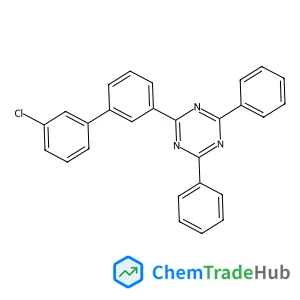
2-(3'-Chlorobiphenyl-3-yl)-4,6-diphenyl-1,3,5-triazine
CAS Number:
1443049-83-9
Molecular Formula:
C27H18ClN3
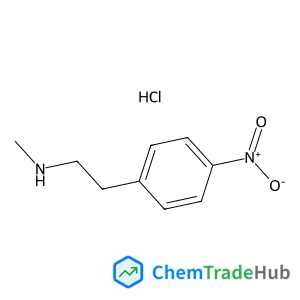
N-Methyl-2-(4-nitrophenyl)ethanamine hydrochloride (1:1)
CAS Number:
166943-39-1
Molecular Formula:
C9H13ClN2O2
Recommended Suppliers





Disclaimer
This page provides academic journal information for reference and research purposes only. We are not affiliated with any journal publishers and do not handle publication submissions. For publication-related inquiries, please contact the respective journal publishers directly.
If you notice any inaccuracies in the information displayed, please contact us at support@chemtradehub.com. We will promptly review and address your concerns.