












Self-templated and self-assembled synthesis of nano/microstructures of Gd-based rare-earth compounds: morphology control, magnetic and luminescence properties
Literature Information
Publication Date
2010-08-02
DOI
10.1039/C0CP00169D
Impact Factor
3.676
Authors
View Original
Abstract
Nearly monodisperse NaGdF4 and GdF3 nanowires/nanorods as well as GdBO3 microplates/microflowers have been successfully prepared by a designed chemical conversion approach using Gd(OH)3 nanowires/nanorods as precursors via a facile hydrothermal approach. The Gd(OH)3 nanowires/nanorods precursors were prepared through a simple hydrothermal process, which then served as sacrificial templates for the fabrication of NaGdF4 and GdF3 nanowires/nanorods as well as GdBO3 microplates/microflowers by a hydrothermal process. The possible formation mechanisms for the corresponding Gd3+-based various products are presented in detail. We have investigated the magnetic properties of the NaGdF4, GdF3, and GdBO3 samples. The as-obtained Eu3+ doped NaGdF4, GdF3, and GdBO3 samples show the strong characteristic red emission of Eu3+ under ultraviolet excitation. Moreover, the luminescence colors of the Eu3+ and Tb3+ co-doped GdBO3 samples can be tuned from red, through orange, yellow and green-yellow, to green by simply adjusting the relative doping concentrations of the activator ions under a single wavelength excitation, which might find potential applications in the fields such as light display systems and optoelectronic devices. More importantly, this simple method is expected to allow the large-scale production of other complex rare-earth compounds with controllable morphologies and sizes, and exploration of the morphology and phase-dependent photoluminescence properties.
Recommended Journals
Related Literature
Enantioselective binding of structural epoxide isomers by a chiral vanadyl salen complex: a pulsed EPR, cw-ENDOR and DFT investigation
Damien M. Murphy, Ian A. Fallis, Emma Carter, David J. Willock, James Landon, Sabine Van Doorslaer, Evi Vinck
2009-06-25
Paper
DOI: 10.1039/B907807J
Calculation of local spins for correlated wave functions
I. Mayer, E. Matito
2010-08-02
Paper
DOI: 10.1039/C004427J
The role of mass transport pathway in wormholelike mesoporous carbon for supercapacitors
Yeru Liang, Fengxue Liang, Zhenghui Li, Fangyu Yan, Siyu Li
2010-07-23
Paper
DOI: 10.1039/C003213A
Methaneactivation by V3PO10˙+ and V4O10˙+clusters: A comparative study
Xun-Lei Ding, Sheng-Gui He
2010-08-16
Paper
DOI: 10.1039/C0CP00360C
Structure of the hydrated Ca2+ and Cl−: Combined X-ray absorption measurements and QM/MM MD simulations study
Anan Tongraar
2010-07-29
Paper
DOI: 10.1039/C0CP00136H
Density functional triple jumping
Jia Deng, Andrew T. B. Gilbert, Peter M. W. Gill
2010-07-07
Paper
DOI: 10.1039/C0CP00242A
Rhodamines in the gas phase: cations, neutrals, anions, and adducts with metal cations
Konstantin Chingin, Roman M. Balabin, Konstantin Barylyuk, Huanwen Chen, Vladimir Frankevich, Renato Zenobi
2010-08-10
Paper
DOI: 10.1039/C000807A
Radiofrequency polarization effects in low-field electron paramagnetic resonance‡
C. J. Wedge, Christopher T. Rodgers, Stuart A. Norman, Neville Baker, Kiminori Maeda, Kevin B. Henbest, C. R. Timmel, P. J. Hore
2009-07-03
Paper
DOI: 10.1039/B907915G
Measurements of relative chemical shift tensor orientations in solid-state NMR: new slow magic angle spinning dipolar recoupling experiments
Andrew P. S. Jurd, Jeremy J. Titman
2009-07-15
Paper
DOI: 10.1039/B906814G
First-principles simulations of hydrogen peroxide formation catalyzed by small neutral gold clusters
Katarzyna A. Kacprzak
2009-05-27
Paper
DOI: 10.1039/B822765A
You might also like
Compound Q&A
What precautions should be taken when handling 2-Chloro-1,2-bis(4-methylphenyl)ethanone (CAS: 71193-32-3)?
When handling 2-Chloro-1,2-bis(4-methylphenyl)ethanone (CAS: 71193-32-3), it is ...
71193-32-32-Chloro-1,2-bis(4-m...
Compound Q&A
What industries use 4-Ethoxy-3-(5-methyl-4-oxo-7-propyl-1,4-dihydroimidazo[5,1-f][1,2,4]triazin-2-yl)benzenesulfonyl chloride (CAS: 224789-26-8)?
4-Ethoxy-3-(5-methyl-4-oxo-7-propyl-1,4-dihydroimidazo[5,1-f][1,2,4]triazin-2-yl...
224789-26-84-Ethoxy-3-(5-methyl...
Compound Q&A
How should Methyl 3-Oxo-4-Androsten-17-Carboxylate (CAS: 2681-55-2) be stored?
Methyl 3-Oxo-4-Androsten-17-Carboxylate (CAS: 2681-55-2) should be stored in a c...
2681-55-2Methyl 3-Oxo-4-Andro...
Compound Q&A
What are the main uses of (R)-3-Amino-4-(3-hexylphenylamino)-4-oxobutylphosphonic acid (CAS: 909725-61-7)?
(R)-3-Amino-4-(3-hexylphenylamino)-4-oxobutylphosphonic acid is primarily used i...
909725-61-7(R)-3-Amino-4-(3-hex...
Compound Q&A
What regulatory guidelines apply to 2-Methyl-2-propanyl 3-amino-3-carbamoyl-1-azetidinecarboxylate (CAS: 1254120-14-3)?
2-Methyl-2-propanyl 3-amino-3-carbamoyl-1-azetidinecarboxylate (CAS: 1254120-14-...
1254120-14-32-Methyl-2-propanyl ...
Compound Q&A
Are there alternatives to (E)-4-(tert-Butoxy)-4-oxobut-2-enoic acid (CAS: 135355-96-3) in synthesis?
There are alternative reagents that can be used in synthesis instead of (E)-4-(t...
135355-96-3(E)-4-(tert-Butoxy)-...
Compound Q&A
What are the physical and chemical properties of [2-(3-Chlorophenyl)-1,3-thiazol-4-yl]methanol (CAS: 121202-20-8)?
[2-(3-Chlorophenyl)-1,3-thiazol-4-yl]methanol (CAS: 121202-20-8) is a crystallin...
121202-20-8[2-(3-Chlorophenyl)-...
Compound Q&A
What is the market or research trend for Methyl (2S)-[(4S)-2,2-dimethyl-1,3-dioxolan-4-yl]{[(4-methylphenyl)sulfonyl]oxy}acetate (CAS: 166249-17-8)?
The market and research trends for Methyl (2S)-[(4S)-2,2-dimethyl-1,3-dioxolan-4...
166249-17-8Methyl (2S)-[(4S)-2,...
Compound Q&A
What is the market or research trend for 1-Bromo-2-isocyanatoethane (CAS: 42865-19-0)?
The market for 1-Bromo-2-isocyanatoethane (CAS: 42865-19-0) is driven by its use...
42865-19-01-Bromo-2-isocyanato...
Compound Q&A
What are the main uses of 4-Nitro-D-phenylalanine hydrochloride (CAS: 147065-06-3)?
4-Nitro-D-phenylalanine hydrochloride (CAS: 147065-06-3) is primarily used in re...
147065-06-34-Nitro-D-phenylalan...
Source Journal
Physical Chemistry Chemical Physics

CiteScore:
5.5
Self-citation Rate:
10.3%
Articles per Year:
3036
Physical Chemistry Chemical Physics (PCCP) is an international journal co-owned by 19 physical chemistry and physics societies from around the world. This journal publishes original, cutting-edge research in physical chemistry, chemical physics and biophysical chemistry. To be suitable for publication in PCCP, articles must include significant innovation and/or insight into physical chemistry; this is the most important criterion that reviewers and Editors will judge against when evaluating submissions. The journal has a broad scope and welcomes contributions spanning experiment, theory, computation and data science. Topical coverage includes spectroscopy, dynamics, kinetics, statistical mechanics, thermodynamics, electrochemistry, catalysis, surface science, quantum mechanics, quantum computing and machine learning. Interdisciplinary research areas such as polymers and soft matter, materials, nanoscience, energy, surfaces/interfaces, and biophysical chemistry are welcomed if they demonstrate significant innovation and/or insight into physical chemistry. Joined experimental/theoretical studies are particularly appreciated when complementary and based on up-to-date approaches.
Recommended Compounds
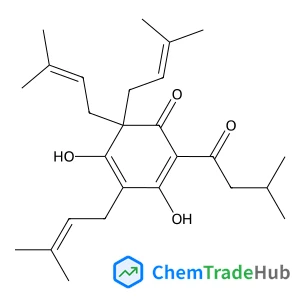
3,5-Dihydroxy-4-(3-methylbutanoyl)-2,6,6-tris(3-methyl-2-buten-1-yl)-2,4-cyclohexadien-1-one
CAS Number:
468-28-0
Molecular Formula:
C26H38O4
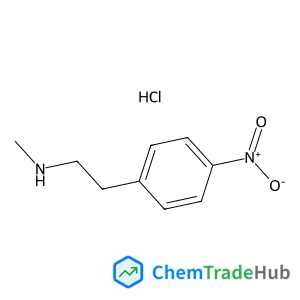
N-Methyl-2-(4-nitrophenyl)ethanamine hydrochloride (1:1)
CAS Number:
166943-39-1
Molecular Formula:
C9H13ClN2O2
Recommended Suppliers





Disclaimer
This page provides academic journal information for reference and research purposes only. We are not affiliated with any journal publishers and do not handle publication submissions. For publication-related inquiries, please contact the respective journal publishers directly.
If you notice any inaccuracies in the information displayed, please contact us at support@chemtradehub.com. We will promptly review and address your concerns.