


Contrasting reactivity of B–Cl and B–H bonds at [Ni(IMes)2] to form unsupported Ni-boryls
Literature Information
Publication Date
2023-12-18
DOI
10.1039/D3CC05369E
Impact Factor
6.222
Authors
Gabrielle Audsley, Ambre Carpentier, Anne-Frédérique Pécharman, James Wright, Thomas M. Roseveare, Ewan R. Clark, Stuart A. Macgregor, Ian M. Riddlestone
View Original
Abstract
[Ni(IMes)2] reacts with chloroboranes via oxidative addition to form rare unsupported Ni-boryls. In contrast, the oxidative addition of hydridoboranes is not observed and products from competing reaction pathways are identified. Computational studies relate these differences to the mechanism of oxidative addition: B–Cl activation proceeds via nucleophilic displacement of Cl−, while B–H activation would entail high energy concerted bond cleavage.
Recommended Journals

Journal of Organometallic Chemistry

Journal of Heterocyclic Chemistry

Journal of Physics and Chemistry of Solids

European Journal of Wood and Wood Products

Planta Medica

Pharmacological Reviews

Israel Journal of Chemistry

Proceedings of the National Academy of Sciences of the United States of America

Kinetics and Catalysis

Molecular Pharmacology
Related Literature
Vesicular assemblies of thermoresponsive amphiphilic polypeptide copolymers for guest encapsulation and release
Mahammad Anas, Somdeb Jana, Tarun K. Mandal
2020-03-19
Paper
DOI: 10.1039/D0PY00135J
Synthesis of star-shaped polyzwitterions with adjustable UCST and fast responsiveness by a facile RAFT polymerization
Zhi Li, Hao Li, Zhonghe Sun, Botao Hao, Tung-Chun Lee, San H. Thang
2020-04-09
Paper
DOI: 10.1039/D0PY00318B
Synthesis of conjugated polymers via cyclopentannulation reaction: promising materials for iodine adsorption
Saleh Al-Mousawi
2020-04-03
Paper
DOI: 10.1039/D0PY00286K
Tuning polymer properties of non-covalent crosslinked PDMS by varying supramolecular interaction strength
Brigitte A. G. Lamers, Marcin L. Ślęczkowski, Fabian Wouters, Tom A. P. Engels, E. W. Meijer, Anja R. A. Palmans
2020-03-25
Paper
DOI: 10.1039/D0PY00139B
Morphological evolution and mechanical properties of an “anchor chain” nanodomain structure of a reactive amphiphilic triblock copolymer in epoxy resin
Quan Zhou, Qi Liu, Yueru Yu, Yuxiao Zhuang, Yizhe Lv, Hanliang Xiao, Ning Song, Lizhong Ni
2020-05-05
Paper
DOI: 10.1039/D0PY00365D
Metal-free polycycloaddition of aldehyde-activated internal diynes and diazides toward post-functionalizable poly(formyl-1,2,3-triazole)s
Baixue Li, Anjun Qin
2020-03-31
Paper
DOI: 10.1039/D0PY00193G
Thermally triggerable, anchoring block copolymers for use in aqueous inkjet printing
George E. Parkes, Helena J. Hutchins-Crawford, Claire Bourdin, Stuart Reynolds, Laura J. Leslie, Matthew J. Derry, Josephine L. Harries, Paul D. Topham
2020-03-25
Paper
DOI: 10.1039/D0PY00244E
You might also like
Compound Q&A
How should waste containing 6-Chloro-5-(2'-hydroxy-3'-methoxy-4-biphenylyl)-3-(3-methoxyphenyl)-1H-pyrrolo[3,2-d]pyrimidine-2,4(3H,5H)-dione (CAS: 1346607-05-3) be handled?
Waste containing 6-Chloro-5-(2'-hydroxy-3'-methoxy-4-biphenylyl)-3-(3-methoxyphe...
1346607-05-36-Chloro-5-(2'-hydro...
Compound Q&A
What are the main uses of (3alpha,5alpha)-3-Hydroxypregnane-11,20-dione (CAS: 23930-19-0)?
(3alpha,5alpha)-3-Hydroxypregnane-11,20-dione is primarily used in the pharmaceu...
23930-19-0(3alpha,5alpha)-3-Hy...
Compound Q&A
What is the market or research trend for 4-Amino-6-chloro-2-pyridinecarboxylic acid (CAS: 546141-56-4)?
The market for 4-Amino-6-chloro-2-pyridinecarboxylic acid (CAS: 546141-56-4) is ...
546141-56-44-Amino-6-chloro-2-p...
Compound Q&A
Are there alternatives to (2-Benzoylethyl)trimethylammonium chloride (CAS: 24472-88-6) in synthesis?
Alternatives to (2-Benzoylethyl)trimethylammonium chloride (CAS: 24472-88-6) in ...
24472-88-6(2-Benzoylethyl)trim...
Compound Q&A
Is N-[4-Nitro-3-(trifluoromethyl)phenyl]acetamide (CAS: 393-12-4) safe?
N-[4-Nitro-3-(trifluoromethyl)phenyl]acetamide (CAS: 393-12-4) is generally safe...
393-12-4N-[4-Nitro-3-(triflu...
Compound Q&A
Are there alternatives to [(4R,5R,6S)-5-hydroxy-10-imino-3,7-dioxa-1,9-diazatricyclo[6.4.0.02,6]dodeca-8,11-dien-4-yl]methyl dihydrogen phosphate (CAS: 39679-56-6) in synthesis?
Alternative reagents such as other phosphates or similar functional groups can b...
39679-56-6[(4R,5R,6S)-5-hydrox...
Compound Q&A
Are there alternatives to N,N'-Bis(3-aminopropyl)-1,3-propanediamine (CAS: 4605-14-5) in synthesis?
There are alternatives to N,N'-Bis(3-aminopropyl)-1,3-propanediamine (CAS: 4605-...
4605-14-5N,N'-Bis(3-aminoprop...
Compound Q&A
What precautions should be taken when handling Aluminium trihexadecanoate (CAS: 555-35-1)?
When handling Aluminium trihexadecanoate, it is important to use appropriate per...
555-35-1Aluminium trihexadec...
Compound Q&A
What is (1,1-Dioxido-3-oxo-1,2-benzothiazol-2(3H)-yl)acetic acid (CAS: 52188-11-1)?
(1,1-Dioxido-3-oxo-1,2-benzothiazol-2(3H)-yl)acetic acid is a chemical compound ...
52188-11-1(1,1-Dioxido-3-oxo-1...
Compound Q&A
Are there alternatives to 5,5-dimethyloxolan-2-one (CAS: 3123-97-5) in synthesis?
Several alternatives to 5,5-dimethyloxolan-2-one (CAS: 3123-97-5) can be used in...
3123-97-55,5-dimethyloxolan-2...
Source Journal
Chemical Communications

CiteScore:
8.6
Self-citation Rate:
4.7%
Articles per Year:
2458
ChemComm publishes urgent research which is of outstanding significance and interest to experts in the field, while also appealing to the journal’s broad chemistry readership. Our communication format is ideally suited to short, urgent studies that are of such importance that they require accelerated publication. Our scope covers all topics in chemistry, and research at the interface of chemistry and other disciplines (such as materials science, nanoscience, physics, engineering and biology) where there is a significant novelty in the chemistry aspects. Major topic areas covered include: Analytical Chemistry Catalysis Chemical Biology and medicinal chemistry Computational Chemistry and Machine Learning Energy and sustainable chemistry Environmental Chemistry Green Chemistry Inorganic Chemistry Materials Chemistry Nanoscience Organic Chemistry Physical Chemistry Polymer Chemistry Supramolecular Chemistry
Recommended Compounds
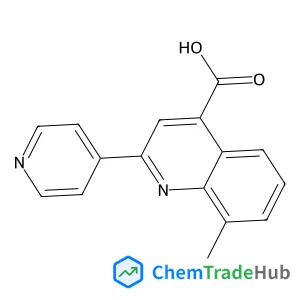
8-Methyl-2-pyridin-4-ylquinoline-4-carboxylic acid
CAS Number:
107027-42-9
Molecular Formula:
C16H12N2O2
-1,2-cyclohexanediamine structure](https://static.chemtradehub.com/structs/928/928769-12-4-a4f0.webp "N,N'-Bis[3-(2-methoxyphenyl)-2-hydroxybenzyl](1R,2R)-1,2-cyclohexanediamine structure")
N,N'-Bis[3-(2-methoxyphenyl)-2-hydroxybenzyl](1R,2R)-1,2-cyclohexanediamine
CAS Number:
928769-12-4
Molecular Formula:
C34H38N2O4
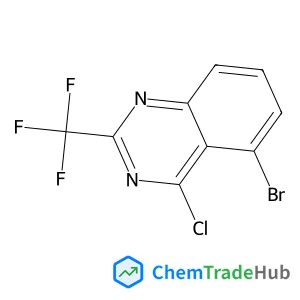
5-Bromo-4-chloro-2-(trifluoromethyl)quinazoline
CAS Number:
2089311-03-3
Molecular Formula:
C9H3BrClF3N2
![1-(2-Chlorophenyl)-6-[(2S)-3,3,3-trifluoro-2-methylpropyl]-1,7-dihydro-4H-pyrazolo[3,4-d]pyrimidin-4-one structure](https://static.chemtradehub.com/structs/794/794568-91-5-0c34.webp "1-(2-Chlorophenyl)-6-[(2S)-3,3,3-trifluoro-2-methylpropyl]-1,7-dihydro-4H-pyrazolo[3,4-d]pyrimidin-4-one structure")
1-(2-Chlorophenyl)-6-[(2S)-3,3,3-trifluoro-2-methylpropyl]-1,7-dihydro-4H-pyrazolo[3,4-d]pyrimidin-4-one
CAS Number:
794568-91-5
Molecular Formula:
C15H12ClF3N4O
Recommended Suppliers






Disclaimer
This page provides academic journal information for reference and research purposes only. We are not affiliated with any journal publishers and do not handle publication submissions. For publication-related inquiries, please contact the respective journal publishers directly.
If you notice any inaccuracies in the information displayed, please contact us at support@chemtradehub.com. We will promptly review and address your concerns.