












Recent bio-applications of covalent organic framework-based nanomaterials
Literature Information
Publication Date
2023-12-19
DOI
10.1039/D3CC04368A
Impact Factor
6.222
Authors
Jun Guo, Ye Lian, Meiting Zhao
View Original
Abstract
Appearing as a new class of functional organic materials, covalent organic frameworks (COFs) have aroused a huge wave of interest in versatile fields ever since they were first proposed in 2005. Thanks to but not limited to their ultralight weights, high surface areas, ordered channels, variable functional groups and well-defined crystal structures, the applications of COF-based biomaterials in the fields of drug loading and delivery, photodynamic therapy, photothermal therapy, bioimaging, etc. are comprehensively summarized and introduced. The existing challenges and future prospects for this emerging but hot research direction are also discussed. It is hoped that this review will serve as a guidance for future research on COFs as multifunctional bioplatforms.
Related Literature
Crystal engineering in the aminophenols. Novel carborundum network in a supramolecular homologous series
Archan Dey, Gautam R. Desiraju, Raju Mondal, Judith A. K. Howard
2004-09-27
Communication
DOI: 10.1039/B407510B
New supramolecular polymers containing both terpyridine metal complexes and quadruple hydrogen bonding units
Harald Hofmeier, Albertus P. H. J. Schenning, Ulrich S. Schubert
2004-01-07
Communication
DOI: 10.1039/B314459N
Octahedral metal clusters as building units in a neutral layered honeycomb network, [Zn(en)]2[Nb6Cl12(CN)6]
Bangbo Yan, Cynthia S. Day, Abdessadek Lachgar
2004-09-14
Communication
DOI: 10.1039/B408000A
Parallel nucleic acid recognition by the LNA (locked nucleic acid) stereoisomers β-L-LNA and α-D-LNA; studies in the mirror image world
Nanna K. Christensen, Torsten Bryld, Mads D. Sørensen, Khalil Arar, Jesper Wengel, Poul Nielsen
2003-12-19
Communication
DOI: 10.1039/B312321A
A simple copper salt catalysed the coupling of imidazole with arylboronic acids in protic solvent
Jing-Bo Lan, Li Chen, Xiao-Qi Yu, Jing-Song You, Ru-Gang Xie
2003-11-25
Communication
DOI: 10.1039/B307734A
NRIS study on the [FeN6] core in photo-induced high-spin state of [Fe(2-pic)3]Cl2·EtOH
Gergely Juhász, Makoto Seto, Yoshitaka Yoda, Shinya Hayami, Yonezo Maeda
2004-09-29
Communication
DOI: 10.1039/B409025J
SSZ-60: a new large-pore zeolite related to ZSM-23
Allen Burton, Saleh Elomari
2004-10-04
Communication
DOI: 10.1039/B410010G
Polymorphism in butylated hydroxy anisole (BHA)
Jennifer A. McMahon, Michael J. Zaworotko, Julius F. Remenar
2004-01-06
Communication
DOI: 10.1039/B311606A
Ethanol vapor-mediated maturing for the enhancement of structural regularity of hexagonal mesoporous silica films
Akihiro Okabe, Makiko Niki, Takanori Fukushima, Takuzo Aida
2004-09-29
Communication
DOI: 10.1039/B410095F
A (bpy)2Ru-coordinated dehydro[12]annulene with exotopically fused diimine binding sites
Sascha Ott
2004-01-23
Communication
DOI: 10.1039/B313788K
You might also like
Compound Q&A
What precautions should be taken when handling 2-Chloro-1,2-bis(4-methylphenyl)ethanone (CAS: 71193-32-3)?
When handling 2-Chloro-1,2-bis(4-methylphenyl)ethanone (CAS: 71193-32-3), it is ...
71193-32-32-Chloro-1,2-bis(4-m...
Compound Q&A
What industries use 4-Ethoxy-3-(5-methyl-4-oxo-7-propyl-1,4-dihydroimidazo[5,1-f][1,2,4]triazin-2-yl)benzenesulfonyl chloride (CAS: 224789-26-8)?
4-Ethoxy-3-(5-methyl-4-oxo-7-propyl-1,4-dihydroimidazo[5,1-f][1,2,4]triazin-2-yl...
224789-26-84-Ethoxy-3-(5-methyl...
Compound Q&A
How should Methyl 3-Oxo-4-Androsten-17-Carboxylate (CAS: 2681-55-2) be stored?
Methyl 3-Oxo-4-Androsten-17-Carboxylate (CAS: 2681-55-2) should be stored in a c...
2681-55-2Methyl 3-Oxo-4-Andro...
Compound Q&A
What are the main uses of (R)-3-Amino-4-(3-hexylphenylamino)-4-oxobutylphosphonic acid (CAS: 909725-61-7)?
(R)-3-Amino-4-(3-hexylphenylamino)-4-oxobutylphosphonic acid is primarily used i...
909725-61-7(R)-3-Amino-4-(3-hex...
Compound Q&A
What regulatory guidelines apply to 2-Methyl-2-propanyl 3-amino-3-carbamoyl-1-azetidinecarboxylate (CAS: 1254120-14-3)?
2-Methyl-2-propanyl 3-amino-3-carbamoyl-1-azetidinecarboxylate (CAS: 1254120-14-...
1254120-14-32-Methyl-2-propanyl ...
Compound Q&A
Are there alternatives to (E)-4-(tert-Butoxy)-4-oxobut-2-enoic acid (CAS: 135355-96-3) in synthesis?
There are alternative reagents that can be used in synthesis instead of (E)-4-(t...
135355-96-3(E)-4-(tert-Butoxy)-...
Compound Q&A
What are the physical and chemical properties of [2-(3-Chlorophenyl)-1,3-thiazol-4-yl]methanol (CAS: 121202-20-8)?
[2-(3-Chlorophenyl)-1,3-thiazol-4-yl]methanol (CAS: 121202-20-8) is a crystallin...
121202-20-8[2-(3-Chlorophenyl)-...
Compound Q&A
What is the market or research trend for Methyl (2S)-[(4S)-2,2-dimethyl-1,3-dioxolan-4-yl]{[(4-methylphenyl)sulfonyl]oxy}acetate (CAS: 166249-17-8)?
The market and research trends for Methyl (2S)-[(4S)-2,2-dimethyl-1,3-dioxolan-4...
166249-17-8Methyl (2S)-[(4S)-2,...
Compound Q&A
What is the market or research trend for 1-Bromo-2-isocyanatoethane (CAS: 42865-19-0)?
The market for 1-Bromo-2-isocyanatoethane (CAS: 42865-19-0) is driven by its use...
42865-19-01-Bromo-2-isocyanato...
Compound Q&A
What are the main uses of 4-Nitro-D-phenylalanine hydrochloride (CAS: 147065-06-3)?
4-Nitro-D-phenylalanine hydrochloride (CAS: 147065-06-3) is primarily used in re...
147065-06-34-Nitro-D-phenylalan...
Source Journal
Chemical Communications

CiteScore:
8.6
Self-citation Rate:
4.7%
Articles per Year:
2458
ChemComm publishes urgent research which is of outstanding significance and interest to experts in the field, while also appealing to the journal’s broad chemistry readership. Our communication format is ideally suited to short, urgent studies that are of such importance that they require accelerated publication. Our scope covers all topics in chemistry, and research at the interface of chemistry and other disciplines (such as materials science, nanoscience, physics, engineering and biology) where there is a significant novelty in the chemistry aspects. Major topic areas covered include: Analytical Chemistry Catalysis Chemical Biology and medicinal chemistry Computational Chemistry and Machine Learning Energy and sustainable chemistry Environmental Chemistry Green Chemistry Inorganic Chemistry Materials Chemistry Nanoscience Organic Chemistry Physical Chemistry Polymer Chemistry Supramolecular Chemistry
Recommended Compounds
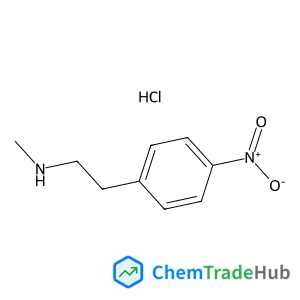
N-Methyl-2-(4-nitrophenyl)ethanamine hydrochloride (1:1)
CAS Number:
166943-39-1
Molecular Formula:
C9H13ClN2O2
Recommended Suppliers





Disclaimer
This page provides academic journal information for reference and research purposes only. We are not affiliated with any journal publishers and do not handle publication submissions. For publication-related inquiries, please contact the respective journal publishers directly.
If you notice any inaccuracies in the information displayed, please contact us at support@chemtradehub.com. We will promptly review and address your concerns.