












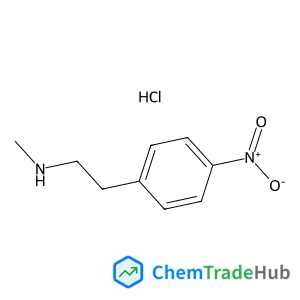
N-Methyl-2-(4-nitrophenyl)ethanamine hydrochloride (1:1)
CAS Number:
166943-39-1
Molecular Formula:
C9H13ClN2O2
Ruowen Tang, Lei Zhou, Yu Dai, Yang Wang, Yan Cai, Tingting Chen, Yong Yao
A pillar[5]arene-modified polydopamine (PDA-P[5]OH) displaying pH/NIR dual-responsive properties was constructed successfully in situ for targeted chemo-photothermal cancer therapy.
Christian Merten, Marc Amkreutz, Andreas Hartwig
DOI: 10.1039/C004009F
Ekaterina Y. Lukianova-Hleb, Lindsey J. E. Anderson, Seunghyun Lee
DOI: 10.1039/C0CP00499E
Sergei A. Dikanov, Rimma I. Samoilova, Reinhard Kappl, Antony R. Crofts, Jürgen Hüttermann
DOI: 10.1039/B904597J
M. Fittipaldi, L. Sorace, A.-L. Barra, C. Sangregorio, R. Sessoli, D. Gatteschi
DOI: 10.1039/B905880J
Alexandra Dos, Volkmar Schimming, Monique Chan-Huot, Hans-Heinrich Limbach
DOI: 10.1039/C002730H
Meng-Sheng Liao, John D. Watts, Ming-Ju Huang
DOI: 10.1039/B904782D
DOI: 10.1039/C0CP00169D
C. Laffon, J. Lasne, F. Bournel, K. Schulte, S. Lacombe, Ph. Parent
DOI: 10.1039/C0CP00229A
Jasper Van Noyen, Bert F. Sels, Pierre A. Jacobs, Thierry Verbiest, Dirk E. De Vos
DOI: 10.1039/C0CP00257G
When handling 2-Chloro-1,2-bis(4-methylphenyl)ethanone (CAS: 71193-32-3), it is ...
4-Ethoxy-3-(5-methyl-4-oxo-7-propyl-1,4-dihydroimidazo[5,1-f][1,2,4]triazin-2-yl...
Methyl 3-Oxo-4-Androsten-17-Carboxylate (CAS: 2681-55-2) should be stored in a c...
(R)-3-Amino-4-(3-hexylphenylamino)-4-oxobutylphosphonic acid is primarily used i...
2-Methyl-2-propanyl 3-amino-3-carbamoyl-1-azetidinecarboxylate (CAS: 1254120-14-...
There are alternative reagents that can be used in synthesis instead of (E)-4-(t...
[2-(3-Chlorophenyl)-1,3-thiazol-4-yl]methanol (CAS: 121202-20-8) is a crystallin...
The market and research trends for Methyl (2S)-[(4S)-2,2-dimethyl-1,3-dioxolan-4...
The market for 1-Bromo-2-isocyanatoethane (CAS: 42865-19-0) is driven by its use...
4-Nitro-D-phenylalanine hydrochloride (CAS: 147065-06-3) is primarily used in re...

ChemComm publishes urgent research which is of outstanding significance and interest to experts in the field, while also appealing to the journal’s broad chemistry readership. Our communication format is ideally suited to short, urgent studies that are of such importance that they require accelerated publication. Our scope covers all topics in chemistry, and research at the interface of chemistry and other disciplines (such as materials science, nanoscience, physics, engineering and biology) where there is a significant novelty in the chemistry aspects. Major topic areas covered include: Analytical Chemistry Catalysis Chemical Biology and medicinal chemistry Computational Chemistry and Machine Learning Energy and sustainable chemistry Environmental Chemistry Green Chemistry Inorganic Chemistry Materials Chemistry Nanoscience Organic Chemistry Physical Chemistry Polymer Chemistry Supramolecular Chemistry
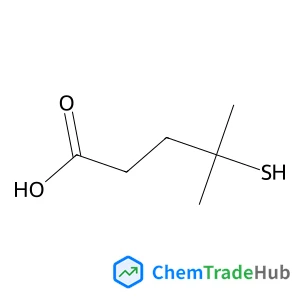
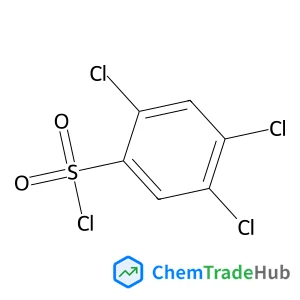
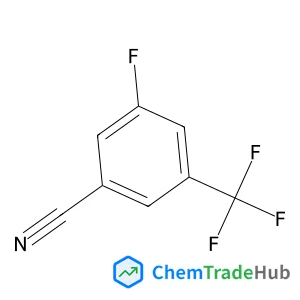
![(1R)-3-Bromo-1,7,7-trimethylbicyclo[2.2.1]heptan-2-one structure](https://static.chemtradehub.com/structs/102/10293-06-8-dd8a.webp "(1R)-3-Bromo-1,7,7-trimethylbicyclo[2.2.1]heptan-2-one structure")





