



The effect of MgO and preparation techniques of the FeMnOδ/MgO–Al2O3 catalyst used for the vapor phase oxidation of cyclohexane
Literature Information
Publication Date
2022-07-16
DOI
10.1039/D2RE00210H
Impact Factor
4.239
Authors
Vijendra Kumar Yadav, Taraknath Das
View Original
Abstract
Magnesia modified alumina with varying contents of MgO was synthesized by the impregnation technique and used as support for the synthesis of supported iron–manganese oxide catalysts. The effect of synthesis techniques such as incipient wetness impregnation, wet impregnation, and sequential impregnation of iron and manganese over the modified supports was investigated in the vapor phase selective oxidation of cyclohexane. The addition of MgO resulted in MgAl2O4 spinel formation, which altered the acidic–basic properties and modified the interaction of Fe–Mn metal oxides with alumina. The iron oxides and manganese oxides were highly dispersed in the catalysts synthesized by the sequential impregnation (SI-I) method, whereas the iron oxide forms a highly crystalline α-Fe2O3 phase when prepared by the SI-II method. The catalyst prepared by the SI-I method (Mn addition followed by Fe) exhibited the highest activity and yield of KA oil and remained stable for more than 10 h. The formation of adsorbed cyclohexanolate (and phenolate) species was observed as intermediate species during the in situ DRIFTS studies for the reaction. Also, the catalytic performance was analysed by varying the catalyst weight. The increasing weight of the catalyst in the reactor affected the percent conversion of cyclohexane and the product distribution significantly.
Recommended Journals

Critical Reviews in Solid State and Materials Sciences

Polycyclic Aromatic Compounds

Electroanalysis

Medicinal Chemistry Research

Herald of the Russian Academy of Sciences

Journal of Asian Natural Products Research

Biocatalysis and Biotransformation

Main Group Chemistry

Chinese Journal of Chemistry

Cellulose
Related Literature
Hydrogen in methanol catalysts by neutron imaging
Hans Geerlings, Pavel Trtik, Anders Kaestner
2020-09-21
Paper
DOI: 10.1039/D0CP03414B
Quantifying how step-wise fluorination tunes local solute hydrophobicity, hydration shell thermodynamics and the quantum mechanical contributions of solute–water interactions
João R. Robalo, Denilson Mendes de Oliveira, Petra Imhof, Dor Ben-Amotz, Ana Vila Verde
2020-09-29
Paper
DOI: 10.1039/D0CP04205F
Na2CO3-modified CaO-based CO2 sorbents: the effects of structure and morphology on CO2 uptake
Alexey Kurlov, Agnieszka M. Kierzkowska, Thomas Huthwelker, Paula M. Abdala, Christoph R. Müller
2020-10-15
Paper
DOI: 10.1039/D0CP04410E
Excellent thermoelectric properties of monolayer RbAgM (M = Se and Te): first-principles calculations
Jinjie Gu, Xilong Qu
2020-10-23
Paper
DOI: 10.1039/D0CP04565A
Distance dependent energy transfer dynamics from a molecular donor to a zeolitic imidazolate framework acceptor
Wenhui Hu, Fan Yang, Nick Pietraszak, Jing Gu, Jier Huang
2020-10-20
Communication
DOI: 10.1039/D0CP03995K
Unraveling the regioselectivity of odd electron halogen bond formation using electrophilicity index and chemical hardness parameters
Prasanta Bandyopadhyay, Soumyadip Ray, Md. Motin Seikh
2019-11-15
Paper
DOI: 10.1039/C9CP05374C
Pressure-induced ionic to mixed ionic and electronic conduction transition in solid electrolyte LaF3
Yalan Yan, Hao Liu, Guozhao Zhang, Shuang Tong, Chunxiao Gao, Yonghao Han
2020-10-27
Paper
DOI: 10.1039/D0CP03579C
The accuracy challenge of the DFT-based molecular assignment of 13C MAS NMR characterization of surface intermediates in zeolite catalysis‡
Alexander A. Kolganov, Ivan Yu. Chernyshov
2020-09-30
Paper
DOI: 10.1039/D0CP04439C
You might also like
Compound Q&A
How should waste containing 2-Ethyl-4-Methyl-1H-Imidazole-5-Carbaldehyde (CAS: 88634-80-4) be handled?
Waste containing 2-Ethyl-4-Methyl-1H-Imidazole-5-Carbaldehyde (CAS: 88634-80-4) ...
88634-80-42-Ethyl-4-Methyl-1H-...
Compound Q&A
What industries use Triethoxy(octyl)silane (CAS: 1385031-14-0)?
Triethoxy(octyl)silane (CAS: 1385031-14-0) is widely used in the pharmaceuticals...
1385031-14-0Triethoxy(octyl)sila...
Compound Q&A
Are there alternatives to 3-iodo-7-nitro-1H-indazole (CAS: 864724-64-1) in synthesis?
Several alternatives to 3-iodo-7-nitro-1H-indazole (CAS: 864724-64-1) exist in t...
864724-64-13-iodo-7-nitro-1H-in...
Compound Q&A
Are there alternatives to Benzene, bis[(trimethoxysilyl)ethyl] (CAS: 266317-71-9) in synthesis?
Yes, there are alternatives to Benzene, bis[(trimethoxysilyl)ethyl] (CAS: 266317...
266317-71-9Benzene, bis[(trimet...
Compound Q&A
Is Isothiazole-3-carbonitrile (CAS: 1452-17-1) safe?
Isothiazole-3-carbonitrile (CAS: 1452-17-1) is generally considered safe when us...
1452-17-1Isothiazole-3-carbon...
Compound Q&A
Is (3-Chlorophenyl)methanol (CAS: 873-63-2) safe?
(3-Chlorophenyl)methanol (CAS: 873-63-2) is considered low to moderately toxic. ...
873-63-2(3-Chlorophenyl)meth...
Compound Q&A
How is (2S,3S)-2-Hydroxy-3-({[(2-methyl-2-propanyl)oxy]carbonyl}amino)-3-(2-naphthyl)propanoic acid (CAS: 959583-98-3) typically synthesized?
(2S,3S)-2-Hydroxy-3-({[(2-methyl-2-propanyl)oxy]carbonyl}amino)-3-(2-naphthyl)pr...
959583-98-3(2S,3S)-2-Hydroxy-3-...
Compound Q&A
What precautions should be taken when handling Methyl 2-(bromomethyl)-5-methoxybenzoate (CAS: 788081-99-2)?
Proper handling of methyl 2-(bromomethyl)-5-methoxybenzoate requires the use of ...
788081-99-2Methyl 2-(bromomethy...
Compound Q&A
What is 6,8-Dibromoimidazo[1,2-a]pyridine-2-carboxylic acid (CAS: 904805-36-3)?
6,8-Dibromoimidazo[1,2-a]pyridine-2-carboxylic acid (CAS: 904805-36-3) is an aro...
904805-36-36,8-Dibromoimidazo[1...
Compound Q&A
Is 3-Amino-5-bromo-2-pyridinecarbonitrile (CAS: 573675-27-1) safe?
3-Amino-5-bromo-2-pyridinecarbonitrile is considered safe when handled under pro...
573675-27-13-Amino-5-bromo-2-py...
Source Journal
Reaction Chemistry & Engineering

CiteScore:
0
Self-citation Rate:
8.8%
Articles per Year:
284
Reaction Chemistry & Engineering is an interdisciplinary journal reporting cutting-edge research focused on enhancing the understanding and efficiency of reactions. Reaction engineering leverages the interface where fundamental molecular chemistry meets chemical engineering and technology. Challenges in chemistry can be overcome by the application of new technologies, while engineers may find improved solutions for process development from the latest developments in reaction chemistry. Reaction Chemistry & Engineering is a unique forum for researchers whose interests span the broad areas of chemical engineering and chemical sciences to come together in solving problems of importance to wider society. All papers should be written to be approachable by readers across the engineering and chemical sciences. Papers that consider multiple scales, from the laboratory up to and including plant scale, are particularly encouraged.
Recommended Compounds

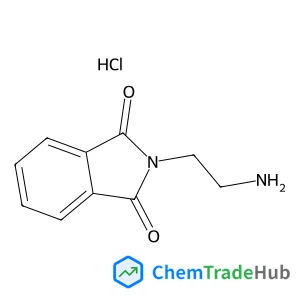
2-(2-Aminoethyl)-1H-isoindole-1,3(2H)-dione hydrochloride (1:1)
CAS Number:
30250-67-0
Molecular Formula:
C10H11ClN2O2

Recommended Suppliers





Disclaimer
This page provides academic journal information for reference and research purposes only. We are not affiliated with any journal publishers and do not handle publication submissions. For publication-related inquiries, please contact the respective journal publishers directly.
If you notice any inaccuracies in the information displayed, please contact us at support@chemtradehub.com. We will promptly review and address your concerns.