


![Pyrazolo[1,5-a]pyridine-3-carbothioamide structure](https://static.chemtradehub.com/structs/885/885275-44-5-aae0.webp "Pyrazolo[1,5-a]pyridine-3-carbothioamide structure")
Tributylphosphine-catalyzed aziridine-based cycloaddition polymerization toward thiacyclic polymers
Literature Information
Publication Date
2022-08-02
DOI
10.1039/D2PY00569G
Impact Factor
5.582
Authors
Zhi Zhou, Ying Wang, Linlin Zhu, Dai Dang
View Original
Abstract
An organocatalytic cycloaddition polymerization approach for the facile synthesis of thiacyclic polymers is established in this work. Bis(N-sulfonyl aziridine)s and diisocyanates are employed as the monomers, and they undergo cycloaddition polymerizations smoothly in the presence of tributylphosphine. Different kinds of bis(N-sulfonyl aziridine)s, including 2,3-disubstituted and 2-substituted ones, are applicable for this polymerization. Two kinds of diisocyanates, 1,4-phenylene diisothiocyanate and 1,4-butane diisothiocyanate, are used, and the produced poly(thiazolidin-2-imine)s exhibited different photophysical properties. The synthesized poly(thiazolidin-2-imine)s with alkyl linkages are luminous in the solid state and in solution, but the aryl-linked ones are nonluminous. In addition, the luminescent polymer can serve as a selective and sensitive fluorescence sensor for Fe3+.
Recommended Journals

Russian Journal of Organic Chemistry

Saudi Pharmaceutical Journal

New Journal of Chemistry

Journal of Natural Medicines

Current Opinion in Colloid & Interface Science

Russian Journal of General Chemistry

Journal of Saudi Chemical Society

Russian Chemical Bulletin

Chemical Communications

Russian Journal of Bioorganic Chemistry
Related Literature
Anion-encapsulating fullerenes behave as large anions: a DFT study
2018-09-04
Paper
DOI: 10.1039/C8CP03615B
Influences of the molecular fuel structure on combustion reactions towards soot precursors in selected alkane and alkene flames
Lena Ruwe, Nils Hansen, Katharina Kohse-Höinghaus
2018-02-02
Paper
DOI: 10.1039/C7CP07743B
Bridging solution properties to gas hydrate nucleation through guest dynamics
Peter G. Kusalik
2018-09-24
Communication
DOI: 10.1039/C8CP04466J
Global quasi-linearization (GQL) versus QSSA for a hydrogen–air auto-ignition problem
Chunkan Yu, Viatcheslav Bykov, Ulrich Maas
2018-01-15
Paper
DOI: 10.1039/C7CP07213A
Importance of protein flexibility in molecular recognition: a case study on Type-I1/2 inhibitors of ALK
Huiyong Sun, Peichen Pan, Feng Zhu, Shan Chang, Lei Xu, Youyong Li
2018-01-16
Paper
DOI: 10.1039/C7CP08241J
Understanding interface (odd–even) effects in charge tunneling using a polished EGaIn electrode
Jiahao Chen, Thomas J. Giroux, Yen Nguyen, Atte A. Kadoma, Boyce S. Chang, Brett VanVeller, Martin M. Thuo
2018-01-12
Paper
DOI: 10.1039/C7CP07531F
Characterization of the binding interactions between EvaGreen dye and dsDNA
L. C. T. Shoute, G. R. Loppnow
2018-01-25
Paper
DOI: 10.1039/C7CP06058K
Reduction of the thermal conductivity of a graphene/hBN heterobilayer via interlayer sp3 bonds
T. Iwata, K. Shintani
2018-01-23
Paper
DOI: 10.1039/C7CP07345C
Promising half-metallicity in ductile NbF3: a first-principles prediction
Bo Yang, Junru Wang, Xiaobiao Liu
2018-01-17
Paper
DOI: 10.1039/C7CP04985D
Mineralization of phosphorylated cellulose: crucial role of surface structure and monovalent ions for optimizing calcium content
Natalia V. Lukasheva, Dmitry A. Tolmachev
2018-11-27
Paper
DOI: 10.1039/C8CP05767B
You might also like
Compound Q&A
What are the main uses of 1-(3-Aminophenyl)-3-[(3R)-1-(3,3-dimethyl-2-oxobutyl)-2-oxo-5-(2-pyridinyl)-2,3-dihydro-1H-1,4-benzodiazepin-3-yl]urea (CAS: 155412-88-7)?
This compound is mainly used as an intermediate in the synthesis of antipsychoti...
155412-88-71-(3-Aminophenyl)-3-...
Compound Q&A
How should waste containing 1-(D-Ribofuranosyl)-1,4-dihydro-3-pyridinecarboxamide (CAS: 19132-12-8) be handled?
Waste containing 1-(D-Ribofuranosyl)-1,4-dihydro-3-pyridinecarboxamide (CAS: 191...
19132-12-81-(D-Ribofuranosyl)-...
Compound Q&A
What regulatory guidelines apply to 2-Methyl-2-propanyl 3-bromo-3-(hydroxymethyl)-1-azetidinecarboxylate (CAS: 2007919-81-3)?
2-Methyl-2-propanyl 3-bromo-3-(hydroxymethyl)-1-azetidinecarboxylate (CAS: 20079...
2007919-81-32-Methyl-2-propanyl ...
Compound Q&A
What is N-(4-Chloro-2-pyridinyl)acetamide (CAS: 245056-66-0)?
N-(4-Chloro-2-pyridinyl)acetamide (CAS: 245056-66-0) is a chemical compound with...
245056-66-0N-(4-Chloro-2-pyridi...
Compound Q&A
What is 5-Chloro-2-hydroxybenzoic acid (CAS: 321-14-2)?
5-Chloro-2-hydroxybenzoic acid, also known as 5-chlorosalicylic acid, is an arom...
321-14-25-Chloro-2-hydroxybe...
Compound Q&A
What precautions should be taken when handling 1,1-Dichloro-1-fluoroethane (CAS: 1717-00-6)?
When handling 1,1-Dichloro-1-fluoroethane (CAS: 1717-00-6), it is important to u...
1717-00-61,1-Dichloro-1-fluor...
Compound Q&A
What are the physical and chemical properties of Fmoc-(2S,3R)-3-phenylpyrrolidine-2-carboxylic acid (CAS: 281655-32-1)?
Fmoc-(2S,3R)-3-phenylpyrrolidine-2-carboxylic acid is a white crystalline solid ...
281655-32-1Fmoc-(2S,3R)-3-pheny...
Compound Q&A
What are the main uses of 4-Amino-5-bromo-2-pyridinecarboxylic acid (CAS: 1363381-01-4)?
4-Amino-5-bromo-2-pyridinecarboxylic acid is primarily used as a precursor in th...
1363381-01-44-Amino-5-bromo-2-py...
Compound Q&A
What precautions should be taken when handling (S)-tert-butyl 2-((2-(4-bromophenyl)-2-oxoethyl)carbamoyl)pyrrolidine-1-carboxylate (CAS: 1007881-98-2)?
Handling this compound should be done with personal protective equipment (PPE) i...
1007881-98-2(S)-tert-butyl 2-((2...
Compound Q&A
What precautions should be taken when handling 8-bromo-2,2-dimethyl-3,4-dihydro-2H-1,4-benzoxazin-3-one (CAS: 688363-73-7)?
When handling 8-bromo-2,2-dimethyl-3,4-dihydro-2H-1,4-benzoxazin-3-one, use prop...
688363-73-78-bromo-2,2-dimethyl...
Source Journal
Polymer Chemistry

CiteScore:
8.6
Self-citation Rate:
7.3%
Articles per Year:
457
Polymer Chemistry welcomes submissions in all areas of polymer science that have a strong focus on macromolecular chemistry. Manuscripts may cover a broad range of fields, yet no direct application focus is required.
Recommended Compounds
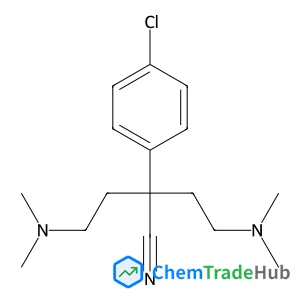
2-(4-Chlorophenyl)-4-(dimethylamino)-2-(2-(dimethylamino)ethyl)butanenitrile
CAS Number:
1246816-57-8
Molecular Formula:
C16H24ClN3


(3-Oxo-1,2,3,4-tetrahydro-2-quinoxalinyl)acetic acid
CAS Number:
136584-14-0
Molecular Formula:
C10H10N2O3
Recommended Suppliers






Disclaimer
This page provides academic journal information for reference and research purposes only. We are not affiliated with any journal publishers and do not handle publication submissions. For publication-related inquiries, please contact the respective journal publishers directly.
If you notice any inaccuracies in the information displayed, please contact us at support@chemtradehub.com. We will promptly review and address your concerns.