


Synthesis and optoelectronic properties of air-stable π-conjugated polymers containing both thiophene-2,5-diyl and fused titanacycle units
Literature Information
Publication Date
2022-06-27
DOI
10.1039/D2PY00452F
Impact Factor
5.582
Authors
Alvin Tanudjaja, Makoto Higuchi, Tomohiro Imai, Yoshimasa Matsumura, Ryoyu Hifumi, Shinsuke Inagi, Ikuyoshi Tomita
View Original
Abstract
π-Conjugated poly(arylene ethynylene)s containing both thiophene-2,5-diyl and fused metallacycles such as titanafluorene-diyl and dithienotitanacyclopentadiene-diyl units in their alternating sequence were synthesized and their optoelectronic features were studied by the UV-vis spectra and theoretical calculations. The polymerization of 2,5-diethynyl-3-dodecylthiophene and arylene dihalides possessing fused organometallic units such as a 2,7-dibromo-9-titanafluorene and a 5,5′-diiodo-dithienotitanacyclopentadiene was carried out at 70 °C for 48 h in tetrahydrofuran (THF) in the presence of palladium dichloride/4,5-bis(diphenylphosphino)-9,9-dimethylxanthene as a catalyst and diisopropylamine as a base to produce black purple-colored polymers in 51% and 49% yields, respectively. The polymers are soluble in organic solvents such as THF, chloroform, and dichloromethane and they are stable under air at ambient temperature. In the UV-vis absorption spectra of the polymers thus obtained, the absorption maxima (λmax) were observed at 395 nm and 486 nm, respectively, which are bathochromically shifted compared to those of model compounds, 2,7-bis(2-thienylethynyl)titanafluorene and 5,5′-bis(2-thienylethynyl)dithienotitanacyclopentadiene derivatives (λmax = 372 and 418 nm, respectively). The optical band gap (Eoptg) of the polymer containing the titanafluorene unit is estimated to be 2.28 eV on the basis of the absorption onset, which is narrower than that of the model compound, the bis(thienylethynyl)titanafluorene derivative (3.06 eV). In the case of the polymer containing the dithienotitanacyclopentadiene unit, Eoptg was estimated to be 2.12 eV, which is also narrower than that of the model compound, the 5,5′-bis(2-thienylethynyl)dithienotitanacyclopentadiene derivative (2.51 eV).
Recommended Journals

Drug Discovery Today

Crystallography Reports

Chemical Communications

Chemistry Education Research and Practice

Current Opinion in Solid State & Materials Science

Journal of Natural Medicines

Organic Process Research & Development

Russian Journal of Organic Chemistry

Russian Journal of General Chemistry

Acta Materialia
Related Literature
Revisiting absorption and electronic circular dichroism spectra of cholesterol in solution: a joint experimental and theoretical study
Andrea Bonvicini, Laure Guilhaudis, Vincent Tognetti, Didier Desmaële, Nathalie Sauvonnet, Hassan Oulyadi, Laurent Joubert
2018-02-06
Paper
DOI: 10.1039/C7CP07713K
First-principles prediction of two-dimensional metal bis(dithiolene) complexes as promising gas sensors
Hongmei Liu, Xiaolong Li, Changmin Shi, Dongchao Wang, Li Chen, Yuanyuan He, Jianwei Zhao
2018-05-04
Paper
DOI: 10.1039/C8CP00900G
Molecular investigation of evaporation of biodroplets containing single-strand DNA on graphene surface
Fahimeh Akbari, Masumeh Foroutan
2018-01-15
Paper
DOI: 10.1039/C7CP07932J
Multi-scale theoretical approach to X-ray absorption spectra in disordered systems: an application to the study of Zn(ii) in water
Francesco Stellato, Matteo Calandra, Francesco D'Acapito, Emiliano De Santis
2018-09-12
Paper
DOI: 10.1039/C8CP04355H
Photoelectron spectroscopy and thermochemistry of o-, m-, and p-methylenephenoxide anions
Daniel J. Nelson, Wilson K. Gichuhi, Charles M. Nichols, Veronica M. Bierbaum, W. Carl Lineberger
2018-09-20
Paper
DOI: 10.1039/C8CP05403G
X-ray-induced sample damage at the Mn L-edge: a case study for soft X-ray spectroscopy of transition metal complexes in solution
Markus Kubin, Jan Kern, Meiyuan Guo, Erik Källman, Rolf Mitzner, Vittal K. Yachandra, Marcus Lundberg, Junko Yano, Philippe Wernet
2018-06-04
Paper
DOI: 10.1039/C8CP03094D
Towards a full quantitative description of single-molecule reaction kinetics in biological cells
Denis S. Grebenkov, Ralf Metzler, Gleb Oshanin
2018-05-21
Paper
DOI: 10.1039/C8CP02043D
Photoprotection or photodamage: a direct observation of nonradiative dynamics from 2-ethylhexyl 4-dimethylaminobenzoate sunscreen agent
Chensheng Ma, Chris Tsz-Leung Chan, Ruth Chau-Ting Chan, Allen Ka-Wa Wong, Bowie Po-Yee Chung, Wai-Ming Kwok
2018-09-05
Paper
DOI: 10.1039/C8CP04447C
Impact of screw and edge dislocations on the thermal conductivity of individual nanowires and bulk GaN: a molecular dynamics study
Anastasiia Salnikova, Imad Belabbas, David Lacroix, Joseph Kioseoglou
2018-01-15
Paper
DOI: 10.1039/C7CP07821H
A photoelectron spectroscopy and quantum chemical study on ternary Al–B–O clusters: AlnBO2− and AlnBO2 (n = 2, 3)
Ting Ou, Yuan Feng, Wen-Juan Tian, Li-Juan Zhao, Xiang-Yu Kong, Hong-Guang Xu, Hua-Jin Zhai
2018-01-18
Paper
DOI: 10.1039/C7CP08512E
You might also like
Compound Q&A
What are the main uses of 1-(3-Aminophenyl)-3-[(3R)-1-(3,3-dimethyl-2-oxobutyl)-2-oxo-5-(2-pyridinyl)-2,3-dihydro-1H-1,4-benzodiazepin-3-yl]urea (CAS: 155412-88-7)?
This compound is mainly used as an intermediate in the synthesis of antipsychoti...
155412-88-71-(3-Aminophenyl)-3-...
Compound Q&A
How should waste containing 1-(D-Ribofuranosyl)-1,4-dihydro-3-pyridinecarboxamide (CAS: 19132-12-8) be handled?
Waste containing 1-(D-Ribofuranosyl)-1,4-dihydro-3-pyridinecarboxamide (CAS: 191...
19132-12-81-(D-Ribofuranosyl)-...
Compound Q&A
What regulatory guidelines apply to 2-Methyl-2-propanyl 3-bromo-3-(hydroxymethyl)-1-azetidinecarboxylate (CAS: 2007919-81-3)?
2-Methyl-2-propanyl 3-bromo-3-(hydroxymethyl)-1-azetidinecarboxylate (CAS: 20079...
2007919-81-32-Methyl-2-propanyl ...
Compound Q&A
What is N-(4-Chloro-2-pyridinyl)acetamide (CAS: 245056-66-0)?
N-(4-Chloro-2-pyridinyl)acetamide (CAS: 245056-66-0) is a chemical compound with...
245056-66-0N-(4-Chloro-2-pyridi...
Compound Q&A
What is 5-Chloro-2-hydroxybenzoic acid (CAS: 321-14-2)?
5-Chloro-2-hydroxybenzoic acid, also known as 5-chlorosalicylic acid, is an arom...
321-14-25-Chloro-2-hydroxybe...
Compound Q&A
What precautions should be taken when handling 1,1-Dichloro-1-fluoroethane (CAS: 1717-00-6)?
When handling 1,1-Dichloro-1-fluoroethane (CAS: 1717-00-6), it is important to u...
1717-00-61,1-Dichloro-1-fluor...
Compound Q&A
What are the physical and chemical properties of Fmoc-(2S,3R)-3-phenylpyrrolidine-2-carboxylic acid (CAS: 281655-32-1)?
Fmoc-(2S,3R)-3-phenylpyrrolidine-2-carboxylic acid is a white crystalline solid ...
281655-32-1Fmoc-(2S,3R)-3-pheny...
Compound Q&A
What are the main uses of 4-Amino-5-bromo-2-pyridinecarboxylic acid (CAS: 1363381-01-4)?
4-Amino-5-bromo-2-pyridinecarboxylic acid is primarily used as a precursor in th...
1363381-01-44-Amino-5-bromo-2-py...
Compound Q&A
What precautions should be taken when handling (S)-tert-butyl 2-((2-(4-bromophenyl)-2-oxoethyl)carbamoyl)pyrrolidine-1-carboxylate (CAS: 1007881-98-2)?
Handling this compound should be done with personal protective equipment (PPE) i...
1007881-98-2(S)-tert-butyl 2-((2...
Compound Q&A
What precautions should be taken when handling 8-bromo-2,2-dimethyl-3,4-dihydro-2H-1,4-benzoxazin-3-one (CAS: 688363-73-7)?
When handling 8-bromo-2,2-dimethyl-3,4-dihydro-2H-1,4-benzoxazin-3-one, use prop...
688363-73-78-bromo-2,2-dimethyl...
Source Journal
Polymer Chemistry

CiteScore:
8.6
Self-citation Rate:
7.3%
Articles per Year:
457
Polymer Chemistry welcomes submissions in all areas of polymer science that have a strong focus on macromolecular chemistry. Manuscripts may cover a broad range of fields, yet no direct application focus is required.
Recommended Compounds

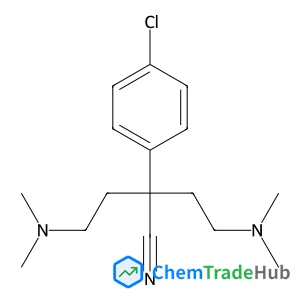
2-(4-Chlorophenyl)-4-(dimethylamino)-2-(2-(dimethylamino)ethyl)butanenitrile
CAS Number:
1246816-57-8
Molecular Formula:
C16H24ClN3
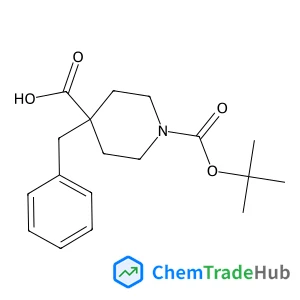
4-Benzyl-1-(tert-butoxycarbonyl)piperidine-4-carboxylic acid
CAS Number:
170838-87-6
Molecular Formula:
C18H25NO4
Recommended Suppliers




Disclaimer
This page provides academic journal information for reference and research purposes only. We are not affiliated with any journal publishers and do not handle publication submissions. For publication-related inquiries, please contact the respective journal publishers directly.
If you notice any inaccuracies in the information displayed, please contact us at support@chemtradehub.com. We will promptly review and address your concerns.