












Preventive effect of pectic oligosaccharides on acute colitis model mice: modulating epithelial barrier, gut microbiota and Treg/Th17 balance
Literature Information
Publication Date
2022-08-10
DOI
10.1039/D2FO01448C
Impact Factor
5.396
Authors
Haoyu Wang, Nian Liu, Zizhen Yang, Kunyi Zhao, Hao Pang, Kaidi Shao, Zihan Zhou, Shangyong Li, Ningning He
View Original
Abstract
Pectin as a dietary fiber supplement has shown emerging potential in clinical ulcerative colitis (UC) adjuvant therapy. In this study, the preventive and prebiotic effects of enzymatically degraded pectic oligosaccharides (POS) were further explored in dextran sodium sulfate (DSS)-induced colitis mice. The POS supplement (400 mg kg−1) was significantly effective at improving preventive efficacy, promoting colonic epithelial barrier integrity and reducing inflammatory cytokines. Meanwhile, the changes in T regulatory (Treg) cells and T helper 17 (Th17) cells indicated that POS treatment regulated the Treg/Th17 balance. Gut microbiota analysis showed that the POS supplement reshaped the dysfunctional gut microbiota. Further Spearman's correlation coefficient analysis indicated that the changes of the gut microbiota were highly associated with modulating the epithelial barrier, promoting the development of Treg cells and suppressing the differentiation of pro-inflammatory Th17 cells. All of these results suggest that enzymatically- degraded POS is a promising therapeutic agent for UC prevention and adjuvant treatment by maintaining intestinal homeostasis.
Related Literature
Autonomous propulsion of carbon nanotubes powered by a multienzyme ensemble
Davide Pantarotto, Wesley R. Browne, Ben L. Feringa
2007-11-16
Communication
DOI: 10.1039/B715310D
Template-controlled topochemical photodimerization based on “organometallic macrocycles” through single-crystal to single-crystal transformation
Ying-Feng Han, Yue-Jian Lin, Wei-Guo Jia, Guo-Liang Wang, Guo-Xin Jin
2008-02-11
Communication
DOI: 10.1039/B717554J
Chemical modifications of AFM tips for the study of molecular recognition events
Régis Barattin, Normand Voyer
2008-02-29
Feature Article
DOI: 10.1039/B614328H
Single molecule conformational analysis of the biologically relevant DNA G-quadruplex in the promoter of the proto-oncogene c-MYC
Pravin S. Shirude, Liming Ying, Shankar Balasubramanian
2008-03-20
Communication
DOI: 10.1039/B801465E
Synthesis of iron oxide nanoparticles in a microfluidic device: preliminary results in a coaxial flow millichannel
Ali Abou Hassan, Olivier Sandre, Valérie Cabuil, Patrick Tabeling
2008-02-18
Communication
DOI: 10.1039/B719550H
Fully reversible guest exchange in tetraphosphonate cavitand complexes probed by fluorescence spectroscopy
Elisa Biavardi, Gionata Battistini, Marco Montalti, Roger M. Yebeutchou, Luca Prodi, Enrico Dalcanale
2008-03-05
Communication
DOI: 10.1039/B801729H
Isolation and X-ray structural characterization of tetraisopropylpyrene cation radical
Moloy Banerjee, Vijay S. Vyas, Sergey V. Lindeman, Rajendra Rathore
2008-02-28
Communication
DOI: 10.1039/B800168E
Rapid formation of metal–organic nano-capsules gives new insight into the self-assembly process‡
Nicholas P. Power, John E. Warren, Jerry L. Atwood
2008-02-27
Communication
DOI: 10.1039/B719769A
One-step solid-state thermolysis of a metal–organic framework: a simple and facile route to large-scale of multiwalled carbon nanotubes
Linyun Chen, Junfeng Bai, Chunzhao Wang, Yi Pan, Manfred Scheer, Xiaozeng You
2008-01-31
Communication
DOI: 10.1039/B718476J
A highly efficient and selective turn-on fluorescent sensor for Cu2+ ion based on calix[4]arene bearing four iminoquinoline subunits on the upper rim
Chuan-Feng Chen, Zhi-Tang Huang
2008-02-14
Communication
DOI: 10.1039/B800258D
You might also like
Compound Q&A
What precautions should be taken when handling 4-Methyl-6-(trifluoromethyl)quinoline (CAS: 40716-16-3)?
When handling 4-Methyl-6-(trifluoromethyl)quinoline (CAS: 40716-16-3), safety go...
40716-16-34-Methyl-6-(trifluor...
Compound Q&A
What is 4-(3,5-Difluorophenyl)aniline (CAS: 405058-00-6)?
4-(3,5-Difluorophenyl)aniline is an aromatic organic compound with the CAS numbe...
405058-00-64-(3,5-Difluoropheny...
Compound Q&A
How is 5-{[4-(Trifluoromethyl)phenyl]sulfanyl}-1,2,3-thiadiazole-4-carboxylic acid (CAS: 338982-07-3) typically synthesized?
5-{[4-(Trifluoromethyl)phenyl]sulfanyl}-1,2,3-thiadiazole-4-carboxylic acid can ...
338982-07-35-{[4-(Trifluorometh...
Compound Q&A
What is the market or research trend for 4-Benzylaniline hydrochloride (CAS: 6317-57-3)?
The market for 4-Benzylaniline hydrochloride (CAS: 6317-57-3) is steadily growin...
6317-57-34-Benzylaniline hydr...
Compound Q&A
Is [3-(Diethylsulfamoyl)phenyl]boronic acid (CAS: 871329-58-7) safe?
[3-(Diethylsulfamoyl)phenyl]boronic acid is generally considered safe when handl...
871329-58-7[3-(Diethylsulfamoyl...
Compound Q&A
What are the main uses of 3-Bromo-2,5-dimethoxyaniline (CAS: 115929-62-9)?
3-Bromo-2,5-dimethoxyaniline is mainly used in the pharmaceutical and chemical i...
115929-62-93-Bromo-2,5-dimethox...
Compound Q&A
What regulatory guidelines apply to N-Methyl-1-(5-methyl-1H-indol-3-yl)methanamine (CAS: 915922-67-7)?
N-Methyl-1-(5-methyl-1H-indol-3-yl)methanamine (CAS: 915922-67-7) is subject to ...
915922-67-7N-Methyl-1-(5-methyl...
Compound Q&A
What industries use Carbamic acid, N-[(5S)-5,6-diamino-6-oxohexyl]-, 1,1-dimethylethyl ester (CAS: 24828-96-4)?
This compound is primarily used in the pharmaceutical industry for the synthesis...
24828-96-4Carbamic acid, N-[(5...
Compound Q&A
How should 2-Methyl-2-propanyl [(1S,3R)-3-aminocyclohexyl]carbamate (CAS: 1298101-47-9) be stored?
2-Methyl-2-propanyl [(1S,3R)-3-aminocyclohexyl]carbamate (CAS: 1298101-47-9) sho...
1298101-47-92-Methyl-2-propanyl ...
Compound Q&A
What industries use Ethyl 2-bromo-4,4,4-trifluorobutanoate (CAS: 367-33-9)?
Ethyl 2-bromo-4,4,4-trifluorobutanoate (CAS: 367-33-9) is utilized in the pharma...
367-33-9Ethyl 2-bromo-4,4,4-...
Source Journal
Food & Function
CiteScore:
10.1
Self-citation Rate:
3.9%
Articles per Year:
758
Food & Function provides a unique venue for physicists, chemists, biochemists, nutritionists and other food scientists to publish novel, cutting-edge, original research focussing on food, its nutrients and their relation to human health and nutrition. We welcome research describing the: Physical properties and structure of food and how this relates to sensory perception and human health Biochemical and physiological actions of food components Interactions between foods, gut microbiota and human physiology Nutritional and biological evaluation of food Clinical and population studies using food or food components Development of biomarkers of food intake and effects on human health We also welcome systematic reviews and meta-analyses of existing studies in the literature, provided these are objective and scientifically valid Food in this context is defined as materials of plant, animal or mineral origin, which are consumed orally (by humans) for pleasure and to sustain growth and vital processes. Examples of research topics that are of interest to be published in Food & Function are: Chemistry and physics of food components and digestion processes Relationship between the physical properties/structure of food and nutrition and human health - for example, impact of food matrix or processing on nutrient release and uptake Molecular properties and physiological effects of food components (nutrients, fibres, essential micronutrients, phytochemicals, bioactives, food substitutes, novel ingredients, allergens, flavours and fragrances) Nutritional and health effects of food including bioavailability and metabolism assessment of food components (nutrients, micronutrients and other microconstituents) Efficacy and mechanisms of food constituents in the body - including biomarkers of intakes, exposure and effects Impacts of foods/food components on gut microorganisms and human physiology - For example impact of fermented foods Role of nutrition and diet in human disease prevention and development Cellular and molecular effects/mechanisms of food/food components image block The following types of research are not within the scope of Food & Function: Research relating to traditional herbal medicines, medicinal plants or active compounds extracted from such plants (materials that are primarily consumed as medicine, i.e. the intended purpose is primarily to treat, cure or prevent a non-deficiency disease) or relating to foods not recognised as human diet contributors Animal nutrition research that is not primarily designed as a model to benefit human nutrition (for example, studies of growth/accretion, heat stress, weaning, ruminant digestion, meat quality, etc.) Treatments administered by non-oral routes such as injection (subcutaneous, intramuscular, intraperitoneal, etc.), dermal/transdermal, rectal, inhalation, nasal, etc. Exceptions are when such routes of administration are used for mechanistic/control purposes in the experimental design Pharmacological/pharmaceutical approaches: Encapsulation, emulsification and/or pure controlled release of compounds or bioactives that do not come directly from edible foods, such as dietary supplements - these are better suited to a pharmaceutical journal In vitro or in vivo studies with poorly defined (insufficiently characterised) extracts and studies without appropriate controls will not be considered Cells studies not considering the metabolism of food components ingested – for example, irrelevant exposure of cells to compounds not present in the body after absorption Manuscripts with only a fully theoretical/bioinformatic approach and without appropriate support from analytical evidence will not be considered for publication Studies focussing solely on food engineering, preservation and sustainable technologies – these can be published in our companion journal Sustainable Food Technology Pure food analysis - these can be published in Analytical Methods
Recommended Compounds
![2-[(5Z,8Z,11Z,14Z)-5,8,11,14-Icosatetraen-1-yloxy]-1,3-propanediol structure](https://static.chemtradehub.com/structs/222/222723-55-9-0348.webp "2-[(5Z,8Z,11Z,14Z)-5,8,11,14-Icosatetraen-1-yloxy]-1,3-propanediol structure")
2-[(5Z,8Z,11Z,14Z)-5,8,11,14-Icosatetraen-1-yloxy]-1,3-propanediol
CAS Number:
222723-55-9
Molecular Formula:
C23H40O3
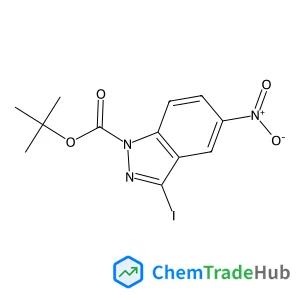
Tert-butyl 3-iodo-5-nitro-1H-indazole-1-carboxylate
CAS Number:
459133-69-8
Molecular Formula:
C12H12IN3O4
Recommended Suppliers




Disclaimer
This page provides academic journal information for reference and research purposes only. We are not affiliated with any journal publishers and do not handle publication submissions. For publication-related inquiries, please contact the respective journal publishers directly.
If you notice any inaccuracies in the information displayed, please contact us at support@chemtradehub.com. We will promptly review and address your concerns.