












![N-[(9H-Fluoren-9-ylmethoxy)carbonyl]serine structure](https://static.chemtradehub.com/structs/737/73724-45-5-b0dc.webp "N-[(9H-Fluoren-9-ylmethoxy)carbonyl]serine structure")
Modified BET theory for actual surfaces: implementation of surface curvature
Literature Information
Publication Date
2023-02-16
DOI
10.1039/D2CP05575A
Impact Factor
3.676
Authors
Behnaz Alinaghipour, Cavus Falamaki
View Original
Abstract
The Brauner–Emmett–Teller (BET) theory was originally based on adsorbing surfaces of zero curvature. The theory is elaborated to include a curvature parameter. The theory has been developed for mono-size dense particles (spherical or rod-like) and porous materials with a sharp pore size distribution (spherical or cylindrical pores). Validation was performed considering 62 relevant published results. It is shown that for porous materials with cylindrical pores (15 cases), while the average error in the calculation of the specific surface area using the original BET theory is ca. 46%, that from the modified theory is ca. 11%. For porous materials with spherical pores (20 cases), an average error of 58% (BET theory) is reduced to 15%. To apply the new theory to dense materials, in addition to the probe-gas adsorption isotherm, skeletal density is needed. For meso-porous materials, the curvature parameter is calculated using the BJH theory.
Recommended Journals
Related Literature
Biological application of water-based electrochemically synthesized CuO leaf-like arrays: SERS response modulated by the positional isomerism and interface type
E. Proniewicz, S. Vantasin, T. K. Olszewski, B. Boduszek, Y. Ozaki
2017-11-13
Paper
DOI: 10.1039/C7CP06001G
Conformational analysis of spiro-epoxides by principal component analysis of molecular dynamics trajectories
T. Hrenar, I. Primožič, D. Fijan, M. Majerić Elenkov
2017-11-07
Paper
DOI: 10.1039/C7CP05600A
Escape of anions from geminate recombination in THF due to charge delocalization
Hung-Cheng Chen, Andrew R. Cook, Sadayuki Asaoka, Jeffery S. Boschen, Theresa L. Windus, John R. Miller
2017-11-24
Paper
DOI: 10.1039/C7CP05880B
Stability and spectral properties of the dication Ne 2+2
H. Hogreve
2017-11-23
Paper
DOI: 10.1039/C7CP07194A
Molecular dynamics simulations of propane in slit shaped silica nano-pores: direct comparison with quasielastic neutron scattering experiments
Siddharth Gautam, Thu Le, Alberto Striolo, David Cole
2017-11-21
Paper
DOI: 10.1039/C7CP05715F
Signatures of a quantum diffusion limited hydrogen atom tunneling reaction
Morgan E. Balabanoff, Mahmut Ruzi, David T. Anderson
2017-11-30
Paper
DOI: 10.1039/C7CP05064J
The structure and catalytic properties of Rh-doped CeO2 catalysts
V. A. Svetlichnyi, A. S. Ivanova
2017-11-09
Paper
DOI: 10.1039/C7CP06573F
Ion chemistry at elevated ion–molecule interaction energies in a selected ion flow-drift tube: reactions of H3O+, NO+ and O2+ with saturated aliphatic ketones
Anatolii Spesyvyi, David Smith, Patrik Španěl
2017-11-16
Paper
DOI: 10.1039/C7CP05795D
Correction: Formic acid catalyzed isomerization of protonated cytosine: a lower barrier reaction for tautomer production of potential biological importance
Lingxia Jin, Mengdan Lv, Mengting Zhao, Rui Wang, Caibin Zhao, Jiufu Lu, Ling Wang, Wenliang Wang, Yawen Wei
2017-12-04
Correction
DOI: 10.1039/C7CP90270K
What regulates the catalytic activities in AGE catalysis? An answer from quantum mechanics/molecular mechanics simulations
Yulai Zhang, Hongxing Zhang
2017-11-10
Paper
DOI: 10.1039/C7CP07079A
You might also like
Compound Q&A
What are the main uses of 1H-Indazole-6-carbonitrile (CAS: 141290-59-7)?
1H-Indazole-6-carbonitrile finds applications in pharmaceuticals, where it serve...
141290-59-71H-Indazole-6-carbon...
Compound Q&A
How should waste containing Dioctyl (2E)-2-butenedioate (CAS: 2997-85-5) be handled?
Waste containing Dioctyl (2E)-2-butenedioate (CAS: 2997-85-5) should be collecte...
2997-85-5Dioctyl (2E)-2-buten...
Compound Q&A
What industries use Sodium [(1,2-benzoxazol-3-ylmethyl)sulfonyl]azanide (CAS: 68291-98-5)?
Sodium [(1,2-benzoxazol-3-ylmethyl)sulfonyl]azanide is primarily used in pharmac...
68291-98-5Sodium [(1,2-benzoxa...
Compound Q&A
Are there alternatives to Dimethyl 4-(4,4,5,5-tetramethyl-1,3,2-dioxaborolan-2-yl)-2,6-pyridinedicarboxylate (CAS: 741709-66-0) in synthesis?
Dimethyl 4-(4,4,5,5-tetramethyl-1,3,2-dioxaborolan-2-yl)-2,6-pyridinedicarboxyla...
741709-66-0Dimethyl 4-(4,4,5,5-...
Compound Q&A
How should waste containing 2-Fluoro-6-hydrazinopyridine (CAS: 80714-39-2) be handled?
Waste containing 2-Fluoro-6-hydrazinopyridine (CAS: 80714-39-2) should be manage...
80714-39-22-Fluoro-6-hydrazino...
Compound Q&A
What is 6-Formyl-2-pyridinecarboxylic acid (CAS: 499214-11-8)?
6-Formyl-2-pyridinecarboxylic acid is an organic compound with the molecular for...
499214-11-86-Formyl-2-pyridinec...
Compound Q&A
What is the market or research trend for 3-(3,4-dimethoxyphenyl)-2,5-dimethyl-N-(2-morpholin-4-ylethyl)pyrazolo[1,5-a]pyrimidin-7-amine (CAS: 900874-91-1)?
Research trends for this compound indicate a focus on its potential applications...
900874-91-13-(3,4-dimethoxyphen...
Compound Q&A
How is 9H-Tribenzo[b,d,f]azepine (CAS: 29875-73-8) typically synthesized?
9H-Tribenzo[b,d,f]azepine is typically synthesized via a multi-step process invo...
29875-73-89H-Tribenzo[b,d,f]az...
Compound Q&A
How is 1-Cyclopropyl-7-ethoxy-6-fluoro-8-methoxy-4-oxo-1,4-dihydro-3-quinolinecarboxylic acid (CAS: 1797982-51-4) typically synthesized?
1-Cyclopropyl-7-ethoxy-6-fluoro-8-methoxy-4-oxo-1,4-dihydro-3-quinolinecarboxyli...
1797982-51-41-Cyclopropyl-7-etho...
Compound Q&A
How should waste containing Methyl 3-oxo-1,2,3,4-tetrahydro-6-quinoxalinecarboxylate (CAS: 671820-52-3) be handled?
Waste containing Methyl 3-oxo-1,2,3,4-tetrahydro-6-quinoxalinecarboxylate (CAS: ...
671820-52-3Methyl 3-oxo-1,2,3,4...
Source Journal
Physical Chemistry Chemical Physics

CiteScore:
5.5
Self-citation Rate:
10.3%
Articles per Year:
3036
Physical Chemistry Chemical Physics (PCCP) is an international journal co-owned by 19 physical chemistry and physics societies from around the world. This journal publishes original, cutting-edge research in physical chemistry, chemical physics and biophysical chemistry. To be suitable for publication in PCCP, articles must include significant innovation and/or insight into physical chemistry; this is the most important criterion that reviewers and Editors will judge against when evaluating submissions. The journal has a broad scope and welcomes contributions spanning experiment, theory, computation and data science. Topical coverage includes spectroscopy, dynamics, kinetics, statistical mechanics, thermodynamics, electrochemistry, catalysis, surface science, quantum mechanics, quantum computing and machine learning. Interdisciplinary research areas such as polymers and soft matter, materials, nanoscience, energy, surfaces/interfaces, and biophysical chemistry are welcomed if they demonstrate significant innovation and/or insight into physical chemistry. Joined experimental/theoretical studies are particularly appreciated when complementary and based on up-to-date approaches.
Recommended Compounds
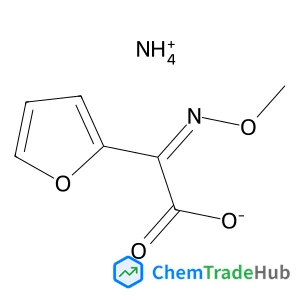
Ammonium (Z)-2-(furan-2-yl)-2-(methoxyimino)acetate
CAS Number:
97148-39-5
Molecular Formula:
C7H10N2O4
Recommended Suppliers







Disclaimer
This page provides academic journal information for reference and research purposes only. We are not affiliated with any journal publishers and do not handle publication submissions. For publication-related inquiries, please contact the respective journal publishers directly.
If you notice any inaccuracies in the information displayed, please contact us at support@chemtradehub.com. We will promptly review and address your concerns.