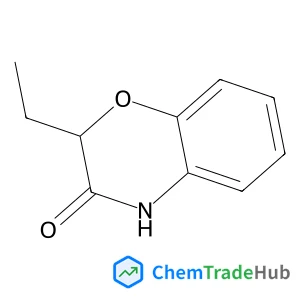
![1-{[5-(4,4,5,5-Tetramethyl-1,3,2-dioxaborolan-2-yl)-2-thienyl]methyl}piperidine structure](https://static.chemtradehub.com/structs/121/1218790-44-3-baef.webp "1-{[5-(4,4,5,5-Tetramethyl-1,3,2-dioxaborolan-2-yl)-2-thienyl]methyl}piperidine structure")
1-{[5-(4,4,5,5-Tetramethyl-1,3,2-dioxaborolan-2-yl)-2-thienyl]methyl}piperidine
CAS Number:
1218790-44-3
Molecular Formula:
C16H26BNO2S
James Rowe, Konstantin Röder
Collagen fibres are the main constituent of the extracellular matrix, and fulfil an important role in the structural stability of living multicellular organisms. An open question is how collagen absorbs pulling forces, and if the applied forces are strong enough to break bonds, what mechanisms underlie this process. As experimental studies on this topic are challenging, simulations are an important tool to further our understanding of these mechanisms. Here, we present pulling simulations of collagen triple helices, revealing the molecular mechanisms induced by tensile stress. At lower forces, pulling alters the configuration of proline residues leading to an effective absorption of applied stress. When forces are strong enough to introduce bond ruptures, these are located preferentially in X-position residues. Reduced backbone flexibility, for example through mutations or cross linking, weakens tensile resistance, leading to localised ruptures around these perturbations. In fibre-like segments, a significant overrepresentation of ruptures in proline residues compared to amino acid contents is observed. This study confirms the important role of proline in the structural stability of collagen, and adds detailed insight into the molecular mechanisms underlying this observation.
Isaac Benkyi, Enrico Tapavicza, Heike Fliegl, Dage Sundholm
DOI: 10.1039/C9CP04178H
Edoardo Buttarazzi, Francesco Rosi, Gianluca Ciancaleoni
DOI: 10.1039/C9CP03811F
Suparna Khatun, Anurag Singh, Debabrata Mandal, Amar Nath Gupta
DOI: 10.1039/C9CP03238J
Hongxia Zhu, Xiaolei Zhao, Huanhuan Li
DOI: 10.1039/C9CP06425G
Qun Wei, Wen Tong, Bing Wei, Meiguang Zhang, Xihong Peng
DOI: 10.1039/C9CP03128F
Jiao Yu, Shaochun Li, Dongshuai Hou, Zuquan Jin, Qing-feng Liu
DOI: 10.1039/C9CP90225B
Lam K. Huynh
DOI: 10.1039/C9CP02187F
Yunlong Ma, Sen Zhang, Yunfei Xu, Xiaoyi Liu
DOI: 10.1039/C9CP06830A
When handling 2-Methyl-2-propanyl 5-amino-2-thiophenecarboxylate (CAS: 1498311-5...
5-Bromo-1,2-dichloro-3-fluorobenzene (CAS: 1000572-93-9) is a crystalline solid ...
(2R)-2-Amino-2-(4-bromophenyl)ethanol (CAS: 354153-64-3) should be stored in a c...
Methyl 4-(aminomethyl)tetrahydro-2H-pyran-4-carboxylate hydrochloride (CAS: 3627...
1,4-Dimethyl-1H-pyrazole-5-sulfonyl chloride is primarily used as an intermediat...
Dinaphtho[1,2-b:2',1'-d]furan is generally safe when handled with appropriate pe...
The market for 7-Methyl-7,9-dihydro-1H-purine-2,6,8(3H)-trione (CAS: 612-37-3) i...
2-(4-Chlorophenyl)malonaldehyde (CAS: 205676-17-1) is a colorless or light yello...
2-Methylchrysene (CAS: 3351-32-4) is typically synthesized via the reaction of c...
N-(6-aminopyrimidin-4-yl)acetamide (CAS: 89533-23-3) is generally considered saf...

Physical Chemistry Chemical Physics (PCCP) is an international journal co-owned by 19 physical chemistry and physics societies from around the world. This journal publishes original, cutting-edge research in physical chemistry, chemical physics and biophysical chemistry. To be suitable for publication in PCCP, articles must include significant innovation and/or insight into physical chemistry; this is the most important criterion that reviewers and Editors will judge against when evaluating submissions. The journal has a broad scope and welcomes contributions spanning experiment, theory, computation and data science. Topical coverage includes spectroscopy, dynamics, kinetics, statistical mechanics, thermodynamics, electrochemistry, catalysis, surface science, quantum mechanics, quantum computing and machine learning. Interdisciplinary research areas such as polymers and soft matter, materials, nanoscience, energy, surfaces/interfaces, and biophysical chemistry are welcomed if they demonstrate significant innovation and/or insight into physical chemistry. Joined experimental/theoretical studies are particularly appreciated when complementary and based on up-to-date approaches.
![N-[(1-Ethyl-2-pyrrolidinyl)methyl]-2-hydroxy-5-sulfamoylbenzamide structure](https://static.chemtradehub.com/structs/673/67381-52-6-877f.webp "N-[(1-Ethyl-2-pyrrolidinyl)methyl]-2-hydroxy-5-sulfamoylbenzamide structure")
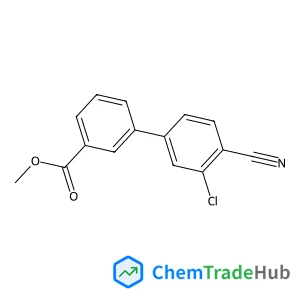
![3-[7-Amino-3-(3-pyridinyl)pyrazolo[1,5-a]pyrimidin-6-yl]phenol structure](https://static.chemtradehub.com/structs/861/861249-77-6-025b.webp "3-[7-Amino-3-(3-pyridinyl)pyrazolo[1,5-a]pyrimidin-6-yl]phenol structure")