


Experimental and theoretical study of the low-temperature kinetics of the reaction of CN with CH2O and implications for interstellar environments
Literature Information
Publication Date
2023-02-24
DOI
10.1039/D2CP05043A
Impact Factor
3.676
Authors
Niclas A. West, Lok Hin Desmond Li, Tom J. Millar, Marie Van de Sande, Edward Rutter, Mark A. Blitz, Julia H. Lehman, Leen Decin, Dwayne E. Heard
View Original
Abstract
Rate coefficients for the reaction of CN with CH2O were measured for the first time below room temperature in the range 32–103 K using a pulsed Laval nozzle apparatus together with the Pulsed Laser Photolysis–Laser-Induced Fluorescence technique. The rate coefficients exhibited a strong negative temperature dependence, reaching (4.62 ± 0.84) × 10−11 cm3 molecule−1 s−1 at 32 K, and no pressure dependence was observed at 70 K. The potential energy surface (PES) of the CN + CH2O reaction was calculated at the CCSD(T)/aug-cc-pVTZ//M06-2X/aug-cc-pVTZ level of theory, with the lowest energy channel to reaction characterized by the formation of a weakly-bound van der Waals complex, bound by 13.3 kJ mol−1, prior to two transition states with energies of −0.62 and 3.97 kJ mol−1, leading to the products HCN + HCO or HNC + HCO, respectively. For the formation of formyl cyanide, HCOCN, a large activation barrier of 32.9 kJ mol−1 was calculated. Reaction rate theory calculations were performed with the MESMER (Master Equation Solver for Multi Energy well Reactions) package on this PES to calculate rate coefficients. While this ab initio description provided good agreement with the low-temperature rate coefficients, it was not capable of describing the high-temperature experimental rate coefficients from the literature. However, increasing the energies and imaginary frequencies of both transition states allowed MESMER simulations of the rate coefficients to be in good agreement with data spanning 32–769 K. The mechanism for the reaction is the formation of a weakly-bound complex followed by quantum mechanical tunnelling through the small barrier to form HCN + HCO products. MESMER calculations showed that channel generating HNC is not important. MESMER simulated the rate coefficients from 4–1000 K which were used to recommend best-fit modified Arrhenius expressions for use in astrochemical modelling. The UMIST Rate12 (UDfa) model yielded no significant changes in the abundances of HCN, HNC, and HCO for a variety of environments upon inclusion of rate coefficients reported here. The main implication from this study is that the title reaction is not a primary formation route to the interstellar molecule formyl cyanide, HCOCN, as currently implemented in the KIDA astrochemical model.
Recommended Journals

Journal of Organometallic Chemistry

Science

Journal of Physics and Chemistry of Solids

European Journal of Wood and Wood Products

Pharmacological Reviews

Israel Journal of Chemistry

Proceedings of the National Academy of Sciences of the United States of America

Journal of Heterocyclic Chemistry

Russian Chemical Reviews

Organic Preparations and Procedures International
Related Literature
Role of halogen⋯halogen interactions in the 2D crystallization of n-semiconductors at the liquid–solid interface
Zongxia Guo, Ping Yu, Kai Sun, Shengbin Lei, Yuanping Yi, Zhibo Li
2017-09-25
Communication
DOI: 10.1039/C7CP06027K
A new scaling for the rotational diffusion of molecular probes in polymer solutions
Jing Qing, Anpu Chen, Nanrong Zhao
2017-11-07
Paper
DOI: 10.1039/C7CP07047K
Solvatochromism in perylene diimides; experiment and theory
C. A. Fuller, C. E. Finlayson
2017-11-16
Paper
DOI: 10.1039/C7CP05039A
On the underlying mechanisms of the low observed nitrate selectivity in photocatalytic NOx abatement and the importance of the oxygen reduction reaction
Julia Patzsch, Andrea Folli, Donald E. Macphee, Jonathan Z. Bloh
2017-11-27
Paper
DOI: 10.1039/C7CP05960D
Detection of the electronic structure of iron-(iii)-oxo oligomers forming in aqueous solutions
Katrin Kraffert, Marvin N. Pohl, Ralph Kraehnert, Franziska Emmerling, Bernd Winter
2017-11-13
Paper
DOI: 10.1039/C7CP06945F
Escape of anions from geminate recombination in THF due to charge delocalization
Hung-Cheng Chen, Andrew R. Cook, Sadayuki Asaoka, Jeffery S. Boschen, Theresa L. Windus, John R. Miller
2017-11-24
Paper
DOI: 10.1039/C7CP05880B
Amplification or cancellation of Fano resonance and quantum confinement induced asymmetries in Raman line-shapes
Shailendra K. Saxena, Priyanka Yogi, Suryakant Mishra, Hari Mohan Rai, Vikash Mishra, M. Kamal Warshi, Swarup Roy, Puspen Mondal, Pankaj R. Sagdeo, Rajesh Kumar
2017-11-13
Paper
DOI: 10.1039/C7CP04836J
On the combustion mechanisms of ZrH2 in double-base propellant
Yanjing Yang, Fengqi Zhao, Zhifeng Yuan, Ying Wang, Ting An, Xueli Chen, Chunlei Xuan, Jiankan Zhang
2017-11-20
Paper
DOI: 10.1039/C7CP02593A
Theoretical identification of seven C80 fullerene isomers by XPS and NEXAFS spectroscopy
Xiu-Neng Song, Jing Hu, Sheng-Yu Wang, Yong Ma, Yong Zhou, Chuan-Kui Wang
2017-11-24
Paper
DOI: 10.1039/C7CP06543D
You might also like
Compound Q&A
What are the main uses of 1H-Indazole-6-carbonitrile (CAS: 141290-59-7)?
1H-Indazole-6-carbonitrile finds applications in pharmaceuticals, where it serve...
141290-59-71H-Indazole-6-carbon...
Compound Q&A
How should waste containing Dioctyl (2E)-2-butenedioate (CAS: 2997-85-5) be handled?
Waste containing Dioctyl (2E)-2-butenedioate (CAS: 2997-85-5) should be collecte...
2997-85-5Dioctyl (2E)-2-buten...
Compound Q&A
What industries use Sodium [(1,2-benzoxazol-3-ylmethyl)sulfonyl]azanide (CAS: 68291-98-5)?
Sodium [(1,2-benzoxazol-3-ylmethyl)sulfonyl]azanide is primarily used in pharmac...
68291-98-5Sodium [(1,2-benzoxa...
Compound Q&A
Are there alternatives to Dimethyl 4-(4,4,5,5-tetramethyl-1,3,2-dioxaborolan-2-yl)-2,6-pyridinedicarboxylate (CAS: 741709-66-0) in synthesis?
Dimethyl 4-(4,4,5,5-tetramethyl-1,3,2-dioxaborolan-2-yl)-2,6-pyridinedicarboxyla...
741709-66-0Dimethyl 4-(4,4,5,5-...
Compound Q&A
How should waste containing 2-Fluoro-6-hydrazinopyridine (CAS: 80714-39-2) be handled?
Waste containing 2-Fluoro-6-hydrazinopyridine (CAS: 80714-39-2) should be manage...
80714-39-22-Fluoro-6-hydrazino...
Compound Q&A
What is 6-Formyl-2-pyridinecarboxylic acid (CAS: 499214-11-8)?
6-Formyl-2-pyridinecarboxylic acid is an organic compound with the molecular for...
499214-11-86-Formyl-2-pyridinec...
Compound Q&A
What is the market or research trend for 3-(3,4-dimethoxyphenyl)-2,5-dimethyl-N-(2-morpholin-4-ylethyl)pyrazolo[1,5-a]pyrimidin-7-amine (CAS: 900874-91-1)?
Research trends for this compound indicate a focus on its potential applications...
900874-91-13-(3,4-dimethoxyphen...
Compound Q&A
How is 9H-Tribenzo[b,d,f]azepine (CAS: 29875-73-8) typically synthesized?
9H-Tribenzo[b,d,f]azepine is typically synthesized via a multi-step process invo...
29875-73-89H-Tribenzo[b,d,f]az...
Compound Q&A
How is 1-Cyclopropyl-7-ethoxy-6-fluoro-8-methoxy-4-oxo-1,4-dihydro-3-quinolinecarboxylic acid (CAS: 1797982-51-4) typically synthesized?
1-Cyclopropyl-7-ethoxy-6-fluoro-8-methoxy-4-oxo-1,4-dihydro-3-quinolinecarboxyli...
1797982-51-41-Cyclopropyl-7-etho...
Compound Q&A
How should waste containing Methyl 3-oxo-1,2,3,4-tetrahydro-6-quinoxalinecarboxylate (CAS: 671820-52-3) be handled?
Waste containing Methyl 3-oxo-1,2,3,4-tetrahydro-6-quinoxalinecarboxylate (CAS: ...
671820-52-3Methyl 3-oxo-1,2,3,4...
Source Journal
Physical Chemistry Chemical Physics

CiteScore:
5.5
Self-citation Rate:
10.3%
Articles per Year:
3036
Physical Chemistry Chemical Physics (PCCP) is an international journal co-owned by 19 physical chemistry and physics societies from around the world. This journal publishes original, cutting-edge research in physical chemistry, chemical physics and biophysical chemistry. To be suitable for publication in PCCP, articles must include significant innovation and/or insight into physical chemistry; this is the most important criterion that reviewers and Editors will judge against when evaluating submissions. The journal has a broad scope and welcomes contributions spanning experiment, theory, computation and data science. Topical coverage includes spectroscopy, dynamics, kinetics, statistical mechanics, thermodynamics, electrochemistry, catalysis, surface science, quantum mechanics, quantum computing and machine learning. Interdisciplinary research areas such as polymers and soft matter, materials, nanoscience, energy, surfaces/interfaces, and biophysical chemistry are welcomed if they demonstrate significant innovation and/or insight into physical chemistry. Joined experimental/theoretical studies are particularly appreciated when complementary and based on up-to-date approaches.
Recommended Compounds
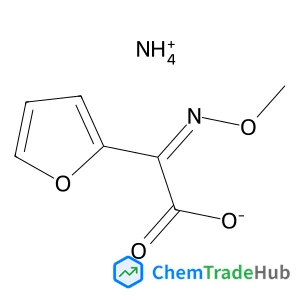
Ammonium (Z)-2-(furan-2-yl)-2-(methoxyimino)acetate
CAS Number:
97148-39-5
Molecular Formula:
C7H10N2O4
Recommended Suppliers





Disclaimer
This page provides academic journal information for reference and research purposes only. We are not affiliated with any journal publishers and do not handle publication submissions. For publication-related inquiries, please contact the respective journal publishers directly.
If you notice any inaccuracies in the information displayed, please contact us at support@chemtradehub.com. We will promptly review and address your concerns.