












![2,5-Dichloro-1H-pyrrolo[3,2-b]pyridine structure](https://static.chemtradehub.com/structs/100/1000342-87-9-f632.webp "2,5-Dichloro-1H-pyrrolo[3,2-b]pyridine structure")
Structural evolution and electronic properties of neutral and anionic TiASil (A = Sc, Ti; l ≤ 12): relatively stable TiASi4 as a structural unit
Literature Information
Publication Date
2022-12-08
DOI
10.1039/D2CP04925B
Impact Factor
3.676
Authors
Xiao-Jun Li
View Original
Abstract
Simulated photoelectron spectroscopy was conducted to investigate the structural evolution and electronic properties of TiASil (A = Sc, Ti; l ≤ 12) clusters and their anions via the Perdew–Burke–Enzerhof scheme and extensive cluster search using the ABCluster software. The results revealed that the ground-state structures of the TiASil (A = Sc, Ti) clusters generally exhibited similar configurations except for the Ti2Si3, ScTiSi3, and TiScSi10 clusters. Furthermore, the TiASil clusters exhibited an adsorptive evolution pattern, and the TiASi4 unit was considered the basic constituent framework of the structure, excluding several distortions and minor changes. With the increase in the cluster size, the lowest-energy structures varied from the exohedral to the cage structures of the single-metal atom at the center. Regarding the second energy difference data, the neutral TiASi4 clusters exhibited better stability among the neutral and anionic TiASil (A = Sc, Ti; l ≤ 12) clusters. Furthermore, the chemical bonding in the TiASi4 clusters was analyzed by molecular orbitals (MOs), highest occupied MO–lowest unoccupied MO gaps, and adaptive natural density partitioning analyses for the best Ti2Si4 cluster especially, and the results were combined with the natural population analysis data. The hybridization of the spd orbital of the metal atoms, eight localized bonds, and four delocalized bonds may primarily account for the relative stabilities of the neutral, square bipyramidal structure of Ti2Si4. Thus, the TiASi4 clusters may be assembled as the basic units of silicon-based semiconductor clusters of large-size neutral and anionic TiASil.
Related Literature
An economic prediction of the finer resolution level wavelet coefficients in electronic structure calculations
Szilvia Nagy, János Pipek
2015-06-26
Paper
DOI: 10.1039/C5CP01214G
Deviation of polarity from linearity in liquid mixtures containing an ionic liquid
Vijay Beniwal, Shashi K. Shukla, Anil Kumar
2015-11-04
Communication
DOI: 10.1039/C5CP05921F
Synthesis of branched Pd nanocrystals with tunable structures, their growth mechanism, and enhanced electrocatalytic properties
Xueli Guo, Yiwei Tan
2015-10-26
Paper
DOI: 10.1039/C5CP05531H
Hydrogen-bonding and vibrational coupling of water in a hydrophobic hydration shell as observed by Raman-MCR and isotopic dilution spectroscopy
Mohammed Ahmed, Ajay K. Singh, Jahur A. Mondal
2015-12-18
Paper
DOI: 10.1039/C5CP07014G
Measurement and prediction of quantum coherence effects in biological processes
Aurélien de la Lande, Vicent Moliner, Dennis Salahub
2015-09-17
Editorial
DOI: 10.1039/C5CP90134K
A slowing down of proton motion from HPTS to water adsorbed on the MCM-41 surface
Noemí Alarcos, Boiko Cohen, Abderrazzak Douhal
2015-12-16
Paper
DOI: 10.1039/C5CP04548G
When do defectless alkanethiol SAMs in ionic liquids become penetrable? A molecular dynamics study
Sergey A. Kislenko, Victoria A. Nikitina, Renat R. Nazmutdinov
2015-10-08
Paper
DOI: 10.1039/C5CP04566E
How can carbon favor planar multi-coordination in boron-based clusters? Global structures of CBxEy2− (E = Al, Ga, x + y = 4)
Zhong-hua Cui, Jing-jing Sui, Yi-hong Ding
2015-10-30
Paper
DOI: 10.1039/C5CP04776E
You might also like
Compound Q&A
What precautions should be taken when handling 2-Methyl-2-propanyl 5-amino-2-thiophenecarboxylate (CAS: 1498311-57-1)?
When handling 2-Methyl-2-propanyl 5-amino-2-thiophenecarboxylate (CAS: 1498311-5...
1498311-57-12-Methyl-2-propanyl ...
Compound Q&A
What are the physical and chemical properties of 5-Bromo-1,2-dichloro-3-fluorobenzene (CAS: 1000572-93-9)?
5-Bromo-1,2-dichloro-3-fluorobenzene (CAS: 1000572-93-9) is a crystalline solid ...
1000572-93-95-Bromo-1,2-dichloro...
Compound Q&A
How should (2R)-2-Amino-2-(4-bromophenyl)ethanol (CAS: 354153-64-3) be stored?
(2R)-2-Amino-2-(4-bromophenyl)ethanol (CAS: 354153-64-3) should be stored in a c...
354153-64-3(2R)-2-Amino-2-(4-br...
Compound Q&A
What regulatory guidelines apply to Methyl 4-(aminomethyl)tetrahydro-2H-pyran-4-carboxylate hydrochloride (CAS: 362707-24-2)?
Methyl 4-(aminomethyl)tetrahydro-2H-pyran-4-carboxylate hydrochloride (CAS: 3627...
362707-24-2Methyl 4-(aminomethy...
Compound Q&A
What are the main uses of 1,4-dimethyl-1H-pyrazole-5-sulfonyl chloride (CAS: 1174834-52-6)?
1,4-Dimethyl-1H-pyrazole-5-sulfonyl chloride is primarily used as an intermediat...
1174834-52-61,4-dimethyl-1H-pyra...
Compound Q&A
Is Dinaphtho[1,2-b:2',1'-d]furan (CAS: 239-69-0) safe?
Dinaphtho[1,2-b:2',1'-d]furan is generally safe when handled with appropriate pe...
239-69-0Dinaphtho[1,2-b:2',1...
Compound Q&A
What is the market or research trend for 7-Methyl-7,9-dihydro-1H-purine-2,6,8(3H)-trione (CAS: 612-37-3)?
The market for 7-Methyl-7,9-dihydro-1H-purine-2,6,8(3H)-trione (CAS: 612-37-3) i...
612-37-37-Methyl-7,9-dihydro...
Compound Q&A
What are the physical and chemical properties of 2-(4-Chlorophenyl)malonaldehyde (CAS: 205676-17-1)?
2-(4-Chlorophenyl)malonaldehyde (CAS: 205676-17-1) is a colorless or light yello...
205676-17-12-(4-Chlorophenyl)ma...
Compound Q&A
How is 2-Methylchrysene (CAS: 3351-32-4) typically synthesized?
2-Methylchrysene (CAS: 3351-32-4) is typically synthesized via the reaction of c...
3351-32-42-Methylchrysene
Compound Q&A
Is N-(6-aminopyrimidin-4-yl)acetamide (CAS: 89533-23-3) safe?
N-(6-aminopyrimidin-4-yl)acetamide (CAS: 89533-23-3) is generally considered saf...
89533-23-3N-(6-aminopyrimidin-...
Source Journal
Physical Chemistry Chemical Physics

CiteScore:
5.5
Self-citation Rate:
10.3%
Articles per Year:
3036
Physical Chemistry Chemical Physics (PCCP) is an international journal co-owned by 19 physical chemistry and physics societies from around the world. This journal publishes original, cutting-edge research in physical chemistry, chemical physics and biophysical chemistry. To be suitable for publication in PCCP, articles must include significant innovation and/or insight into physical chemistry; this is the most important criterion that reviewers and Editors will judge against when evaluating submissions. The journal has a broad scope and welcomes contributions spanning experiment, theory, computation and data science. Topical coverage includes spectroscopy, dynamics, kinetics, statistical mechanics, thermodynamics, electrochemistry, catalysis, surface science, quantum mechanics, quantum computing and machine learning. Interdisciplinary research areas such as polymers and soft matter, materials, nanoscience, energy, surfaces/interfaces, and biophysical chemistry are welcomed if they demonstrate significant innovation and/or insight into physical chemistry. Joined experimental/theoretical studies are particularly appreciated when complementary and based on up-to-date approaches.
Recommended Compounds
methyl]-N,2-dimethyl-2-propanesulfinamide structure](https://static.chemtradehub.com/structs/256/2565792-50-7-8a26.webp "N-[(R)-[3-(Benzyloxy)-2-(dicyclohexylphosphino)phenyl](phenyl)methyl]-N,2-dimethyl-2-propanesulfinamide structure")
N-[(R)-[3-(Benzyloxy)-2-(dicyclohexylphosphino)phenyl](phenyl)methyl]-N,2-dimethyl-2-propanesulfinamide
CAS Number:
2565792-50-7
Molecular Formula:
C37H50NO2PS

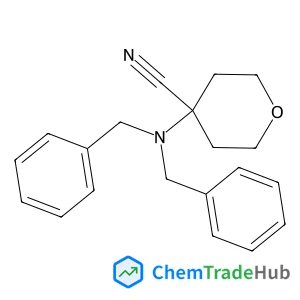
4-(Dibenzylamino)tetrahydro-2H-pyran-4-carbonitrile
CAS Number:
1630906-81-8
Molecular Formula:
C20H22N2O

(5Z,11alpha,13E,15R)-11,15-Dihydroxy-15-methyl-9-oxoprosta-5,13-dien-1-oic acid
CAS Number:
55028-70-1
Molecular Formula:
C21H34O5
Recommended Suppliers





Disclaimer
This page provides academic journal information for reference and research purposes only. We are not affiliated with any journal publishers and do not handle publication submissions. For publication-related inquiries, please contact the respective journal publishers directly.
If you notice any inaccuracies in the information displayed, please contact us at support@chemtradehub.com. We will promptly review and address your concerns.