












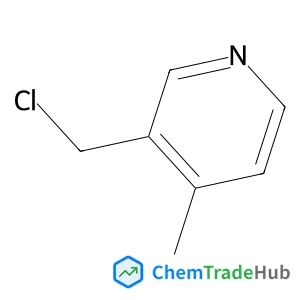
Theoretical investigation of the role of hydrogenation-induced strain in single-layer h10-Si
Literature Information
Publication Date
2022-12-02
DOI
10.1039/D2CP04855H
Impact Factor
3.676
Authors
Peng Jiang, Hong-Mei Huang, Yanning Zhang, Yan-Ling Li
View Original
Abstract
Although great efforts have been dedicated to exploring hydrogenated two-dimensional (2D) materials, there are few reports about the role of hydrogenation-induced equivalent strain effects in tuning the physical properties. Here, based on density functional theory, we systematically reveal the non-negligible role of the hydrogenation-induced strain and its effects on the electronic and optical properties in single-layer (SL) h10-Si. We demonstrate that hydrogenation can trigger an electronic transition from an indirect- to a direct-band-gap semiconductor mainly due to the energy level rearrangement of the partial p orbitals caused by the equivalent strain. The electronic transition in SL h10-Si occurs at a critical hydrogenation concentration of about 87.5%. Furthermore, it is found that hydrogenation can continuously shift the light absorption peak of SL h10-Si in the photon-energy range of 1.64–2.44 eV by changing the pz–pz dipole transition. Our findings provide an example of tuning the electronic properties of 2D materials via hydrogenation-induced strain, which is important for understanding the physical mechanism of the hydrogenation-tuned physical properties of such materials.
Related Literature
A facile one-step synthesis to ionic liquid-based cross-linked polymeric nanoparticles and their application for CO2 fixation
Yubing Xiong, Yujiao Wang, Hong Wang, Rongmin Wang
2011-07-21
Paper
DOI: 10.1039/C1PY00201E
Synthesis of paramagnetic polymers using ionic liquid chemistry
Markus Döbbelin, Irantzu Llarena, Luis J. Claros Marfil, Germán Cabañero, Javier Rodriguez, David Mecerreyes
2011-03-24
Paper
DOI: 10.1039/C1PY00044F
Nitroxide mediated controlled synthesis of glycidyl methacrylate-rich copolymers enabled by SG1-based alkoxyamines bearing succinimidyl ester groups
Ali Moayeri, Benoit Lessard, Milan Maric
2011-06-22
Paper
DOI: 10.1039/C1PY00190F
Thermally reactive Thiazolo[5,4-d]thiazole based copolymers for high photochemical stability in polymer solar cells
Martin Helgesen, Morten V. Madsen, Birgitta Andreasen, Thomas Tromholt, Jens W. Andreasen, Frederik C. Krebs
2011-09-21
Paper
DOI: 10.1039/C1PY00323B
Unusual activation by solvent of the ethylene free radical polymerization
Etienne Grau, Jean-Pierre Broyer, Christophe Boisson, Roger Spitz, Vincent Monteil
2011-07-28
Paper
DOI: 10.1039/C1PY00200G
A furan-bridged D-π-A copolymer with deep HOMO level: synthesis and application in polymer solar cells
Xiaochen Wang, Maojie Zhang, Yongfang Li, Xiaoyu Li, Haiqiao Wang
2011-10-13
Paper
DOI: 10.1039/C1PY00364J
Red light-emitting hyperbranched fluorene-alt-carbazolecopolymers with an iridium complex as the core
Ting Guo, Rong Guan, Jianhua Zou, Jie Liu, Lei Ying, Wei Yang, Hongbin Wu, Yong Cao
2011-07-08
Paper
DOI: 10.1039/C1PY00075F
Synthetic methodology effect on the microstructure and thermal properties of poly(n-butyl acrylate-co-methyl methacrylate) synthesized by nitroxide mediated polymerization
Adeline Issoulie, Abdel Khoukh, Ahmed Benaboura, Maud Save, Christophe Derail, Laurent Billon
2011-04-26
Paper
DOI: 10.1039/C1PY00066G
Tuning the lower critical solution temperature of thermoresponsive polymers by biospecific recognition
Jens Buller, André Laschewsky, Jean-François Lutz, Erik Wischerhoff
2011-02-15
Communication
DOI: 10.1039/C1PY00001B
You might also like
Compound Q&A
What precautions should be taken when handling 2-Methyl-2-propanyl 5-amino-2-thiophenecarboxylate (CAS: 1498311-57-1)?
When handling 2-Methyl-2-propanyl 5-amino-2-thiophenecarboxylate (CAS: 1498311-5...
1498311-57-12-Methyl-2-propanyl ...
Compound Q&A
What are the physical and chemical properties of 5-Bromo-1,2-dichloro-3-fluorobenzene (CAS: 1000572-93-9)?
5-Bromo-1,2-dichloro-3-fluorobenzene (CAS: 1000572-93-9) is a crystalline solid ...
1000572-93-95-Bromo-1,2-dichloro...
Compound Q&A
How should (2R)-2-Amino-2-(4-bromophenyl)ethanol (CAS: 354153-64-3) be stored?
(2R)-2-Amino-2-(4-bromophenyl)ethanol (CAS: 354153-64-3) should be stored in a c...
354153-64-3(2R)-2-Amino-2-(4-br...
Compound Q&A
What regulatory guidelines apply to Methyl 4-(aminomethyl)tetrahydro-2H-pyran-4-carboxylate hydrochloride (CAS: 362707-24-2)?
Methyl 4-(aminomethyl)tetrahydro-2H-pyran-4-carboxylate hydrochloride (CAS: 3627...
362707-24-2Methyl 4-(aminomethy...
Compound Q&A
What are the main uses of 1,4-dimethyl-1H-pyrazole-5-sulfonyl chloride (CAS: 1174834-52-6)?
1,4-Dimethyl-1H-pyrazole-5-sulfonyl chloride is primarily used as an intermediat...
1174834-52-61,4-dimethyl-1H-pyra...
Compound Q&A
Is Dinaphtho[1,2-b:2',1'-d]furan (CAS: 239-69-0) safe?
Dinaphtho[1,2-b:2',1'-d]furan is generally safe when handled with appropriate pe...
239-69-0Dinaphtho[1,2-b:2',1...
Compound Q&A
What is the market or research trend for 7-Methyl-7,9-dihydro-1H-purine-2,6,8(3H)-trione (CAS: 612-37-3)?
The market for 7-Methyl-7,9-dihydro-1H-purine-2,6,8(3H)-trione (CAS: 612-37-3) i...
612-37-37-Methyl-7,9-dihydro...
Compound Q&A
What are the physical and chemical properties of 2-(4-Chlorophenyl)malonaldehyde (CAS: 205676-17-1)?
2-(4-Chlorophenyl)malonaldehyde (CAS: 205676-17-1) is a colorless or light yello...
205676-17-12-(4-Chlorophenyl)ma...
Compound Q&A
How is 2-Methylchrysene (CAS: 3351-32-4) typically synthesized?
2-Methylchrysene (CAS: 3351-32-4) is typically synthesized via the reaction of c...
3351-32-42-Methylchrysene
Compound Q&A
Is N-(6-aminopyrimidin-4-yl)acetamide (CAS: 89533-23-3) safe?
N-(6-aminopyrimidin-4-yl)acetamide (CAS: 89533-23-3) is generally considered saf...
89533-23-3N-(6-aminopyrimidin-...
Source Journal
Physical Chemistry Chemical Physics

CiteScore:
5.5
Self-citation Rate:
10.3%
Articles per Year:
3036
Physical Chemistry Chemical Physics (PCCP) is an international journal co-owned by 19 physical chemistry and physics societies from around the world. This journal publishes original, cutting-edge research in physical chemistry, chemical physics and biophysical chemistry. To be suitable for publication in PCCP, articles must include significant innovation and/or insight into physical chemistry; this is the most important criterion that reviewers and Editors will judge against when evaluating submissions. The journal has a broad scope and welcomes contributions spanning experiment, theory, computation and data science. Topical coverage includes spectroscopy, dynamics, kinetics, statistical mechanics, thermodynamics, electrochemistry, catalysis, surface science, quantum mechanics, quantum computing and machine learning. Interdisciplinary research areas such as polymers and soft matter, materials, nanoscience, energy, surfaces/interfaces, and biophysical chemistry are welcomed if they demonstrate significant innovation and/or insight into physical chemistry. Joined experimental/theoretical studies are particularly appreciated when complementary and based on up-to-date approaches.
Recommended Compounds
![L-Lysine,N6-[2-[[(1,1-dimethylethoxy)carbonyl]amino]benzoyl]-N2-[(9H-fluoren-9-ylmethoxy)carbonyl]- structure](https://static.chemtradehub.com/structs/159/159322-59-5-c046.webp "L-Lysine,N6-[2-[[(1,1-dimethylethoxy)carbonyl]amino]benzoyl]-N2-[(9H-fluoren-9-ylmethoxy)carbonyl]- structure")
L-Lysine,N6-[2-[[(1,1-dimethylethoxy)carbonyl]amino]benzoyl]-N2-[(9H-fluoren-9-ylmethoxy)carbonyl]-
CAS Number:
159322-59-5
Molecular Formula:
C33H37N3O7
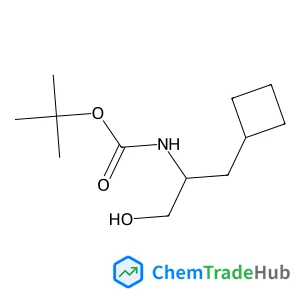
2-Methyl-2-propanyl (1-cyclobutyl-3-hydroxy-2-propanyl)carbamate
CAS Number:
816429-99-9
Molecular Formula:
C12H23NO3
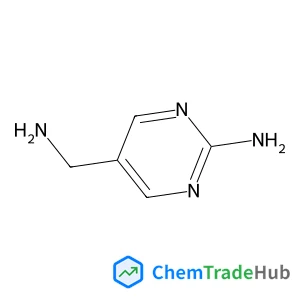
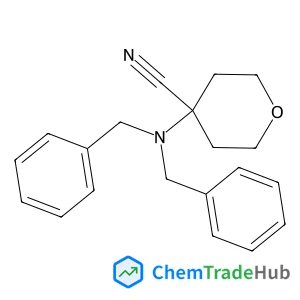
4-(Dibenzylamino)tetrahydro-2H-pyran-4-carbonitrile
CAS Number:
1630906-81-8
Molecular Formula:
C20H22N2O
Recommended Suppliers



Disclaimer
This page provides academic journal information for reference and research purposes only. We are not affiliated with any journal publishers and do not handle publication submissions. For publication-related inquiries, please contact the respective journal publishers directly.
If you notice any inaccuracies in the information displayed, please contact us at support@chemtradehub.com. We will promptly review and address your concerns.