












Tribochemically driven dehydrogenation of undoped sodium alanate under room temperature‡
Literature Information
Publication Date
2022-12-01
DOI
10.1039/D2CP04681D
Impact Factor
3.676
Authors
Esmeralda Muñoz-Cortés, Olga L. Ibryaeva, Miguel Manso Silvan, Borja Zabala, Eduardo Flores, Almudena Gutierrez, Jose Ramon Ares, Roman Nevshupa
View Original
Abstract
An application of mechanical energy was explored as a new non-thermal method to drive H2 emission from undoped sodium alanate at room temperature. It was found that mild rubbing of NaAlH4 pellets under vacuum led to intensive and almost instantaneous gas emission. The dominating species in the emitted gases was H2 (>99%). Traces of mono- and polyalanes, NaAlH4 vapours, CO2 and other non-identified gases were registered. H2 emission involved several first-order processes, whose characteristic time constants ranged widely from 0.6 to 465 s. None of the dehydrogenation reactions could be connected to either the thermal effect of friction or the direct coupling of mechanical forces to the energy landscape of chemical reactions. In turn, it was suggested that the tribochemical reactions can be triggered by plastic deformation and shearing. A linked diffusion-wear model of NaAlH4 triboinduced dehydrogenation, which consistently explains all empirical findings, was put forward.
Related Literature
Synergistic effect of novel redox additives of p-nitroaniline and dimethylglyoxime for highly improving the supercapacitor performances
Yong Fu Nie, Qian Wang, Xiang Ying Chen, Zhong Jie Zhang
2015-12-21
Paper
DOI: 10.1039/C5CP06147D
In situ 2D-extraction of DNA wheels by 3D through-solution transport
Keitel Cervantes-Salguero, Waka Nakanishi, Ibuki Kawamata, Kosuke Minami, Hirokazu Komatsu, Satoshi Murata
2015-11-16
Communication
DOI: 10.1039/C5CP05765E
Theoretical study on the dehydrogenation reaction of dihydrogen bonded phenol–borane-trimethylamine in the excited state
Yonggang Yang, Yufang Liu, Dapeng Yang, Hui Li, Kai Jiang, Jinfeng Sun
2015-08-12
Paper
DOI: 10.1039/C5CP02530C
How can carbon favor planar multi-coordination in boron-based clusters? Global structures of CBxEy2− (E = Al, Ga, x + y = 4)
Zhong-hua Cui, Jing-jing Sui, Yi-hong Ding
2015-10-30
Paper
DOI: 10.1039/C5CP04776E
Relationship between vesicle size and steric hindrance influences vesicle rupture on solid supports
2015-12-15
Paper
DOI: 10.1039/C5CP06786C
Phase transition behaviors of the supported DPPC bilayer investigated by sum frequency generation (SFG) vibrational spectroscopy and atomic force microscopy (AFM)
Heng-Liang Wu, Yujin Tong, Qiling Peng, Na Li, Shen Ye
2015-10-02
Paper
DOI: 10.1039/C5CP04960A
Measurement and prediction of quantum coherence effects in biological processes
Aurélien de la Lande, Vicent Moliner, Dennis Salahub
2015-09-17
Editorial
DOI: 10.1039/C5CP90134K
Molecular design of electron transport with orbital rule: toward conductance-decay free molecular junctions
Tomofumi Tada, Kazunari Yoshizawa
2015-10-30
Perspective
DOI: 10.1039/C5CP05423K
Theoretical analysis of NMR shieldings in XSe and XTe (X = Si, Ge, Sn and Pb): the spin-rotation constant saga
2015-12-21
Paper
DOI: 10.1039/C5CP07025B
Theoretical study of the coordination behavior of formate and formamidoximate with dioxovanadium(v) cation: implications for selectivity towards uranyl
Nada Mehio, J. Casey Johnson, Vyacheslav S. Bryantsev
2015-10-28
Paper
DOI: 10.1039/C5CP06165B
You might also like
Compound Q&A
What precautions should be taken when handling 2-Methyl-2-propanyl 5-amino-2-thiophenecarboxylate (CAS: 1498311-57-1)?
When handling 2-Methyl-2-propanyl 5-amino-2-thiophenecarboxylate (CAS: 1498311-5...
1498311-57-12-Methyl-2-propanyl ...
Compound Q&A
What are the physical and chemical properties of 5-Bromo-1,2-dichloro-3-fluorobenzene (CAS: 1000572-93-9)?
5-Bromo-1,2-dichloro-3-fluorobenzene (CAS: 1000572-93-9) is a crystalline solid ...
1000572-93-95-Bromo-1,2-dichloro...
Compound Q&A
How should (2R)-2-Amino-2-(4-bromophenyl)ethanol (CAS: 354153-64-3) be stored?
(2R)-2-Amino-2-(4-bromophenyl)ethanol (CAS: 354153-64-3) should be stored in a c...
354153-64-3(2R)-2-Amino-2-(4-br...
Compound Q&A
What regulatory guidelines apply to Methyl 4-(aminomethyl)tetrahydro-2H-pyran-4-carboxylate hydrochloride (CAS: 362707-24-2)?
Methyl 4-(aminomethyl)tetrahydro-2H-pyran-4-carboxylate hydrochloride (CAS: 3627...
362707-24-2Methyl 4-(aminomethy...
Compound Q&A
What are the main uses of 1,4-dimethyl-1H-pyrazole-5-sulfonyl chloride (CAS: 1174834-52-6)?
1,4-Dimethyl-1H-pyrazole-5-sulfonyl chloride is primarily used as an intermediat...
1174834-52-61,4-dimethyl-1H-pyra...
Compound Q&A
Is Dinaphtho[1,2-b:2',1'-d]furan (CAS: 239-69-0) safe?
Dinaphtho[1,2-b:2',1'-d]furan is generally safe when handled with appropriate pe...
239-69-0Dinaphtho[1,2-b:2',1...
Compound Q&A
What is the market or research trend for 7-Methyl-7,9-dihydro-1H-purine-2,6,8(3H)-trione (CAS: 612-37-3)?
The market for 7-Methyl-7,9-dihydro-1H-purine-2,6,8(3H)-trione (CAS: 612-37-3) i...
612-37-37-Methyl-7,9-dihydro...
Compound Q&A
What are the physical and chemical properties of 2-(4-Chlorophenyl)malonaldehyde (CAS: 205676-17-1)?
2-(4-Chlorophenyl)malonaldehyde (CAS: 205676-17-1) is a colorless or light yello...
205676-17-12-(4-Chlorophenyl)ma...
Compound Q&A
How is 2-Methylchrysene (CAS: 3351-32-4) typically synthesized?
2-Methylchrysene (CAS: 3351-32-4) is typically synthesized via the reaction of c...
3351-32-42-Methylchrysene
Compound Q&A
Is N-(6-aminopyrimidin-4-yl)acetamide (CAS: 89533-23-3) safe?
N-(6-aminopyrimidin-4-yl)acetamide (CAS: 89533-23-3) is generally considered saf...
89533-23-3N-(6-aminopyrimidin-...
Source Journal
Physical Chemistry Chemical Physics

CiteScore:
5.5
Self-citation Rate:
10.3%
Articles per Year:
3036
Physical Chemistry Chemical Physics (PCCP) is an international journal co-owned by 19 physical chemistry and physics societies from around the world. This journal publishes original, cutting-edge research in physical chemistry, chemical physics and biophysical chemistry. To be suitable for publication in PCCP, articles must include significant innovation and/or insight into physical chemistry; this is the most important criterion that reviewers and Editors will judge against when evaluating submissions. The journal has a broad scope and welcomes contributions spanning experiment, theory, computation and data science. Topical coverage includes spectroscopy, dynamics, kinetics, statistical mechanics, thermodynamics, electrochemistry, catalysis, surface science, quantum mechanics, quantum computing and machine learning. Interdisciplinary research areas such as polymers and soft matter, materials, nanoscience, energy, surfaces/interfaces, and biophysical chemistry are welcomed if they demonstrate significant innovation and/or insight into physical chemistry. Joined experimental/theoretical studies are particularly appreciated when complementary and based on up-to-date approaches.
Recommended Compounds
![methyl 6-amino-1H-pyrrolo[2,3-b]pyridine-4-carboxylate structure](https://static.chemtradehub.com/structs/119/1190315-60-6-9d9a.webp "methyl 6-amino-1H-pyrrolo[2,3-b]pyridine-4-carboxylate structure")
methyl 6-amino-1H-pyrrolo[2,3-b]pyridine-4-carboxylate
CAS Number:
1190315-60-6
Molecular Formula:
C9H9N3O2
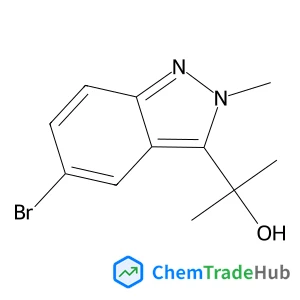
2-(5-Bromo-2-methyl-2H-indazol-3-yl)-2-propanol
CAS Number:
1823787-20-7
Molecular Formula:
C11H13BrN2O
![1-Oxa-8-azaspiro[4.5]decan-3-ol structure](https://static.chemtradehub.com/structs/757/757239-76-2-a0ec.webp "1-Oxa-8-azaspiro[4.5]decan-3-ol structure")
Recommended Suppliers







Disclaimer
This page provides academic journal information for reference and research purposes only. We are not affiliated with any journal publishers and do not handle publication submissions. For publication-related inquiries, please contact the respective journal publishers directly.
If you notice any inaccuracies in the information displayed, please contact us at support@chemtradehub.com. We will promptly review and address your concerns.