












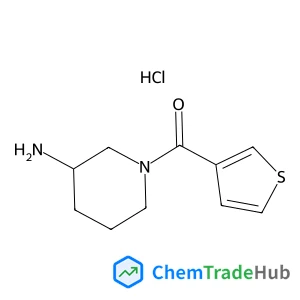
(3-Amino-piperidin-1-yl)-thiophen-3-yl-methanone hydrochloride
CAS Number:
1185316-70-4
Molecular Formula:
C10H15ClN2OS
Zahra Baniamerian, Amir Sadra Jafari, Noel Perera
Using a microchannel heatsink is an advanced cooling technique to meet the cooling needs of electronic devices installed with high-power integrated circuit packages (microchips). These heat sinks utilize microchannel heat exchangers (MCHEs) with boiling-mode cooling (BMC) and nanofluids. Such MCHEs usually have high operating pressures (3–13 bar). In spite of a large number of studies carried out on other thermo-physical properties of nanofluids, few studies have been carried out on the latent heat of evaporation (LHE) of nanofluids. The limited published literature all reports the LHE under atmospheric conditions, which are outside of the operating range of MCHEs. The precise estimation of the LHE is essential for the appropriate design of MCHEs. In the present study, a novel experimental setup is applied for the measurement of LHE under high operating pressure and temperature conditions (90–180 °C and 80–880 kPa) and for investigating the effects of pressure on the LHE. It has been shown that by exposing a nanofluid under pressure some new hydrogen bonds are formed increasing the LHE, which significantly improves the performance of boiling cooling of MCHEs. Based on the obtained results by pressurizing a 2 vol% (4.6 wt%) SiO2 nanofluid, the LHE can be increased by about 17% in comparison with that of a similar non-pressurized sample. On the other hand, pressurization can improve nanofluid stability. Finally, a correlation is proposed for the calculation of enthalpy of evaporation of SiO2 nanofluids.
Hyeon Seok Ju, Jung Sang Cho, Jong Hwa Kim, Yun Ju Choi, Yun Chan Kang
DOI: 10.1039/C5CP06206C
Hèctor Prats, Pablo Gamallo, Ramón Sayós, Francesc Illas
DOI: 10.1039/C5CP06863K
Thomas Fransson, Iurii Zhovtobriukh, Patrick Norman, Lars G. M. Pettersson
DOI: 10.1039/C5CP03919C
Martin Stachoň, Aleš Vítek, René Kalus
DOI: 10.1039/C5CP05257B
Ludmila B. Boinovich, Alexandre M. Emelyanenko, Kirill A. Emelyanenko, Konstantin I. Maslakov
DOI: 10.1039/C5CP06988B
Nan Chen, Xianke Huang, Liangti Qu
DOI: 10.1039/C5CP04391C
Mohammed Ahmed, Ajay K. Singh, Jahur A. Mondal
DOI: 10.1039/C5CP07014G
Yu Li, Firuz Demir, Satoshi Kaneko, Shintaro Fujii, Tomoaki Nishino, George Kirczenow, Manabu Kiguchi
DOI: 10.1039/C5CP05227K
ShuangYing Ma, Chaoyu He, L. Z. Sun, Haiping Lin, Youyong Li, K. W. Zhang
DOI: 10.1039/C5CP05901A
When handling 2-Methyl-2-propanyl 5-amino-2-thiophenecarboxylate (CAS: 1498311-5...
5-Bromo-1,2-dichloro-3-fluorobenzene (CAS: 1000572-93-9) is a crystalline solid ...
(2R)-2-Amino-2-(4-bromophenyl)ethanol (CAS: 354153-64-3) should be stored in a c...
Methyl 4-(aminomethyl)tetrahydro-2H-pyran-4-carboxylate hydrochloride (CAS: 3627...
1,4-Dimethyl-1H-pyrazole-5-sulfonyl chloride is primarily used as an intermediat...
Dinaphtho[1,2-b:2',1'-d]furan is generally safe when handled with appropriate pe...
The market for 7-Methyl-7,9-dihydro-1H-purine-2,6,8(3H)-trione (CAS: 612-37-3) i...
2-(4-Chlorophenyl)malonaldehyde (CAS: 205676-17-1) is a colorless or light yello...
2-Methylchrysene (CAS: 3351-32-4) is typically synthesized via the reaction of c...
N-(6-aminopyrimidin-4-yl)acetamide (CAS: 89533-23-3) is generally considered saf...

Physical Chemistry Chemical Physics (PCCP) is an international journal co-owned by 19 physical chemistry and physics societies from around the world. This journal publishes original, cutting-edge research in physical chemistry, chemical physics and biophysical chemistry. To be suitable for publication in PCCP, articles must include significant innovation and/or insight into physical chemistry; this is the most important criterion that reviewers and Editors will judge against when evaluating submissions. The journal has a broad scope and welcomes contributions spanning experiment, theory, computation and data science. Topical coverage includes spectroscopy, dynamics, kinetics, statistical mechanics, thermodynamics, electrochemistry, catalysis, surface science, quantum mechanics, quantum computing and machine learning. Interdisciplinary research areas such as polymers and soft matter, materials, nanoscience, energy, surfaces/interfaces, and biophysical chemistry are welcomed if they demonstrate significant innovation and/or insight into physical chemistry. Joined experimental/theoretical studies are particularly appreciated when complementary and based on up-to-date approaches.
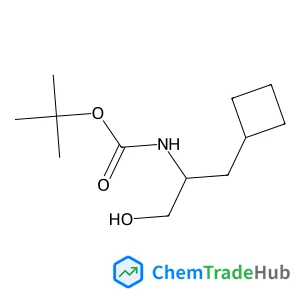
![methyl 6-amino-1H-pyrrolo[2,3-b]pyridine-4-carboxylate structure](https://static.chemtradehub.com/structs/119/1190315-60-6-9d9a.webp "methyl 6-amino-1H-pyrrolo[2,3-b]pyridine-4-carboxylate structure")
![2-Bromo-7-chloro-4H-pyrrolo[2,3-b]pyrazine structure](https://static.chemtradehub.com/structs/115/1150617-58-5-0b0a.webp "2-Bromo-7-chloro-4H-pyrrolo[2,3-b]pyrazine structure")
![3-[7-Amino-3-(3-pyridinyl)pyrazolo[1,5-a]pyrimidin-6-yl]phenol structure](https://static.chemtradehub.com/structs/861/861249-77-6-025b.webp "3-[7-Amino-3-(3-pyridinyl)pyrazolo[1,5-a]pyrimidin-6-yl]phenol structure")




