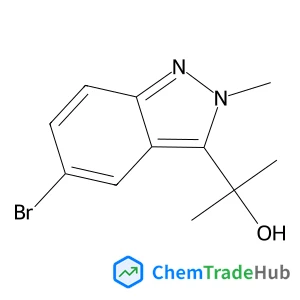
2-(5-Bromo-2-methyl-2H-indazol-3-yl)-2-propanol
CAS Number:
1823787-20-7
Molecular Formula:
C11H13BrN2O
Sergei Manzhos, Shunsaku Tsuda, Manabu Ihara
Machine learning (ML) based methods and tools have now firmly established themselves in physical chemistry and in particular in theoretical and computational chemistry and in materials chemistry. The generality of popular ML techniques such as neural networks or kernel methods (Gaussian process and kernel ridge regression and their flavors) permitted their application to diverse problems from prediction of properties of functional materials (catalysts, solid state ionic conductors, etc.) from descriptors to the building of interatomic potentials (where ML is currently routinely used in applications) and electron density functionals. These ML techniques are assumed to have superior expressive power of nonlinear methods, and are often used “as is”, with concepts such as “non-parametric” or “deep learning“ used without a clear justification for their need or advantage over simpler and more robust alternatives. In this Perspective, we highlight some interrelations between popular ML techniques and traditional linear regressions and basis expansions and demonstrate that in certain regimes (such as a very high dimensionality) these approximations might collapse. We also discuss ways to recover the expressive power of a nonlinear approach and to help select hyperparameters with the help of high-dimensional model representation and to obtain elements of insight while preserving the generality of the method.

Faraday Discussions

Lab on a Chip

Mini-Reviews in Medicinal Chemistry

Journal of Enzyme inhibition and Medicinal Chemistry

Advanced Engineering Materials

Contact Lens & Anterior Eye

Environmental Toxicology and Pharmacology

Coloration Technology

Physical Chemistry Chemical Physics

Journal of Medical Biochemistry
Haifang Mao, Hongzhao Wang, Ting Tang, Qixuan Shi, Haiyan Yu, Xiaojun Hu, Zuobing Xiao, Pingyi Zhang, Jibo Liu
DOI: 10.1039/D1SE00011J
DOI: 10.1039/D0SE01831G
Ashish Gaur, Parrydeep K. Sachdeva, Rajinder Kumar, Takahiro Maruyama, Chandan Bera, Vivek Bagchi
DOI: 10.1039/D0SE01543A
Fen Li, Jinxia Li, Lihui Zhou, Sheng Dai
DOI: 10.1039/D0SE01750G
Bingshe Xu, Xueji Zhang
DOI: 10.1039/D0SE01575J
Ridwanur Chowdhury, Yan Zhao, Xinhua Liu, Nigel Brandon
DOI: 10.1039/D0SE01611J
Fumiaki Takagi
DOI: 10.1039/D0SE00998A
Cheng Jiang, Ping Li, Qi Feng, Zhi liang Zhao, Keguang Yao, Jiantao Fan, Hui Li, Haijiang Wang
DOI: 10.1039/D0SE01516D
When handling 2-Methyl-2-propanyl 5-amino-2-thiophenecarboxylate (CAS: 1498311-5...
5-Bromo-1,2-dichloro-3-fluorobenzene (CAS: 1000572-93-9) is a crystalline solid ...
(2R)-2-Amino-2-(4-bromophenyl)ethanol (CAS: 354153-64-3) should be stored in a c...
Methyl 4-(aminomethyl)tetrahydro-2H-pyran-4-carboxylate hydrochloride (CAS: 3627...
1,4-Dimethyl-1H-pyrazole-5-sulfonyl chloride is primarily used as an intermediat...
Dinaphtho[1,2-b:2',1'-d]furan is generally safe when handled with appropriate pe...
The market for 7-Methyl-7,9-dihydro-1H-purine-2,6,8(3H)-trione (CAS: 612-37-3) i...
2-(4-Chlorophenyl)malonaldehyde (CAS: 205676-17-1) is a colorless or light yello...
2-Methylchrysene (CAS: 3351-32-4) is typically synthesized via the reaction of c...
N-(6-aminopyrimidin-4-yl)acetamide (CAS: 89533-23-3) is generally considered saf...
Physical Chemistry Chemical Physics (PCCP) is an international journal co-owned by 19 physical chemistry and physics societies from around the world. This journal publishes original, cutting-edge research in physical chemistry, chemical physics and biophysical chemistry. To be suitable for publication in PCCP, articles must include significant innovation and/or insight into physical chemistry; this is the most important criterion that reviewers and Editors will judge against when evaluating submissions. The journal has a broad scope and welcomes contributions spanning experiment, theory, computation and data science. Topical coverage includes spectroscopy, dynamics, kinetics, statistical mechanics, thermodynamics, electrochemistry, catalysis, surface science, quantum mechanics, quantum computing and machine learning. Interdisciplinary research areas such as polymers and soft matter, materials, nanoscience, energy, surfaces/interfaces, and biophysical chemistry are welcomed if they demonstrate significant innovation and/or insight into physical chemistry. Joined experimental/theoretical studies are particularly appreciated when complementary and based on up-to-date approaches.
methyl]-N,2-dimethyl-2-propanesulfinamide structure](https://static.chemtradehub.com/structs/256/2565792-50-7-8a26.webp "N-[(R)-[3-(Benzyloxy)-2-(dicyclohexylphosphino)phenyl](phenyl)methyl]-N,2-dimethyl-2-propanesulfinamide structure")