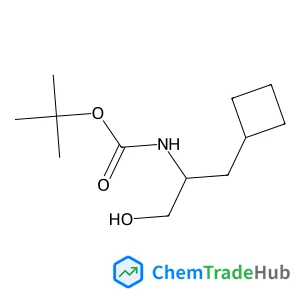
2-Methyl-2-propanyl (1-cyclobutyl-3-hydroxy-2-propanyl)carbamate
CAS Number:
816429-99-9
Molecular Formula:
C12H23NO3
Yue-Hong Liu, Xiang-Qian Lu, Mi-Mi Dong, Guang-Ping Zhang, Zong-Liang Li, Chuan-Kui Wang, Xiao-Xiao Fu
Diodes have been widely studied as one of the most commonly used electronic components in circuits, and it is important to find diodes with an excellent rectification performance. Herein, we investigate the electronic and transport properties of Schottky contact diodes based on zigzag hydrogenated blue phosphorene nanoribbons, by employing density functional theory combined with the non-equilibrium Green's function. It is found that the adsorption of transition metal atoms Sc/Cr/Ti and Ni on the top site of blue phosphorene nanoribbons leads to metallic and semiconducting properties, respectively. Devices consisting of the planar contact of the metallic and semiconducting nanoribbons show rectifying behavior due to the Schottky barriers of the homojunctions. The current is preferential to flow from the semiconducting side to the metallic side. The rectification ratio of the Sc–Ni device and the Cr–Ni device can reach up to 108, which is much higher than that of traditional p–n junctions of about 105–107. The high rectification ratio at low bias regions, together with the low threshold voltages and negligible reverse currents, make blue phosphorene nanoribbon homojunctions ideal rectifier diodes.
Sandro Jurinovich, Carles Curutchet, Benedetta Mennucci
DOI: 10.1039/C5CP00986C
Xuefeng Wang, Jiangyan Bian, Lichao Xu, Hua Wang, Shengyu Feng
DOI: 10.1039/C5CP05473G
Markus Martincic, Elzbieta Pach, Belén Ballesteros, Gerard Tobias
DOI: 10.1039/C5CP04664E
Yang Zhang, Dang-Qi Fang, Sheng-Li Zhang, Rao Huang, Yu-Hua Wen
DOI: 10.1039/C5CP06564J
Lingting Ye, Shanwen Tao, Kui Xie
DOI: 10.1039/C5CP06742A
Masashi Honda, Yuya Oaki, Hiroaki Imai
DOI: 10.1039/C5CP05584A
Helgi Rafn Hróðmarsson, Ágúst Kvaran
DOI: 10.1039/C5CP06185G
Keitel Cervantes-Salguero, Waka Nakanishi, Ibuki Kawamata, Kosuke Minami, Hirokazu Komatsu, Satoshi Murata
DOI: 10.1039/C5CP05765E
Yong Fu Nie, Qian Wang, Xiang Ying Chen, Zhong Jie Zhang
DOI: 10.1039/C5CP06147D
When handling 2-Methyl-2-propanyl 5-amino-2-thiophenecarboxylate (CAS: 1498311-5...
5-Bromo-1,2-dichloro-3-fluorobenzene (CAS: 1000572-93-9) is a crystalline solid ...
(2R)-2-Amino-2-(4-bromophenyl)ethanol (CAS: 354153-64-3) should be stored in a c...
Methyl 4-(aminomethyl)tetrahydro-2H-pyran-4-carboxylate hydrochloride (CAS: 3627...
1,4-Dimethyl-1H-pyrazole-5-sulfonyl chloride is primarily used as an intermediat...
Dinaphtho[1,2-b:2',1'-d]furan is generally safe when handled with appropriate pe...
The market for 7-Methyl-7,9-dihydro-1H-purine-2,6,8(3H)-trione (CAS: 612-37-3) i...
2-(4-Chlorophenyl)malonaldehyde (CAS: 205676-17-1) is a colorless or light yello...
2-Methylchrysene (CAS: 3351-32-4) is typically synthesized via the reaction of c...
N-(6-aminopyrimidin-4-yl)acetamide (CAS: 89533-23-3) is generally considered saf...

Physical Chemistry Chemical Physics (PCCP) is an international journal co-owned by 19 physical chemistry and physics societies from around the world. This journal publishes original, cutting-edge research in physical chemistry, chemical physics and biophysical chemistry. To be suitable for publication in PCCP, articles must include significant innovation and/or insight into physical chemistry; this is the most important criterion that reviewers and Editors will judge against when evaluating submissions. The journal has a broad scope and welcomes contributions spanning experiment, theory, computation and data science. Topical coverage includes spectroscopy, dynamics, kinetics, statistical mechanics, thermodynamics, electrochemistry, catalysis, surface science, quantum mechanics, quantum computing and machine learning. Interdisciplinary research areas such as polymers and soft matter, materials, nanoscience, energy, surfaces/interfaces, and biophysical chemistry are welcomed if they demonstrate significant innovation and/or insight into physical chemistry. Joined experimental/theoretical studies are particularly appreciated when complementary and based on up-to-date approaches.
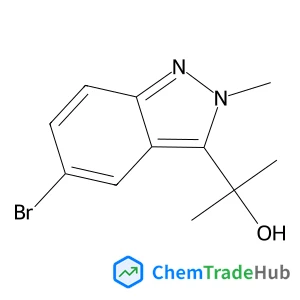
![2-Bromo-7-chloro-4H-pyrrolo[2,3-b]pyrazine structure](https://static.chemtradehub.com/structs/115/1150617-58-5-0b0a.webp "2-Bromo-7-chloro-4H-pyrrolo[2,3-b]pyrazine structure")