












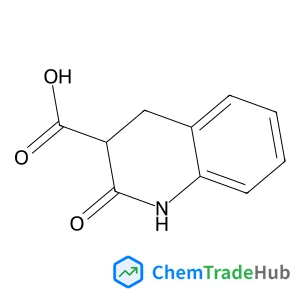
2-Oxo-1,2,3,4-tetrahydro-3-quinolinecarboxylic acid
CAS Number:
246867-17-4
Molecular Formula:
C10H9NO3
Shanshan Du, Fengyun Liu, Huiying Cao, Zhihao Mi, Haihua Huang
Luminescence intensity is a critical factor for upconversion (UC) oxides with high phonon energy. Herein, an effective enhancement in UC luminescence is achieved in the ZnMoO4:Er3+ phosphor via Bi3+ doping. UV-vis-NIR diffuse reflectance spectroscopy verifies the fact that the absorption at 980 nm is enhanced by the introduction of Bi3+. The physical mechanism is that Bi3+ doping affects the transition probability between the f-levels of Er3+. Therefore, the green and red emission intensities are increased 82.4 and 37 times, respectively. The dependence of luminescence intensity on the power of Bi3+-doped ZnMoO4:Er3+ combined with density functional theory (DFT) calculations also confirms the proposed energy transfer mechanism. Based on the excellent green emission, the 980 nm excited optical temperature sensing property of the synthesized sample is realized in a wide temperature range by monitoring the intensity of UC luminescence. The theoretically calculated absolute sensitivity of the optical temperature sensor was SA = 3.04% K−1 at 1253 K. This work paves a new way for enhancing UC luminescence and will arouse extensive interest in noncontact temperature-sensing applications.
Tomofumi Tada, Kazunari Yoshizawa
DOI: 10.1039/C5CP05423K
Michael Zuzovski, Amir Boag, Amir Natan
DOI: 10.1039/C5CP01090J
Xiaoqing Tian, Lin Liu, Yu Du, Juan Gu, Jian-bin Xu, Boris I. Yakobson
DOI: 10.1039/C5CP05443E
Linus O. Johannissen, Sam Hay, Nigel S. Scrutton
DOI: 10.1039/C5CP00614G
Keitel Cervantes-Salguero, Waka Nakanishi, Ibuki Kawamata, Kosuke Minami, Hirokazu Komatsu, Satoshi Murata
DOI: 10.1039/C5CP05765E
Gaosheng Nie, Jun Xu, Jianying He, Qingchi Xu, Zhiliang Zhang
DOI: 10.1039/C5CP05435D
Heinz-Jürgen Flad, Gohar Harutyunyan, Bert-Wolfgang Schulze
DOI: 10.1039/C5CP01183C
Ludmila B. Boinovich, Alexandre M. Emelyanenko, Kirill A. Emelyanenko, Konstantin I. Maslakov
DOI: 10.1039/C5CP06988B
Li-Yong Gan, Li-Hong Zhang, Qingyun Zhang, Chun-Sheng Guo, Udo Schwingenschlögl
DOI: 10.1039/C5CP05695K
When handling 2-Methyl-2-propanyl 5-amino-2-thiophenecarboxylate (CAS: 1498311-5...
5-Bromo-1,2-dichloro-3-fluorobenzene (CAS: 1000572-93-9) is a crystalline solid ...
(2R)-2-Amino-2-(4-bromophenyl)ethanol (CAS: 354153-64-3) should be stored in a c...
Methyl 4-(aminomethyl)tetrahydro-2H-pyran-4-carboxylate hydrochloride (CAS: 3627...
1,4-Dimethyl-1H-pyrazole-5-sulfonyl chloride is primarily used as an intermediat...
Dinaphtho[1,2-b:2',1'-d]furan is generally safe when handled with appropriate pe...
The market for 7-Methyl-7,9-dihydro-1H-purine-2,6,8(3H)-trione (CAS: 612-37-3) i...
2-(4-Chlorophenyl)malonaldehyde (CAS: 205676-17-1) is a colorless or light yello...
2-Methylchrysene (CAS: 3351-32-4) is typically synthesized via the reaction of c...
N-(6-aminopyrimidin-4-yl)acetamide (CAS: 89533-23-3) is generally considered saf...

Physical Chemistry Chemical Physics (PCCP) is an international journal co-owned by 19 physical chemistry and physics societies from around the world. This journal publishes original, cutting-edge research in physical chemistry, chemical physics and biophysical chemistry. To be suitable for publication in PCCP, articles must include significant innovation and/or insight into physical chemistry; this is the most important criterion that reviewers and Editors will judge against when evaluating submissions. The journal has a broad scope and welcomes contributions spanning experiment, theory, computation and data science. Topical coverage includes spectroscopy, dynamics, kinetics, statistical mechanics, thermodynamics, electrochemistry, catalysis, surface science, quantum mechanics, quantum computing and machine learning. Interdisciplinary research areas such as polymers and soft matter, materials, nanoscience, energy, surfaces/interfaces, and biophysical chemistry are welcomed if they demonstrate significant innovation and/or insight into physical chemistry. Joined experimental/theoretical studies are particularly appreciated when complementary and based on up-to-date approaches.
![2,5-Dichloro-1H-pyrrolo[3,2-b]pyridine structure](https://static.chemtradehub.com/structs/100/1000342-87-9-f632.webp "2,5-Dichloro-1H-pyrrolo[3,2-b]pyridine structure")

![1-{[5-(4,4,5,5-Tetramethyl-1,3,2-dioxaborolan-2-yl)-2-thienyl]methyl}piperidine structure](https://static.chemtradehub.com/structs/121/1218790-44-3-baef.webp "1-{[5-(4,4,5,5-Tetramethyl-1,3,2-dioxaborolan-2-yl)-2-thienyl]methyl}piperidine structure")




