


![[(2R)-6,6-Dimethyl-2-morpholinyl]methanol hydrochloride (1:1) structure](https://static.chemtradehub.com/structs/141/1416444-88-6-e06a.webp "[(2R)-6,6-Dimethyl-2-morpholinyl]methanol hydrochloride (1:1) structure")
[(2R)-6,6-Dimethyl-2-morpholinyl]methanol hydrochloride (1:1)
CAS Number:
1416444-88-6
Molecular Formula:
C7H16ClNO2
Mengzhao Du, Xuan Liu, Shijie Xie
With the discovery of the chiral-induced spin selectivity (CISS) effect, it has been recognized that spin and structural spin–orbit coupling (SOC) play important roles in the electro-optical properties of chiral materials. We redefine the spin-dependent current and magnetic moment operators to include chiral-induced SOC in a helical polymer and deduce optical absorption and circular dichroism (CD) formulae. The fine structure in the optical spectra is calculated for a helical polymer described with the tight-binding model. The effects of both the electron orbit and spin on the optical absorption and CD are discussed. Our investigations demonstrate that the synergy between the electron orbit and spin will contribute to higher-sensitivity circularly polarized light (CPL) detection.

Chemical Communications

Journal of Peptide Science

Crystallography Reports

Organic Process Research & Development

Saudi Pharmaceutical Journal

Current Opinion in Solid State & Materials Science

Russian Journal of Coordination Chemistry

New Journal of Chemistry

Russian Journal of General Chemistry

Journal of Saudi Chemical Society
Liang-Wei Zhu, Wu Yang, Ling-Shu Wan, Zhi-Kang Xu
DOI: 10.1039/C4PY00491D
Xue-Song Ge, Chen He, Wei-Dong He, Sheng-Qi Chen
DOI: 10.1039/C4PY00425F
Florian Paulus, Dirk Steinhilber, Pia Welker, Dorothea Mangoldt, Kai Licha, Harald Depner, Stephan Sigrist, Rainer Haag
DOI: 10.1039/C4PY00430B
Bo-Geng Li
DOI: 10.1039/C4PY00622D
Xinxin Li, Yanhua Yang, Guojun Li
DOI: 10.1039/C4PY00308J
Stefan Reinicke, Pieter Espeel, Milan M. Stamenović, Filip E. Du Prez
DOI: 10.1039/C4PY00468J
Shudong Wang, Guangming Gong, Hua Su, Wenya Liu, Zhen Wang, Li Li
DOI: 10.1039/C4PY00212A
Roukaya Hamiye, Ali Alaaeddine, Mouhamad Awada, Benjamin Campagne, Sylvain Caillol, Sophie M. Guillaume, Bruno Ameduri, Jean-François Carpentier
DOI: 10.1039/C4PY00547C
When handling lithium chloride hydrate (1:1:1) (CAS: 16712-20-2), it is importan...
4-(4H-1,2,4-Triazol-4-yl)piperidine is generally considered safe for use in phar...
Waste containing 1,3-Thiazole-2-carboxamide (CAS: 16733-85-0) should be collecte...
5-(Difluoromethyl)-2-fluorobenzonitrile (CAS: 934175-58-3) is subject to regulat...
Methyl 3-acetamido-2-thiophenecarboxylate can be synthesized by the reaction of ...
4-Isoquinolinecarbonitrile is a chemical compound with the CAS number 34846-65-6...
Store Methyl 1H-1,2,3-triazole-4-carboxylate (CAS: 877309-59-6) in a cool, dry p...
6-Bromo[1,3]thiazolo[5,4-b]pyridin-2-amine (CAS: 1160791-13-8) is subject to the...
(2S,3S)-2-Ammonio-3-(3,4-dihydroxyphenyl)-3-hydroxypropanoate (CAS: 23651-95-8) ...
7-Bromo-3-methyl-3,4-dihydroquinazolin-4-one is a solid with a crystalline form....

Physical Chemistry Chemical Physics (PCCP) is an international journal co-owned by 19 physical chemistry and physics societies from around the world. This journal publishes original, cutting-edge research in physical chemistry, chemical physics and biophysical chemistry. To be suitable for publication in PCCP, articles must include significant innovation and/or insight into physical chemistry; this is the most important criterion that reviewers and Editors will judge against when evaluating submissions. The journal has a broad scope and welcomes contributions spanning experiment, theory, computation and data science. Topical coverage includes spectroscopy, dynamics, kinetics, statistical mechanics, thermodynamics, electrochemistry, catalysis, surface science, quantum mechanics, quantum computing and machine learning. Interdisciplinary research areas such as polymers and soft matter, materials, nanoscience, energy, surfaces/interfaces, and biophysical chemistry are welcomed if they demonstrate significant innovation and/or insight into physical chemistry. Joined experimental/theoretical studies are particularly appreciated when complementary and based on up-to-date approaches.
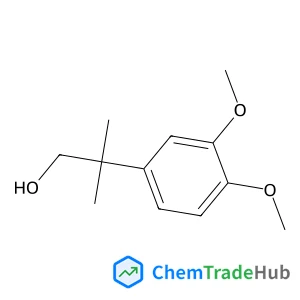
![6-(Benzyloxy)-8-(2-bromoacetyl)-2H-benzo[b][1,4]oxazin-3(4H)-one structure](https://static.chemtradehub.com/structs/926/926319-53-1-2287.webp "6-(Benzyloxy)-8-(2-bromoacetyl)-2H-benzo[b][1,4]oxazin-3(4H)-one structure")
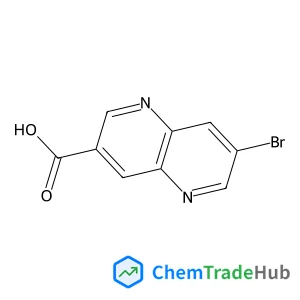
![5,10-Dihydroindeno[2,1-a]indene structure](https://static.chemtradehub.com/structs/654/6543-29-9-71ca.webp "5,10-Dihydroindeno[2,1-a]indene structure")






