


Doping effects on the antibonding states and carriers of two-dimensional PC6
Literature Information
Publication Date
2022-03-31
DOI
10.1039/D2CP00848C
Impact Factor
3.676
Authors
Mi Zhong, Wei Zeng, Han Qin, Sheng-Hai Zhu, Xing-Han Li, Fu-Sheng Liu, Bin Tang, Qi-Jun Liu
View Original
Abstract
The absence of a bandgap in pristine graphene severely restricts its application, and there is high demand for other novel two-dimensional (2D) materials. PC6 has recently emerged as a promising 2D material with a direct band gap and ultrahigh carrier mobility. In light of the remarkable properties of an intrinsic PC6 monolayer, it would be intriguing to find out whether a doped PC6 monolayer displays properties superior to the pure system. In this study, we have performed density functional theory calculations to understand the doping effects of both P-site and C-site substitution in PC6 and, for the first time, we discovered doping-related impurity-level anomalies in this system. We successfully explained why no donor or acceptor defect states exist in the band structures of XP–PC6 (X = C, Ge, Sn, O, S, Se, or Te). In group-IV-substituted systems, these dopant states hybridize with host states near the Fermi level rather than act as acceptors, which is deemed to be a potential way to tune the mobility of PC6. In the case of group-VI substitution, the underlying mechanism relating to doping anomalies arises from excess electrons occupying antibonding states.
Recommended Journals

Journal of Natural Medicines

Russian Journal of Applied Chemistry

New Journal of Chemistry

Russian Journal of Coordination Chemistry

Russian Chemical Bulletin

Acta Materialia

Saudi Pharmaceutical Journal

Russian Journal of Organic Chemistry

Current Opinion in Solid State & Materials Science

Journal of Saudi Chemical Society
Related Literature
Supramolecular flower micelle formation of polyrotaxane-containing triblock copolymers prepared from macro-chain transfer agents bearing molecular hooks
Atsushi Tamura, Hajime Tanaka, Nobuhiko Yui
2014-05-16
Paper
DOI: 10.1039/C4PY00379A
A supramolecular approach for fabrication of photo-responsive block-controllable supramolecular polymers
Lichao Liu, Leilei Rui, Yun Gao, Weian Zhang
2014-06-27
Paper
DOI: 10.1039/C4PY00645C
Synthesis of polyethylene and polystyrene miktoarm star copolymers using an “in–out” strategy
Bo-Geng Li
2014-05-23
Paper
DOI: 10.1039/C4PY00622D
Nano-building block based-hybrid organic–inorganic copolymers with self-healing properties
A. Guinault, S. Delalande
2014-04-03
Paper
DOI: 10.1039/C4PY00172A
Synthesis and characterization of quaternary phosphonium-containing, trithiocarbonate RAFT agents
Longhe Zhang, Qiang Tang, R. A. Weiss, Kevin A. Cavicchi
2014-06-27
Paper
DOI: 10.1039/C4PY00615A
Multi-responsive protein nanocarriers from an anionic dynamic covalent copolymer
Xiaobei Wang, Lin Wang, Shixia Yang, Hanying Zhao
2014-04-22
Paper
DOI: 10.1039/C4PY00117F
Enhanced performance for organic bulk heterojunction solar cells by cooperative assembly of ter(ethylene oxide) pendants
Lie Chen, Shaojie Tian
2014-03-11
Paper
DOI: 10.1039/C4PY00095A
A well-defined coil–comb polycationic brush with “star polymers” as side chains for gene delivery
Mingming Zhang, Qingqing Xiong, Yinsong Wang, Zhibao Zhang, Wei Shen, Lingrong Liu, Quanyao Wang
2014-04-22
Paper
DOI: 10.1039/C4PY00311J
Dimanganese decacarbonyl/2-cyanoprop-2-yl-1-dithionaphthalate: toward sunlight induced RAFT polymerization of MMA
Xuelang Miao, Jiajia Li, Zhengbiao Zhang, Zhenping Cheng, Wei Zhang, Jian Zhu, Xiulin Zhu
2014-04-23
Paper
DOI: 10.1039/C4PY00509K
You might also like
Compound Q&A
What precautions should be taken when handling lithium chloride hydrate (1:1:1) (CAS: 16712-20-2)?
When handling lithium chloride hydrate (1:1:1) (CAS: 16712-20-2), it is importan...
16712-20-2Lithium chloride hyd...
Compound Q&A
Is 4-(4H-1,2,4-Triazol-4-yl)piperidine (CAS: 690261-92-8) safe?
4-(4H-1,2,4-Triazol-4-yl)piperidine is generally considered safe for use in phar...
690261-92-84-(4H-1,2,4-Triazol-...
Compound Q&A
How should waste containing 1,3-Thiazole-2-carboxamide (CAS: 16733-85-0) be handled?
Waste containing 1,3-Thiazole-2-carboxamide (CAS: 16733-85-0) should be collecte...
16733-85-01,3-Thiazole-2-carbo...
Compound Q&A
What regulatory guidelines apply to 5-(Difluoromethyl)-2-fluorobenzonitrile (CAS: 934175-58-3)?
5-(Difluoromethyl)-2-fluorobenzonitrile (CAS: 934175-58-3) is subject to regulat...
934175-58-35-(Difluoromethyl)-2...
Compound Q&A
How is Methyl 3-acetamido-2-thiophenecarboxylate (CAS: 22288-79-5) typically synthesized?
Methyl 3-acetamido-2-thiophenecarboxylate can be synthesized by the reaction of ...
22288-79-5Methyl 3-acetamido-2...
Compound Q&A
What is 4-Isoquinolinecarbonitrile (CAS: 34846-65-6)?
4-Isoquinolinecarbonitrile is a chemical compound with the CAS number 34846-65-6...
34846-65-64-Isoquinolinecarbon...
Compound Q&A
How should Methyl 1H-1,2,3-triazole-4-carboxylate (CAS: 877309-59-6) be stored?
Store Methyl 1H-1,2,3-triazole-4-carboxylate (CAS: 877309-59-6) in a cool, dry p...
877309-59-6Methyl 1H-1,2,3-tria...
Compound Q&A
What regulatory guidelines apply to 6-Bromo[1,3]thiazolo[5,4-b]pyridin-2-amine (CAS: 1160791-13-8)?
6-Bromo[1,3]thiazolo[5,4-b]pyridin-2-amine (CAS: 1160791-13-8) is subject to the...
1160791-13-86-Bromo[1,3]thiazolo...
Compound Q&A
Is (2S,3S)-2-Ammonio-3-(3,4-dihydroxyphenyl)-3-hydroxypropanoate (CAS: 23651-95-8) safe?
(2S,3S)-2-Ammonio-3-(3,4-dihydroxyphenyl)-3-hydroxypropanoate (CAS: 23651-95-8) ...
23651-95-8(2S,3S)-2-Ammonio-3-...
Compound Q&A
What are the physical and chemical properties of 7-bromo-3-methyl-3,4-dihydroquinazolin-4-one (CAS: 1293987-84-4)?
7-Bromo-3-methyl-3,4-dihydroquinazolin-4-one is a solid with a crystalline form....
1293987-84-47-bromo-3-methyl-3,4...
Source Journal
Physical Chemistry Chemical Physics

CiteScore:
5.5
Self-citation Rate:
10.3%
Articles per Year:
3036
Physical Chemistry Chemical Physics (PCCP) is an international journal co-owned by 19 physical chemistry and physics societies from around the world. This journal publishes original, cutting-edge research in physical chemistry, chemical physics and biophysical chemistry. To be suitable for publication in PCCP, articles must include significant innovation and/or insight into physical chemistry; this is the most important criterion that reviewers and Editors will judge against when evaluating submissions. The journal has a broad scope and welcomes contributions spanning experiment, theory, computation and data science. Topical coverage includes spectroscopy, dynamics, kinetics, statistical mechanics, thermodynamics, electrochemistry, catalysis, surface science, quantum mechanics, quantum computing and machine learning. Interdisciplinary research areas such as polymers and soft matter, materials, nanoscience, energy, surfaces/interfaces, and biophysical chemistry are welcomed if they demonstrate significant innovation and/or insight into physical chemistry. Joined experimental/theoretical studies are particularly appreciated when complementary and based on up-to-date approaches.
Recommended Compounds
![8-Bromo-6-fluoro[1,2,4]triazolo[1,5-a]pyridin-2-amine structure](https://static.chemtradehub.com/structs/125/1257705-51-3-9f4a.webp "8-Bromo-6-fluoro[1,2,4]triazolo[1,5-a]pyridin-2-amine structure")
8-Bromo-6-fluoro[1,2,4]triazolo[1,5-a]pyridin-2-amine
CAS Number:
1257705-51-3
Molecular Formula:
C6H4BrFN4
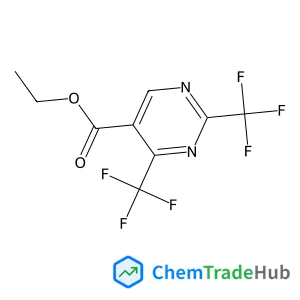
Ethyl 2,4-bis(trifluoromethyl)-5-pyrimidinecarboxylate
CAS Number:
188781-15-9
Molecular Formula:
C9H6F6N2O2
Recommended Suppliers





Disclaimer
This page provides academic journal information for reference and research purposes only. We are not affiliated with any journal publishers and do not handle publication submissions. For publication-related inquiries, please contact the respective journal publishers directly.
If you notice any inaccuracies in the information displayed, please contact us at support@chemtradehub.com. We will promptly review and address your concerns.