




2-Amino-2-(4-(pyridin-2-YL)phenyl)acetic acid hydrochloride
CAS Number:
1135818-89-1
Molecular Formula:
C13H13ClN2O2
Sujoy Kumar Ghosh, Santanu Jana, Zinnia Mallick, Subrata Sarkar, Dipankar Mandal
In this work, an all-fiber piezoelectric nanogenerator (A-PNG) is designed by using ZnO nanoparticles (NPs) reinforced poly(vinylidene fluoride) (PVDF) electrospun nanofibers as the active layer and interlocked conducting microfiber composite mats as electrodes to convert the mechanical energy into electrical power. Theoretical simulation using finite element analysis on stress distribution shows that the external stress can be concentrated to deform ZnO nanoparticles by 7.2 fold of magnitude compared to the surrounding neat PVDF, improving the stress-induced large polarization in the resulting PVDF–ZnO composite nanofibers, thus enabling improved generation of electricity. Nano-scale investigation revealed superior generation of ferro- and piezo-electricity using the PVDF–ZnO composite nanofibers, showing an excellent piezoelectric charge coefficient of d33 = −32 pC N−1. As a result, the A-PNG shows a high electrical throughput, with 18 V of open-circuit output voltage, 26.7 μW cm−2 of output power density, and 11.52 × 10⁻¹² Pa−1 for the piezoelectric figure of merit (FoM). In addition, the excellent mechanical to the electrical energy conversion efficiency of 91%, means that the system is suitable for driving a range of consumer electronics components, such as capacitors and light-emitting diodes (LEDs). The quick response time of 10 ms means it is feasible for ultra-fast signal detection in a healthcare monitoring system. Owing to the skin conformable functionality on different body parts, such as wrists, fingers, throat, and knees, the A-PNG was found to be attractive for application in detecting the pulse rate, muscle behavior, and coughing signal characteristics in order to monitor health conditions. The robust device structure means the A-PNG can be used as a weight monitoring sensor as it is able to predict the weight of a person in a weight range between 45 and 80 kg.

Acta Metallurgica Sinica-English Letters

Chinese Journal of Chemistry

Critical Reviews in Solid State and Materials Sciences

Journal of Asian Natural Products Research

Bioorganic & Medicinal Chemistry

Herald of the Russian Academy of Sciences

Atomization and Sprays

Polycyclic Aromatic Compounds

Electroanalysis

Cellulose
László Biczók, Pierre Valat, Véronique Wintgens
DOI: 10.1039/B100692O
Tomasz Goworek, Czesław Rybka, Jan Wawryszczuk
DOI: 10.1039/B008826I
Cristina Ruiz Martínez, Juana M. Pérez, Francisco M. Arrabal-Campos, María Batuecas, Ignacio Fernández
DOI: 10.1039/D1PY00547B
DOI: 10.1039/A903447A
Yufeng Lei, Anqiang Zhang, Yaling Lin
DOI: 10.1039/D1PY00623A
Louise Breloy, Ozgur Yavuz, Ismail Yilmaz, Yusuf Yagci, Davy-Louis Versace
DOI: 10.1039/D1PY00462J
João Carlos R. Reis, Michael J. Blandamer, Michael I. Davis, Gérard Douhéret
DOI: 10.1039/B009512P
J. R. Bamforth, J. H. Merkin, S. K. Scott, R. Tóth, V. Gáspár
DOI: 10.1039/B010094N
(3.beta.)-3-Hydroxy-N,N-dimethyl-chol-5-en-24-amide (CAS: 79066-03-8) is primari...
5-(Aminomethyl)-2-methoxyphenol (CAS: 89702-89-6) is classified under GHS as a s...
Thieno[2,3-c]pyridin-7(6H)-one (CAS: 28981-13-7) is a heterocyclic organic compo...
1-[(6-Methoxy-3-pyridinyl)methyl]-4-piperidinamine dihydrochloride is generally ...
[(2E)-3-Phenyl-2-propen-1-yl]phosphonic acid (CAS: 146404-58-2) is regulated und...
6-Bromo-7-methoxyquinoline (CAS: 1620515-86-7) falls under the scope of the Glob...
This compound is primarily used in the pharmaceutical industry for the developme...
1-Ethyl-7-[2-methyl-6-(4H-1,2,4-triazol-3-yl)-3-pyridinyl]-3,5-dihydropyrazino[2...
Alternative reagents such as 2-[(dimethylamino)methyl]phenylboronic acid or rela...
3-(Piperidin-4-yloxy)pyridine (CAS: 310881-48-2) is an organic compound with the...

![4,4-Difluoro-2-methyl-1-{[(2-methyl-2-propanyl)oxy]carbonyl}-L-proline structure](https://static.chemtradehub.com/structs/119/1194032-23-9-f426.webp "4,4-Difluoro-2-methyl-1-{[(2-methyl-2-propanyl)oxy]carbonyl}-L-proline structure")
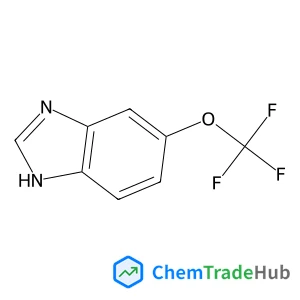
![Ethanone, 1-[4-chloro-2-(methylthio)-5-pyrimidinyl]- structure](https://static.chemtradehub.com/structs/661/66116-82-3-863e.webp "Ethanone, 1-[4-chloro-2-(methylthio)-5-pyrimidinyl]- structure")





