













Structural characterisation of natural products by means of quantum chemical calculations of NMR parameters: new insights
Literature Information
Publication Date
2021-02-22
DOI
10.1039/D1QO00034A
Impact Factor
5.281
Authors
Fabio L. P. Costa, Ana C. F. de Albuquerque, Rodolfo G. Fiorot, Luciano M. Lião, Lucas H. Martorano, Gunar V. S. Mota, Alessandra L. Valverde, José W. M. Carneiro, Fernando M. dos Santos Junior
View Original
Abstract
In the early 2000s, the first articles regarding the calculation of NMR parameters for natural products appeared in the literature. Since then, modelling 1H and 13C chemical shifts and spin–spin coupling constants for this class of compounds has experienced a remarkable increase in precision, accessibility, and application, leading to considerable advances in the field. More recently, significant contributions from several authors have led to continuous growth in this research field, updating and broadening the simulation of NMR parameters, in particular with the application of new techniques for data treatment. Nowadays, such studies are routinely found in the high impact literature. In this review, we intend to cover the general guidelines and the main advances in NMR calculations of natural products published since 2012. We intend to address the bottlenecks of quantum chemical calculations of NMR parameters, including mathematical definitions, updates, and a discussion of relevant examples, and to highlight novel tools, for example DU8+, CP3, DP4, DP4+ and J-DP4. We will cover all aspects of NMR simulation focusing on natural products, from the fundamentals to the new computational toolboxes available, combining advanced quantum chemical calculations with complex upstream data processing and machine learning.
Related Literature
The first tandem double palladium-catalyzed aminations: synthesis of dipyrido[1,2-a∶3′,2′-d]imidazole and its benzo- and aza-analogues
Kristof T. J. Loones, Bert U. W. Maes, Roger A. Dommisse, Guy L. F. Lemière
2004-09-20
Communication
DOI: 10.1039/B409161B
Semi-quantitative estimation by IR of framework, extraframework and defect Al species of HBEA zeolites
Isabelle Gener, Philippe Ayrault, Michel Guisnet
2004-09-01
Communication
DOI: 10.1039/B409964H
K6Cd4Sn3Se13: A polar open-framework compound based on the partially destroyed supertetrahedral [Cd4Sn4Se17]10− cluster
Nan Ding, Duck-Young Chung, Mercouri G. Kanatzidis
2004-04-23
Communication
DOI: 10.1039/B402686A
Novel biocompatible hydrogel-based amperometric sensor for nitric oxide gas detection: towards a non-invasive device
Corinne Wartelle, Fethi Bedioui
2004-05-07
Communication
DOI: 10.1039/B402735C
Superhydrophobic silica aerogels by fluorination at the gel stage
Anna Roig, Elies Molins, Elisenda Rodríguez, Sandra Martínez, Marcial Moreno-Mañas, Adelina Vallribera
2004-09-06
Communication
DOI: 10.1039/B407987F
Solid-state caging of 1,10-phenanthroline π–π stacked dimers by calix[4]arene dihydroxyphosphonic acid
Adina N. Lazar, Alda Navaza, Anthony W. Coleman
2004-03-30
Communication
DOI: 10.1039/B315600C
H2–O2 atmosphere increases the activity of Pt/TiO2 for benzene photocatalytic oxidation by two orders of magnitude
Yilin Chen, Danzhen Li, Xinchen Wang, Xuxu Wang, Xianzhi Fu
2004-09-02
Communication
DOI: 10.1039/B408187K
Unprecedented copper-catalyzed asymmetric conjugate addition of organometallic reagents to α,β-unsaturated lactams
Mauro Pineschi, Federica Del Moro, Adriaan J. Minnaard, Ben L. Feringa
2004-04-28
Communication
DOI: 10.1039/B403793F
NH4[BPO4F]: A novel open-framework ammonium fluorinated borophosphate with a zeolite-like structure related to gismondine topology
Man-Rong Li, Wei Liu, Ming-Hui Ge, Hao-Hong Chen, Xin-Xin Yang, Jing-Tai Zhao
2004-04-29
Communication
DOI: 10.1039/B402966F
Mesoporous silica anchored Ru catalysts for highly enantioselective hydrogenation of β-ketoesters
Banu Kesanli, Wenbin Lin
2004-08-25
Communication
DOI: 10.1039/B406697A
You might also like
Compound Q&A
What precautions should be taken when handling 2-Chloro-1,2-bis(4-methylphenyl)ethanone (CAS: 71193-32-3)?
When handling 2-Chloro-1,2-bis(4-methylphenyl)ethanone (CAS: 71193-32-3), it is ...
71193-32-32-Chloro-1,2-bis(4-m...
Compound Q&A
What industries use 4-Ethoxy-3-(5-methyl-4-oxo-7-propyl-1,4-dihydroimidazo[5,1-f][1,2,4]triazin-2-yl)benzenesulfonyl chloride (CAS: 224789-26-8)?
4-Ethoxy-3-(5-methyl-4-oxo-7-propyl-1,4-dihydroimidazo[5,1-f][1,2,4]triazin-2-yl...
224789-26-84-Ethoxy-3-(5-methyl...
Compound Q&A
How should Methyl 3-Oxo-4-Androsten-17-Carboxylate (CAS: 2681-55-2) be stored?
Methyl 3-Oxo-4-Androsten-17-Carboxylate (CAS: 2681-55-2) should be stored in a c...
2681-55-2Methyl 3-Oxo-4-Andro...
Compound Q&A
What are the main uses of (R)-3-Amino-4-(3-hexylphenylamino)-4-oxobutylphosphonic acid (CAS: 909725-61-7)?
(R)-3-Amino-4-(3-hexylphenylamino)-4-oxobutylphosphonic acid is primarily used i...
909725-61-7(R)-3-Amino-4-(3-hex...
Compound Q&A
What regulatory guidelines apply to 2-Methyl-2-propanyl 3-amino-3-carbamoyl-1-azetidinecarboxylate (CAS: 1254120-14-3)?
2-Methyl-2-propanyl 3-amino-3-carbamoyl-1-azetidinecarboxylate (CAS: 1254120-14-...
1254120-14-32-Methyl-2-propanyl ...
Compound Q&A
Are there alternatives to (E)-4-(tert-Butoxy)-4-oxobut-2-enoic acid (CAS: 135355-96-3) in synthesis?
There are alternative reagents that can be used in synthesis instead of (E)-4-(t...
135355-96-3(E)-4-(tert-Butoxy)-...
Compound Q&A
What are the physical and chemical properties of [2-(3-Chlorophenyl)-1,3-thiazol-4-yl]methanol (CAS: 121202-20-8)?
[2-(3-Chlorophenyl)-1,3-thiazol-4-yl]methanol (CAS: 121202-20-8) is a crystallin...
121202-20-8[2-(3-Chlorophenyl)-...
Compound Q&A
What is the market or research trend for Methyl (2S)-[(4S)-2,2-dimethyl-1,3-dioxolan-4-yl]{[(4-methylphenyl)sulfonyl]oxy}acetate (CAS: 166249-17-8)?
The market and research trends for Methyl (2S)-[(4S)-2,2-dimethyl-1,3-dioxolan-4...
166249-17-8Methyl (2S)-[(4S)-2,...
Compound Q&A
What is the market or research trend for 1-Bromo-2-isocyanatoethane (CAS: 42865-19-0)?
The market for 1-Bromo-2-isocyanatoethane (CAS: 42865-19-0) is driven by its use...
42865-19-01-Bromo-2-isocyanato...
Compound Q&A
What are the main uses of 4-Nitro-D-phenylalanine hydrochloride (CAS: 147065-06-3)?
4-Nitro-D-phenylalanine hydrochloride (CAS: 147065-06-3) is primarily used in re...
147065-06-34-Nitro-D-phenylalan...
Source Journal
Organic Chemistry Frontiers

CiteScore:
7.8
Self-citation Rate:
8.7%
Articles per Year:
724
Organic Chemistry Frontiers publishes high-quality research from across organic chemistry. Emphases are placed on studies that make significant contributions to the field of organic chemistry by reporting either new or significantly improved protocols or methodologies. Topics include, but are not limited to the following: Organic synthesis Development of synthetic methodologies Catalysis Natural products Functional organic materials Supramolecular and macromolecular chemistry Physical and computational organic chemistry
Recommended Compounds

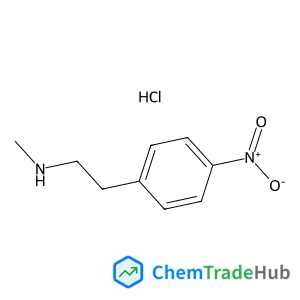
N-Methyl-2-(4-nitrophenyl)ethanamine hydrochloride (1:1)
CAS Number:
166943-39-1
Molecular Formula:
C9H13ClN2O2
![4-[2-(Trichlorosilyl)ethyl]benzenesulfonyl chloride structure](https://static.chemtradehub.com/structs/797/79793-00-3-de16.webp "4-[2-(Trichlorosilyl)ethyl]benzenesulfonyl chloride structure")
4-[2-(Trichlorosilyl)ethyl]benzenesulfonyl chloride
CAS Number:
79793-00-3
Molecular Formula:
C8H8Cl4O2SSi
Recommended Suppliers





Disclaimer
This page provides academic journal information for reference and research purposes only. We are not affiliated with any journal publishers and do not handle publication submissions. For publication-related inquiries, please contact the respective journal publishers directly.
If you notice any inaccuracies in the information displayed, please contact us at support@chemtradehub.com. We will promptly review and address your concerns.