


Poly(cyclosiloxane–carborane)s for harsh environments
Literature Information
Publication Date
2022-01-13
DOI
10.1039/D1PY01323H
Impact Factor
5.582
Authors
View Original
Abstract
Poly(siloxane–carborane)s are a class of polymeric materials which can be used for harsh environments. Poly(cyclosiloxane–carborane)s were prepared through the hydrosilylation of cyclosiloxanes and vinyl modified carboranes. The structure of the as-prepared carborane cyclosiloxane hybrid polymers (CcHPs) could be controlled through changing the ratio of monomers, and the CcHPs showed good thermal stability as well as anti-oxidation properties. The carbon fiber coated with CcHPs could resist high temperature in air, and only 10 wt% loss was observed at 1000 °C. The coated carbon foam could retain its shape and size after burning for 2 min, demonstrating the potential applications of CcHPs as protective coatings for harsh environments.
Recommended Journals

Crystallography Reports

Russian Journal of Applied Chemistry

Current Opinion in Colloid & Interface Science

Russian Journal of Coordination Chemistry

Journal of Saudi Chemical Society

New Journal of Chemistry

Russian Journal of Bioorganic Chemistry

Russian Journal of Organic Chemistry

Russian Chemical Bulletin

Current Opinion in Solid State & Materials Science
Related Literature
Tailoring the gas separation efficiency of metal organic framework ZIF-8 through metal substitution: a computational study
Panagiotis Krokidas, Salvador Moncho, Edward N. Brothers, Marcelo Castier, Ioannis G. Economou
2018-01-15
Paper
DOI: 10.1039/C7CP08456K
A systematic study of various 2D materials in the light of defect formation and oxidation
A. K. A. Lu, D. Chiappe
2018-12-19
Paper
DOI: 10.1039/C8CP05665J
Impact of screw and edge dislocations on the thermal conductivity of individual nanowires and bulk GaN: a molecular dynamics study
Anastasiia Salnikova, Imad Belabbas, David Lacroix, Joseph Kioseoglou
2018-01-15
Paper
DOI: 10.1039/C7CP07821H
Activation of Kagome lattice-structured Cu3V2O7(OH)2·2H2O volborthite via hydrothermal crystallization for boosting visible light-driven water oxidation
Hengyan Yang, Ding Wang, AiYing Chen, Wei-Lin Dai, Xianglong Zhao
2018-07-09
Paper
DOI: 10.1039/C8CP03530J
Molecular dynamics investigations of cello-oligosaccharide recognition by Cel9G–CBM3c from Clostridium cellulovorans
Penghui Li, Chunchun Zhang
2018-01-23
Paper
DOI: 10.1039/C7CP07175B
Dihydrogen vs. hydrogen bonding in the solvation of ammonia borane by tetrahydrofuran and liquid ammonia
Thomas F. Headen, Samantha K. Callear, Matthew Billing, Andrea Sella
2018-04-23
Paper
DOI: 10.1039/C7CP08220G
Investigations on the charge transfer mechanism at donor/acceptor interfaces in the quest for descriptors of organic solar cell performance
Kenji Mishima, Hiroki Matsunaga
2018-04-04
Paper
DOI: 10.1039/C8CP01253A
Kinetics of autoignition: a simple intuitive interpretation and its relation to the Livengood–Wu integral
2018-01-17
Paper
DOI: 10.1039/C7CP07736J
Carbon-contacted single molecule electrical junctions
Cezhou Zhao, Chun Zhao, Weitao Su, Yannick J. Dappe, Richard J. Nichols
2018-06-21
Paper
DOI: 10.1039/C8CP02877J
Liquid crystals of hard rectangles on flat and cylindrical manifolds
2018-01-19
Paper
DOI: 10.1039/C7CP07026H
You might also like
Compound Q&A
What are the main uses of 1-(3-Aminophenyl)-3-[(3R)-1-(3,3-dimethyl-2-oxobutyl)-2-oxo-5-(2-pyridinyl)-2,3-dihydro-1H-1,4-benzodiazepin-3-yl]urea (CAS: 155412-88-7)?
This compound is mainly used as an intermediate in the synthesis of antipsychoti...
155412-88-71-(3-Aminophenyl)-3-...
Compound Q&A
How should waste containing 1-(D-Ribofuranosyl)-1,4-dihydro-3-pyridinecarboxamide (CAS: 19132-12-8) be handled?
Waste containing 1-(D-Ribofuranosyl)-1,4-dihydro-3-pyridinecarboxamide (CAS: 191...
19132-12-81-(D-Ribofuranosyl)-...
Compound Q&A
What regulatory guidelines apply to 2-Methyl-2-propanyl 3-bromo-3-(hydroxymethyl)-1-azetidinecarboxylate (CAS: 2007919-81-3)?
2-Methyl-2-propanyl 3-bromo-3-(hydroxymethyl)-1-azetidinecarboxylate (CAS: 20079...
2007919-81-32-Methyl-2-propanyl ...
Compound Q&A
What is N-(4-Chloro-2-pyridinyl)acetamide (CAS: 245056-66-0)?
N-(4-Chloro-2-pyridinyl)acetamide (CAS: 245056-66-0) is a chemical compound with...
245056-66-0N-(4-Chloro-2-pyridi...
Compound Q&A
What is 5-Chloro-2-hydroxybenzoic acid (CAS: 321-14-2)?
5-Chloro-2-hydroxybenzoic acid, also known as 5-chlorosalicylic acid, is an arom...
321-14-25-Chloro-2-hydroxybe...
Compound Q&A
What precautions should be taken when handling 1,1-Dichloro-1-fluoroethane (CAS: 1717-00-6)?
When handling 1,1-Dichloro-1-fluoroethane (CAS: 1717-00-6), it is important to u...
1717-00-61,1-Dichloro-1-fluor...
Compound Q&A
What are the physical and chemical properties of Fmoc-(2S,3R)-3-phenylpyrrolidine-2-carboxylic acid (CAS: 281655-32-1)?
Fmoc-(2S,3R)-3-phenylpyrrolidine-2-carboxylic acid is a white crystalline solid ...
281655-32-1Fmoc-(2S,3R)-3-pheny...
Compound Q&A
What are the main uses of 4-Amino-5-bromo-2-pyridinecarboxylic acid (CAS: 1363381-01-4)?
4-Amino-5-bromo-2-pyridinecarboxylic acid is primarily used as a precursor in th...
1363381-01-44-Amino-5-bromo-2-py...
Compound Q&A
What precautions should be taken when handling (S)-tert-butyl 2-((2-(4-bromophenyl)-2-oxoethyl)carbamoyl)pyrrolidine-1-carboxylate (CAS: 1007881-98-2)?
Handling this compound should be done with personal protective equipment (PPE) i...
1007881-98-2(S)-tert-butyl 2-((2...
Compound Q&A
What precautions should be taken when handling 8-bromo-2,2-dimethyl-3,4-dihydro-2H-1,4-benzoxazin-3-one (CAS: 688363-73-7)?
When handling 8-bromo-2,2-dimethyl-3,4-dihydro-2H-1,4-benzoxazin-3-one, use prop...
688363-73-78-bromo-2,2-dimethyl...
Source Journal
Polymer Chemistry

CiteScore:
8.6
Self-citation Rate:
7.3%
Articles per Year:
457
Polymer Chemistry welcomes submissions in all areas of polymer science that have a strong focus on macromolecular chemistry. Manuscripts may cover a broad range of fields, yet no direct application focus is required.
Recommended Compounds
![6-Benzyl-4,5,6,7-tetrahydro-1H-pyrazolo[3,4-c]pyridin-3(2H)-one structure](https://static.chemtradehub.com/structs/909/909187-64-0-f54f.webp "6-Benzyl-4,5,6,7-tetrahydro-1H-pyrazolo[3,4-c]pyridin-3(2H)-one structure")
6-Benzyl-4,5,6,7-tetrahydro-1H-pyrazolo[3,4-c]pyridin-3(2H)-one
CAS Number:
909187-64-0
Molecular Formula:
C13H15N3O
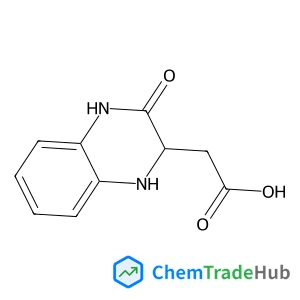
(3-Oxo-1,2,3,4-tetrahydro-2-quinoxalinyl)acetic acid
CAS Number:
136584-14-0
Molecular Formula:
C10H10N2O3
Recommended Suppliers




Disclaimer
This page provides academic journal information for reference and research purposes only. We are not affiliated with any journal publishers and do not handle publication submissions. For publication-related inquiries, please contact the respective journal publishers directly.
If you notice any inaccuracies in the information displayed, please contact us at support@chemtradehub.com. We will promptly review and address your concerns.