












One-pot synthesis and aqueous solution properties of pH-responsive schizophrenic diblock copolymer nanoparticles prepared via RAFT aqueous dispersion polymerization
Literature Information
Publication Date
2021-09-29
DOI
10.1039/D1PY01114F
Impact Factor
5.582
Authors
S. M. North, S. P. Armes
View Original
Abstract
Schizophrenic diblock copolymers can form two types of nanoparticles in aqueous solution, with such self-assembly typically being driven by a change in solution temperature, solution pH or salt concentration. In the present study, we report the first wholly aqueous one-pot synthesis of a doubly pH-responsive schizophrenic diblock copolymer. This is achieved using RAFT aqueous dispersion polymerization, which is an example of polymerization-induced self-assembly (PISA). First, 2-(diethylamino)ethyl methacrylate (DEA) is homopolymerized in its protonated form at pH 2 to produce a cationic polyelectrolytic precursor. Subsequently, the RAFT aqueous dispersion polymerization of 2-carboxyethyl acrylate (CEA) is conducted to produce sterically-stabilized diblock copolymer nanoparticles in which the cationic PDEA block acts as the hydrophilic stabilizer block and the neutral PCEA block forms the hydrophobic core. On addition of sufficient NaOH, the PCEA becomes highly anionic at pH 10 and hence acts as a stabilizer block while the deprotonated PDEA block forms the hydrophobic core. Characterizing such polyampholytes via aqueous gel permeation chromatography is challenging. Thus a selective methylation protocol was developed to esterify the anionic carboxylate groups in the PCEA block to enable GPC analysis using THF as an eluent. However, optimization of the reaction conditions was required because using too large an excess of the trimethylsilyldiazomethane reagent led to unwanted quaternization of the tertiary amine groups on the PDEA block, which prevented meaningful GPC analysis. The aqueous self-assembly behaviour of a series of PDEA–PCEA diblock copolymers was examined using transmission electron microscopy, dynamic light scattering, 1H NMR spectroscopy and aqueous electrophoresis.
Related Literature
Thermal hysteresis of Morin transition in hematite particles
L. Suber, P. Imperatori, A. Mari, G. Marchegiani, M. Vasquez Mansilla, D. Fiorani, W. R. Plunkett, D. Rinaldi, C. Cannas, G. Ennas
2010-05-18
Paper
DOI: 10.1039/B925371H
Characterization and mechanism study of micrometer-sized secondary assembly of β-cyclodextrin
Yifeng He, Xinghai Shen, Qingde Chen, Hongcheng Gao
2010-10-29
Paper
DOI: 10.1039/C0CP00899K
Redox-induced Ru(bpy)32+-methylviologen radical formation and its dimerization in cucurbit[8]uril
Shiguo Sun, Wenyan Gao, Fengyu Liu, Fusheng Li, Jiangli Fan, Xiaojun Peng
2010-11-01
Paper
DOI: 10.1039/C0CP00712A
A detailed TPD study of H2O and pre-adsorbed O on the stepped Pt(553) surface
Maria J. T. C. van der Niet, Angela den Dunnen, Ludo B. F. Juurlink, Marc T. M. Koper
2010-12-01
Paper
DOI: 10.1039/C0CP01162B
Molecular dynamics calculation of activation volumes
Elna Deglint, Heather Martens, Essex Edwards, Nicholas Boon, Paul Dance
2010-11-12
Communication
DOI: 10.1039/C0CP01570A
Dynamics of heparan sulfate explored by neutron scattering
Marion Jasnin, Lambert van Eijck, Michael Marek Koza, Cédric Laguri, Hugues Lortat-Jacob
2010-03-01
Communication
DOI: 10.1039/B923878F
The benzene+OH potential energy surface: intermediates and transition states
David S. Hollman, Andrew C. Simmonett, Henry F. Schaefer
2010-11-23
Paper
DOI: 10.1039/C0CP01607A
Negative differential resistance in oxidized zigzag graphene nanoribbons
Min Wang, Chang Ming Li
2010-12-09
Paper
DOI: 10.1039/C0CP00828A
You might also like
Compound Q&A
How should waste containing (6-Bromo-2-naphthyl)oxy](dimethyl)(2-methyl-2-propanyl)silane be handled?
Waste containing (6-Bromo-2-naphthyl)oxy](dimethyl)(2-methyl-2-propanyl)silane (...
100751-65-3[(6-Bromo-2-naphthyl...
Compound Q&A
How is 7-Fluoro-4-isoquinolinecarboxylic acid (CAS: 1841081-40-0) typically synthesized?
7-Fluoro-4-isoquinolinecarboxylic acid can be synthesized via a multi-step proce...
1841081-40-07-Fluoro-4-isoquinol...
Compound Q&A
What are the physical and chemical properties of 2,3,5,6-Tetrabromothieno[3,2-b]thiophene (CAS: 124638-53-5)?
2,3,5,6-Tetrabromothieno[3,2-b]thiophene is a crystalline compound with a high m...
124638-53-52,3,5,6-Tetrabromoth...
Compound Q&A
Is 1-[4-(Benzylamino)-7,8-dihydro-5H-pyrano[4,3-d]pyrimidin-2-yl]-2-methyl-1H-indole-4-carboxamide (CAS: 1542705-92-9) safe?
1-[4-(Benzylamino)-7,8-dihydro-5H-pyrano[4,3-d]pyrimidin-2-yl]-2-methyl-1H-indol...
1542705-92-91-[4-(Benzylamino)-7...
Compound Q&A
What is the market or research trend for imidazo[5,1-d]-1,2,3,5-tetrazine-8-carboxylic acid, 3,4-dihydro-3-methyl-4-oxo- (CAS: 113942-30-6)?
The market for imidazo[5,1-d]-1,2,3,5-tetrazine-8-carboxylic acid, 3,4-dihydro-3...
113942-30-6Imidazo[5,1-d]-1,2,3...
Compound Q&A
What is 3-(Triisopropylsilyl)propiolaldehyde (CAS: 163271-80-5)?
3-(Triisopropylsilyl)propiolaldehyde is a synthetic organic compound with the CA...
163271-80-53-(Triisopropylsilyl...
Compound Q&A
What regulatory guidelines apply to 6-Nitro-2H-1,4-benzoxazin-3(4H)-one (CAS: 81721-87-1)?
6-Nitro-2H-1,4-benzoxazin-3(4H)-one (CAS: 81721-87-1) is subject to various regu...
81721-87-16-Nitro-2H-1,4-benzo...
Compound Q&A
How should waste containing (3-Fluorophenyl)(4-{[(2-methyl-2-propanyl)oxy]carbonyl}-1-piperazinyl)acetic acid (CAS: 885272-91-3) be handled?
Waste containing (3-Fluorophenyl)(4-{[(2-methyl-2-propanyl)oxy]carbonyl}-1-piper...
885272-91-3(3-Fluorophenyl)(4-{...
Compound Q&A
What are the physical and chemical properties of N,N'-4,4'-Biphenyldiyldiisonicotinamide (CAS: 55119-40-9)?
N,N'-4,4'-Biphenyldiyldiisonicotinamide is a white crystalline solid with a mole...
55119-40-9N,N'-4,4'-Biphenyldi...
Compound Q&A
What industries use 6-Bromo-8-fluoro-2-quinazolinol (CAS: 1036756-15-6)?
6-Bromo-8-fluoro-2-quinazolinol is primarily used in the pharmaceutical industry...
1036756-15-66-Bromo-8-fluoro-2-q...
Source Journal
Polymer Chemistry

CiteScore:
8.6
Self-citation Rate:
7.3%
Articles per Year:
457
Polymer Chemistry welcomes submissions in all areas of polymer science that have a strong focus on macromolecular chemistry. Manuscripts may cover a broad range of fields, yet no direct application focus is required.
Recommended Compounds
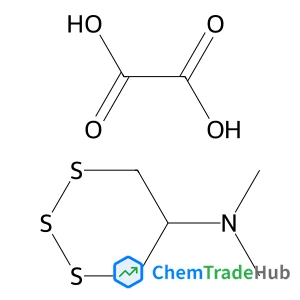
Oxalic acid compound with cyclohexylsulfamothioic O-acid (11)
CAS Number:
31895-22-4
Molecular Formula:
C7H13NO4S3
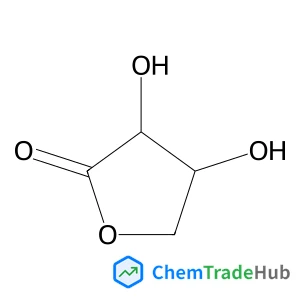
![(2S)-2-({[(2-Methyl-2-propanyl)oxy]carbonyl}amino)-4-pentynoic acid structure](https://static.chemtradehub.com/structs/630/63039-48-5-b66d.webp "(2S)-2-({[(2-Methyl-2-propanyl)oxy]carbonyl}amino)-4-pentynoic acid structure")
(2S)-2-({[(2-Methyl-2-propanyl)oxy]carbonyl}amino)-4-pentynoic acid
CAS Number:
63039-48-5
Molecular Formula:
C10H15NO4
Recommended Suppliers






Disclaimer
This page provides academic journal information for reference and research purposes only. We are not affiliated with any journal publishers and do not handle publication submissions. For publication-related inquiries, please contact the respective journal publishers directly.
If you notice any inaccuracies in the information displayed, please contact us at support@chemtradehub.com. We will promptly review and address your concerns.