












Amphiphilic poly(ether urethanes) carrying associative terpyridine side groups with controlled spacing
Literature Information
Publication Date
2021-03-23
DOI
10.1039/D1PY00121C
Impact Factor
5.582
Authors
Katharina Breul, Sebastian Seiffert
View Original
Abstract
The rational design of transiently crosslinked polymer gels requires a profound understanding of how molecular and topological factors determine the mechanical and dynamic material properties. To refine so-far established structure–property relations, complementary and versatile model sytems are still a crucial prerequisiste. In this study, the synthesis of a metallo-supramolecular associating terpyridine-diol (referred to as sticker) and its incorporation into poly(ethylene glycol) (pEG) based polyurethanes (PU) with strictly alternating vs. random sequences and variable sticker spacings is described. Synergetic effects resulting from the proximity of multiple neighboring urethane and sticker units in the random PUs are reflected in the hydrogen-bonding characteristics in the melt state as well as in their solution behavior. While the alternating PUs form micellar aggregates in water, whose size strongly depends on concentration and temperature leading to a pEG-length-dependent thermo-responsiveness, the random PUs are water insoluble. Finally, shear rheological measurements performed on manganese(II)-crosslinked PU gels demonstrate severely prolonged network relaxation times and an exacerbated shallowing of the power-lawscaling in the terminal flow regime in case of the random PUs.
Recommended Journals
Related Literature
Finite-momentum excitons and the role of electron–phonon couplings in the electronic and phonon transport properties of boron arsenide
Haodong Mei, Yujie Xia, Yiming Zhang, Yu Wu, Ying Chen, Congcong Ma, Mingran Kong, Lei Peng, Heyuan Zhu
2022-03-22
Paper
DOI: 10.1039/D1CP05979C
First-principles calculations of the BeO monolayer with chemical functionalization
Hanlu Liu, Kehan Feng, Haiming Lu, Xiangkang Meng
2022-03-07
Paper
DOI: 10.1039/D1CP05640A
On standardised moments of force distribution in simple liquids
Jonathan Utterson, Radek Erban
2022-01-27
Paper
DOI: 10.1039/D1CP04056A
Solving the discrepancy between the direct and relative-rate determinations of unimolecular reaction kinetics of dimethyl-substituted Criegee intermediate (CH3)2COO using a new photolytic precursor
Jari Peltola, Prasenjit Seal, Niko Vuorio, Petri Heinonen, Arkke Eskola
2022-01-26
Paper
DOI: 10.1039/D1CP02270A
Optimization of the thermochemical properties of the norbornadiene/quadricyclane photochromic couple for solar energy storage using nanoparticles
Andreas Erbs Hillers-Bendtsen, Frederik Ørsted Kjeldal, Nicolai Machholdt Høyer, Kurt V. Mikkelsen
2022-02-08
Paper
DOI: 10.1039/D2CP00226D
Improved delivery and competitive adsorption of paclitaxel and mitomycin C anticancer drugs on boron nitride nanoparticles: a molecular dynamics insight
Mohaddeseh Habibzadeh Mashatooki, Bahram Ghalami-Choobar
2022-02-19
Paper
DOI: 10.1039/D1CP04006E
First principles assessment of the phase stability and transition mechanisms of designated crystal structures of pristine and Janus transition metal dichalcogenides
Öznur Demirkol, İlker Demiroğlu
2022-02-23
Paper
DOI: 10.1039/D1CP05642E
Lone pair driven anisotropy in antimony chalcogenide semiconductors
Xinwei Wang, Alex M. Ganose
2022-03-09
Paper
DOI: 10.1039/D1CP05373F
Fluoromethylsulfinyl radicals: spectroscopic characterization and photoisomerization via intramolecular hydrogen shift
Bifeng Zhu, Junjie Jiang, Bo Lu, Xiaolong Li, Xiaoqing Zeng
2022-03-17
Paper
DOI: 10.1039/D1CP05556A
SAXS data modelling for the characterisation of ion tracks in polymers
Shankar Dutt, Christian Notthoff, Alexander Kiy, Pablo Mota-Santiago, Stephen T. Mudie, Maria E. Toimil-Molares, Yugang Wang, Patrick Kluth
2022-03-23
Paper
DOI: 10.1039/D1CP05813D
You might also like
Compound Q&A
What precautions should be taken when handling lithium chloride hydrate (1:1:1) (CAS: 16712-20-2)?
When handling lithium chloride hydrate (1:1:1) (CAS: 16712-20-2), it is importan...
16712-20-2Lithium chloride hyd...
Compound Q&A
Is 4-(4H-1,2,4-Triazol-4-yl)piperidine (CAS: 690261-92-8) safe?
4-(4H-1,2,4-Triazol-4-yl)piperidine is generally considered safe for use in phar...
690261-92-84-(4H-1,2,4-Triazol-...
Compound Q&A
How should waste containing 1,3-Thiazole-2-carboxamide (CAS: 16733-85-0) be handled?
Waste containing 1,3-Thiazole-2-carboxamide (CAS: 16733-85-0) should be collecte...
16733-85-01,3-Thiazole-2-carbo...
Compound Q&A
What regulatory guidelines apply to 5-(Difluoromethyl)-2-fluorobenzonitrile (CAS: 934175-58-3)?
5-(Difluoromethyl)-2-fluorobenzonitrile (CAS: 934175-58-3) is subject to regulat...
934175-58-35-(Difluoromethyl)-2...
Compound Q&A
How is Methyl 3-acetamido-2-thiophenecarboxylate (CAS: 22288-79-5) typically synthesized?
Methyl 3-acetamido-2-thiophenecarboxylate can be synthesized by the reaction of ...
22288-79-5Methyl 3-acetamido-2...
Compound Q&A
What is 4-Isoquinolinecarbonitrile (CAS: 34846-65-6)?
4-Isoquinolinecarbonitrile is a chemical compound with the CAS number 34846-65-6...
34846-65-64-Isoquinolinecarbon...
Compound Q&A
How should Methyl 1H-1,2,3-triazole-4-carboxylate (CAS: 877309-59-6) be stored?
Store Methyl 1H-1,2,3-triazole-4-carboxylate (CAS: 877309-59-6) in a cool, dry p...
877309-59-6Methyl 1H-1,2,3-tria...
Compound Q&A
What regulatory guidelines apply to 6-Bromo[1,3]thiazolo[5,4-b]pyridin-2-amine (CAS: 1160791-13-8)?
6-Bromo[1,3]thiazolo[5,4-b]pyridin-2-amine (CAS: 1160791-13-8) is subject to the...
1160791-13-86-Bromo[1,3]thiazolo...
Compound Q&A
Is (2S,3S)-2-Ammonio-3-(3,4-dihydroxyphenyl)-3-hydroxypropanoate (CAS: 23651-95-8) safe?
(2S,3S)-2-Ammonio-3-(3,4-dihydroxyphenyl)-3-hydroxypropanoate (CAS: 23651-95-8) ...
23651-95-8(2S,3S)-2-Ammonio-3-...
Compound Q&A
What are the physical and chemical properties of 7-bromo-3-methyl-3,4-dihydroquinazolin-4-one (CAS: 1293987-84-4)?
7-Bromo-3-methyl-3,4-dihydroquinazolin-4-one is a solid with a crystalline form....
1293987-84-47-bromo-3-methyl-3,4...
Source Journal
Polymer Chemistry

CiteScore:
8.6
Self-citation Rate:
7.3%
Articles per Year:
457
Polymer Chemistry welcomes submissions in all areas of polymer science that have a strong focus on macromolecular chemistry. Manuscripts may cover a broad range of fields, yet no direct application focus is required.
Recommended Compounds
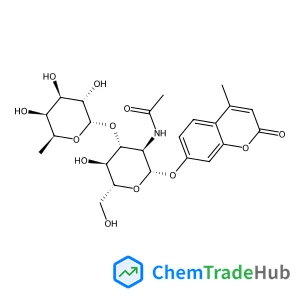
4-Methyl-2-oxo-2H-chromen-7-yl 2-acetamido-2-deoxy-3-O-(6-deoxy-alpha-L-galactopyranosyl)-beta-D-glucopyranoside
CAS Number:
383160-12-1
Molecular Formula:
C24H31NO12
![6-(Benzyloxy)-8-(2-bromoacetyl)-2H-benzo[b][1,4]oxazin-3(4H)-one structure](https://static.chemtradehub.com/structs/926/926319-53-1-2287.webp "6-(Benzyloxy)-8-(2-bromoacetyl)-2H-benzo[b][1,4]oxazin-3(4H)-one structure")
6-(Benzyloxy)-8-(2-bromoacetyl)-2H-benzo[b][1,4]oxazin-3(4H)-one
CAS Number:
926319-53-1
Molecular Formula:
C17H14BrNO4
Recommended Suppliers






Disclaimer
This page provides academic journal information for reference and research purposes only. We are not affiliated with any journal publishers and do not handle publication submissions. For publication-related inquiries, please contact the respective journal publishers directly.
If you notice any inaccuracies in the information displayed, please contact us at support@chemtradehub.com. We will promptly review and address your concerns.