













-1,2-cyclohexanediamine structure](https://static.chemtradehub.com/structs/928/928769-12-4-a4f0.webp "N,N'-Bis[3-(2-methoxyphenyl)-2-hydroxybenzyl](1R,2R)-1,2-cyclohexanediamine structure")
N,N'-Bis[3-(2-methoxyphenyl)-2-hydroxybenzyl](1R,2R)-1,2-cyclohexanediamine
CAS Number:
928769-12-4
Molecular Formula:
C34H38N2O4
The arylhydrocarbon receptor (AHR) is a ligand activated transcription factor that controls the expression of a number of immunosuppressive signaling molecules, including the immune checkpoint proteins PD-1/L1 and cytokine IL-10. AHR activation also stimulates the formation and recruitment of tolerogenic dendritic cells, tumor associated macrophages, and regulatory T cells in the tumor microenvironment, which restrains antitumoral immune response. Overexpression of AHR has been observed in a number of different types of cancer and suggested to contribute to immune dysfunction and cancer progression. One prominent endogenous ligand of AHR is the oncometabolite kynurenine, a product of tryptophan metabolism catalyzed by the dioxygenases IDO1 and TDO that are often aberrantly activated in cancer. AHR has gained significant interest as a drug target for the development of novel small molecule cancer immunotherapies, as evidenced by the advancement of two clinical candidates into phase 1 clinical trials in patients with advanced cancer. Discussed in this Review is a brief background of AHR in immuno-oncology and the recent progress in the discovery and development of AHR antagonists.
Yu Zong Chen
DOI: 10.1039/C6AN00678G
Olja Simoska, Keith J. Stevenson
DOI: 10.1039/C9AN01747J
Tatsuro Nakao, Yutaka Kazoe, Emi Mori, Hisashi Shimizu
DOI: 10.1039/C9AN01491H
Won-Nyoung Lee, Hyun Jin Yoo, Kim Huyen Nguyen, Changyoon Baek, Junhong Min
DOI: 10.1039/C9AN00896A
Rajeev Yadav, Rajeev Agarwal, Samuel Kadoury, Dominique Trudel, Marie-Christine Guiot, Kevin Petrecca
DOI: 10.1039/C9AN01144G
Wen Yang, Jianniao Tian, Lijun Wang, Shui Fu, Hongyun Huang, Yanchun Zhao, Shulin Zhao
DOI: 10.1039/C6AN00184J
Heike Hardelauf‡, Sarah Waide‡, Julia Sisnaiske, Peter Jacob, Vanessa Hausherr, Nicole Schöbel, Dirk Janasek, Christoph van Thriel
DOI: 10.1039/C6AN90037B
Jun-Bin Li, Qian-Qian Wang, Lin Yuan, Yong-Xiang Wu, Xiao-Xiao Hu, Xiao-Bing Zhang, Weihong Tan
DOI: 10.1039/C6AN00473C
Wanyu Zhang, Lihua Jia, Rui Yang, Yu Zhang, Zhenlong Zhao
DOI: 10.1039/C9AN01953G
Waste containing 6-Chloro-5-(2'-hydroxy-3'-methoxy-4-biphenylyl)-3-(3-methoxyphe...
(3alpha,5alpha)-3-Hydroxypregnane-11,20-dione is primarily used in the pharmaceu...
The market for 4-Amino-6-chloro-2-pyridinecarboxylic acid (CAS: 546141-56-4) is ...
Alternatives to (2-Benzoylethyl)trimethylammonium chloride (CAS: 24472-88-6) in ...
N-[4-Nitro-3-(trifluoromethyl)phenyl]acetamide (CAS: 393-12-4) is generally safe...
Alternative reagents such as other phosphates or similar functional groups can b...
There are alternatives to N,N'-Bis(3-aminopropyl)-1,3-propanediamine (CAS: 4605-...
When handling Aluminium trihexadecanoate, it is important to use appropriate per...
(1,1-Dioxido-3-oxo-1,2-benzothiazol-2(3H)-yl)acetic acid is a chemical compound ...
Several alternatives to 5,5-dimethyloxolan-2-one (CAS: 3123-97-5) can be used in...
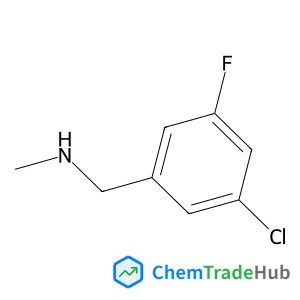
![2-Methyl-2-propanyl (2E)-5-chloro-2-[3-methoxy-4-(4-methyl-1H-imidazol-1-yl)benzylidene]pentanoate structure](https://static.chemtradehub.com/structs/122/1225232-42-7-ee03.webp "2-Methyl-2-propanyl (2E)-5-chloro-2-[3-methoxy-4-(4-methyl-1H-imidazol-1-yl)benzylidene]pentanoate structure")
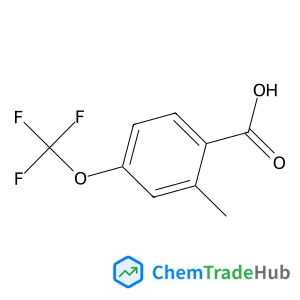
![(3-{[4-(Aminomethyl)-6-(trifluoromethyl)-2-pyridinyl]oxy}phenyl)[(3R,4R)-3-fluoro-4-hydroxy-1-pyrrolidinyl]methanone structure](https://static.chemtradehub.com/structs/200/2007885-39-2-affc.webp "(3-{[4-(Aminomethyl)-6-(trifluoromethyl)-2-pyridinyl]oxy}phenyl)[(3R,4R)-3-fluoro-4-hydroxy-1-pyrrolidinyl]methanone structure")





