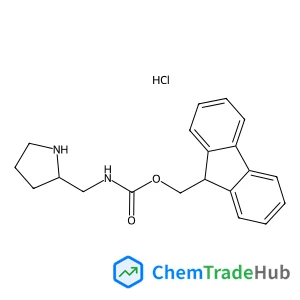
(S)-(9H-Fluoren-9-yl)methyl (pyrrolidin-2-ylmethyl)carbamate hydrochloride
CAS Number:
1217813-15-4
Molecular Formula:
C20H23ClN2O2
Meng Hu, Xu Dong, Bingchao Yang, Bo Xu, Dongli Yu, Julong He
We identify two sp2 hybridized network models of carbon, namely GT-8 and CT-12, based on first-principles calculation results. Parallel nanoribbon rows of graphene and net C are found to be interlinked with orthogonal nanoribbons to construct GT-8 and CT-12, and their series of isomorphic analogs (named GTs and CTs) are assembled with the widening of the nanoribbon components. GTs and CTs are dynamically and mechanically stable and energetically more favorable than many previous sp2 carbons, including K4, C20, and H6 carbon. They are two-dimensional conductors with insulating properties along the z-axis. Remarkably, GTs are superconductive with increased superconducting transition temperatures, Tc, as the nanoribbons widen. The Tcs of GT-8 and GT-16 are 5.2 and 14.0 K respectively, which are higher than that of boron-doped diamond under the same value of Coulomb pseudopotential μ*. They possess higher bulk moduli than graphite and behave as excellent ductile materials. The Young's modulus of GT-8 along the z-axis is comparable with that of graphene and it significantly increases as the nanoribbons widen.

Herald of the Russian Academy of Sciences

Polycyclic Aromatic Compounds

Critical Reviews in Solid State and Materials Sciences

Journal of the Indian Institute of Science

Biocatalysis and Biotransformation

Bioorganic & Medicinal Chemistry Letters

Heteroatom Chemistry

Bioorganic & Medicinal Chemistry

NDT & E International

Medicinal Chemistry Research
Xiao-wang Zhou, Reese E. Jones, Patrick E. Hopkins, Thomas E. Beechem
DOI: 10.1039/C4CP00261J
Samiyara Begum, Ranga Subramanian
DOI: 10.1039/C4CP01084A
Junfeng Liu, Li Wang, Guoxin Zhang, Xiaoming Sun
DOI: 10.1039/C4CP00155A
Moumita Saharay, R. James Kirkpatrick
DOI: 10.1039/C4CP03904A
DOI: 10.1039/C4CP04194A
Benjamin G. Harvey, Heather A. Meylemans, Raina V. Gough, Roxanne L. Quintana, Michael D. Garrison, Thomas J. Bruno
DOI: 10.1039/C3CP55349C
André Severo Pereira Gomes, Florent Réal, Nicolas Galland, Celestino Angeli, Renzo Cimiraglia, Valérie Vallet
DOI: 10.1039/C3CP55294B
Ze Chen, Xiao-dan Zhang, Jun-hui Liang, Jia Fang, Xue-jiao Liang, Jian Sun, De-kun Zhang, Xin-liang Chen, Qian Huang, Ying Zhao
DOI: 10.1039/C4CP04066J
Hendrik E. van der Bij, Bert M. Weckhuysen
DOI: 10.1039/C3CP54791D
Yavar T. Azar, Mahmoud Payami
DOI: 10.1039/C4CP00598H
Waste containing N-Methoxy-N-methyl-1,3-thiazole-5-carboxamide (CAS: 898825-89-3...
N-(4-Biphenylyl)dibenzo[b,d]furan-4-amine should be stored in a tightly sealed c...
The market for 3-Acetamido-5-amino-2,4,6-triiodobenzoic acid (CAS: 1713-07-1) is...
Benzyl 2-O-acetyl-3,4,6-tri-O-benzyl-beta-D-galactopyranoside (CAS: 61820-03-9) ...
2-Ethylpiperazine dihydrochloride (CAS: 438050-52-3) is regulated under the Glob...
1,1'-[1,3-Phenylenebis(methylene)]bis(3-methyl-1H-pyrrole-2,5-dione) (CAS: 11946...
Several alternatives can be used in the synthesis of 5-Fluoro-2-(1-pyrrolidinyl)...
Proper personal protective equipment (PPE) must be worn when handling this compo...
When handling 6-Bromoimidazo[1,2-a]pyridin-8-amine, it is important to wear appr...
Alternatives to (2S,4R)-4-(4-Nitrobenzyl)pyrrolidine-2-carboxylic acid hydrochlo...

Physical Chemistry Chemical Physics (PCCP) is an international journal co-owned by 19 physical chemistry and physics societies from around the world. This journal publishes original, cutting-edge research in physical chemistry, chemical physics and biophysical chemistry. To be suitable for publication in PCCP, articles must include significant innovation and/or insight into physical chemistry; this is the most important criterion that reviewers and Editors will judge against when evaluating submissions. The journal has a broad scope and welcomes contributions spanning experiment, theory, computation and data science. Topical coverage includes spectroscopy, dynamics, kinetics, statistical mechanics, thermodynamics, electrochemistry, catalysis, surface science, quantum mechanics, quantum computing and machine learning. Interdisciplinary research areas such as polymers and soft matter, materials, nanoscience, energy, surfaces/interfaces, and biophysical chemistry are welcomed if they demonstrate significant innovation and/or insight into physical chemistry. Joined experimental/theoretical studies are particularly appreciated when complementary and based on up-to-date approaches.