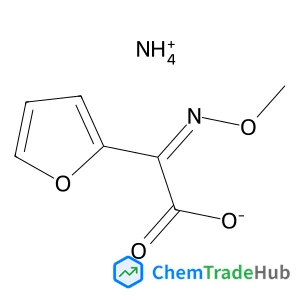
Ammonium (Z)-2-(furan-2-yl)-2-(methoxyimino)acetate
CAS Number:
97148-39-5
Molecular Formula:
C7H10N2O4
Xin Wu, Bo Li, Chu-Chen Chueh
Hybrid metal-halide perovskite solar cells (PVSCs) have drawn unprecedented attention during the last decade due to their superior photovoltaic performance, facile and low-cost fabrication, and potential for roll-to-roll mass production and application for portable devices. Through collective composition, interface, and process engineering, a comprehensive understanding of the structure–property relationship and carrier dynamics of perovskites has been established to help achieve a very high certified power conversion efficiency (PCE) of 25.5%. Apart from material properties, the modified heterojunction design and device configuration evolution also play crucial roles in enhancing the efficiency. The adoption and/or modification of heterojunction structures have been demonstrated to effectively suppress the carrier recombination and potential losses in PVSCs. Moreover, the employment of multijunction structures has been shown to reduce thermalization losses, achieving a high PCE of 29.52% in perovskite/silicon tandem solar cells. Therefore, understanding the evolution of the device configuration of PVSCs from single junction, heterojunction to multijunction designs is helpful for the researchers in this field to further boost the PCE beyond 30%. Herein, we summarize the evolution and progress of the single junction, heterojunction and multijunction designs for high-performance PVSCs. A comprehensive review of the fundamentals and working principles of these designs is presented. We first introduce the basic working principles of single junction PVSCs and the intrinsic properties (such as crystallinity and defects) in perovskite films. Afterwards, the progress of diverse heterojunction designs and perovskite-based multijunction solar cells is synopsized and reviewed. Meanwhile, the challenges and strategies to further enhance the performance are also summarized. At the end, the perspectives on the future development of perovskite-based solar cells are provided. We hope this review can provide the readers with a quick catchup on this emerging solution-processable photovoltaic technology, which is currently at the transition stage towards commercialization.
Alessandra Ronchi, Paolo Brazzo, Mauro Sassi, Luca Beverina, Jacopo Pedrini, Francesco Meinardi, Angelo Monguzzi
DOI: 10.1039/C9CP01692A
Ruslan N. Tazhigulov, Pradeep Kumar Gurunathan, Yongbin Kim, Lyudmila V. Slipchenko, Ksenia B. Bravaya
DOI: 10.1039/C9CP01533G
Zeinab Parsouzi, Mojtaba Rajabi, Rony Saha, Prabesh Gyawali, Alan R. Baldwin, Chris Welch, Georg H. Mehl, J. T. Gleeson, Samuel Sprunt
DOI: 10.1039/C9CP00984A
Raffael Ruess, Sabina Scarabino, Andreas Ringleb, Kazuteru Nonomura, Nick Vlachopoulos, Anders Hagfeldt, Gunther Wittstock, Derck Schlettwein
DOI: 10.1039/C9CP01215J
Leandro D. Mena, D. M. A. Vera, Maria T. Baumgartner, Liliana B. Jimenez
DOI: 10.1039/C9CP02028D
Jesse Lentz, Stephen H. Garofalini
DOI: 10.1039/C9CP01994D
Yina Salamanca Blanco, Önder Topel, Éva G. Bajnóczi, Olle Björneholm, Ingmar Persson
DOI: 10.1039/C9CP02449B
Bo Yang, Maodong Li, Jiye Wang, Jingchao Zhang, Dongmei Liao, Yanan Yue
DOI: 10.1039/C9CP01605H
Zonghao Shen, Stephen J. Skinner, John A. Kilner
DOI: 10.1039/C9CP02175B
1H-Indazole-6-carbonitrile finds applications in pharmaceuticals, where it serve...
Waste containing Dioctyl (2E)-2-butenedioate (CAS: 2997-85-5) should be collecte...
Sodium [(1,2-benzoxazol-3-ylmethyl)sulfonyl]azanide is primarily used in pharmac...
Dimethyl 4-(4,4,5,5-tetramethyl-1,3,2-dioxaborolan-2-yl)-2,6-pyridinedicarboxyla...
Waste containing 2-Fluoro-6-hydrazinopyridine (CAS: 80714-39-2) should be manage...
6-Formyl-2-pyridinecarboxylic acid is an organic compound with the molecular for...
Research trends for this compound indicate a focus on its potential applications...
9H-Tribenzo[b,d,f]azepine is typically synthesized via a multi-step process invo...
1-Cyclopropyl-7-ethoxy-6-fluoro-8-methoxy-4-oxo-1,4-dihydro-3-quinolinecarboxyli...
Waste containing Methyl 3-oxo-1,2,3,4-tetrahydro-6-quinoxalinecarboxylate (CAS: ...

Chem Soc Rev publishes review articles covering important topics at the forefront of the chemical sciences. Reviews should be of the very highest quality and international impact. We particularly encourage international and multidisciplinary collaborations among our authors. Our scope covers the breadth of the chemical sciences, including interdisciplinary topics where the article has a basis in chemistry. Topics include: Analytical chemistry Biomaterials chemistry Bioorganic/medicinal chemistry Catalysis Chemical Biology Coordination Chemistry Crystal Engineering Energy Sustainable chemistry Green chemistry Inorganic chemistry Inorganic materials Main group chemistry Nanoscience Organic chemistry Organic materials Organometallics Physical chemistry Supramolecular chemistry Synthetic methodology Theoretical and computational chemistry