


Back cover
Literature Information
Publication Date
2021-07-16
DOI
10.1039/D1CP90141A
Impact Factor
3.676
Authors
View Original
Abstract
A graphical abstract is available for this content
Recommended Journals

Russian Journal of General Chemistry

Current Opinion in Colloid & Interface Science

Russian Chemical Bulletin

Journal of Peptide Science

Chemical Communications

Russian Journal of Coordination Chemistry

Crystallography Reports

Drug Discovery Today

Current Opinion in Solid State & Materials Science

Russian Journal of Organic Chemistry
Related Literature
Chemoselective photocatalytic oxidation of alcohols to aldehydes and ketones by nitromethane on titanium dioxide under violet 400 nm LED light irradiation
Azam Rahimi Niaraki, Mohammad Reza Saraee, Babak Kaboudin
2020-03-07
Paper
DOI: 10.1039/C9OB02183C
Metal-free late-stage C(sp2)–H functionalization of N-aryl amines with various sodium salts
Chandrashekar Mudithanapelli, Mi-hyun Kim
2019-11-26
Paper
DOI: 10.1039/C9OB02217A
Insights into DNA catalysis from structural and functional studies of the 8-17 DNAzyme
Marjorie Cepeda-Plaza, Alessio Peracchi
2020-01-28
Review Article
DOI: 10.1039/C9OB02453K
A domino annulation approach to 3,4-diacylpyrrolo[1,2-a]pyrazines: decoration of pyrazine units
Anuradha Dagar, Yohan Seo, Ikyon Kim
2020-04-07
Paper
DOI: 10.1039/D0OB00444H
Stereoselective Michael additions on α-aminoacrylates as the key step to an l-Oic analogue bearing a quaternary stereocenter
Federico Maria Cecchinelli, Giuseppe Celentano, Alessandra Puglisi, Nicoletta Gaggero
2019-12-16
Paper
DOI: 10.1039/C9OB02084E
Tandem addition/cyclization for synthesis of 2-aroyl benzofurans and 2-aroyl indoles by carbopalladation of nitriles
Julin Gong, Kun Hu, Yinlin Shao, Renhao Li, Yetong Zhang, Maolin Hu, Jiuxi Chen
2019-12-13
Paper
DOI: 10.1039/C9OB02408E
Functionalised thermally induced phase separation (TIPS) microparticles enabled for “click” chemistry
João C. F. Nogueira, Ketevan Paliashvili, Alexandra Bradford, Francesco Di Maggio, Daniel A. Richards, Vijay Chudasama
2020-03-02
Communication
DOI: 10.1039/D0OB00106F
Rhodium(iii)-catalyzed ortho-C–H amidation of 2-arylindazoles with a dioxazolone as an amidating reagent
Payel Ghosh, Sadhanendu Samanta, Alakananda Hajra
2020-01-27
Communication
DOI: 10.1039/C9OB02756D
You might also like
Compound Q&A
What regulatory guidelines apply to 6-Bromo-2-methylimidazo[1,2-a]pyrimidine (CAS: 1111638-05-1)?
6-Bromo-2-methylimidazo[1,2-a]pyrimidine (CAS: 1111638-05-1) falls under various...
1111638-05-16-Bromo-2-methylimid...
Compound Q&A
Are there alternatives to 1-Pyrrolidineethanol, β-methyl-α-phenyl-, (αS,βR) (CAS: 123620-80-4) in synthesis?
While there are no direct alternatives, similar compounds like 1-Pyrrolidineetha...
123620-80-41-Pyrrolidineethanol...
Compound Q&A
Is 4-Methyl-2,6-bis(2-methyl-2-propanyl)phenyl methylcarbamate (CAS: 1918-11-2) safe?
4-Methyl-2,6-bis(2-methyl-2-propanyl)phenyl methylcarbamate (CAS: 1918-11-2) is ...
1918-11-24-Methyl-2,6-bis(2-m...
Compound Q&A
How should 2-(3-Bromo-4-fluorophenyl)-1,3-dioxolane (CAS: 77771-04-1) be stored?
2-(3-Bromo-4-fluorophenyl)-1,3-dioxolane (CAS: 77771-04-1) should be stored in a...
77771-04-12-(3-Bromo-4-fluorop...
Compound Q&A
What are the physical and chemical properties of 4,5,6,7-Tetrahydro-1H-indazole hydrochloride (CAS: 18161-11-0)?
4,5,6,7-Tetrahydro-1H-indazole hydrochloride is a white crystalline solid with a...
18161-11-04,5,6,7-Tetrahydro-1...
Compound Q&A
What is (2R)-1-Methoxy-3-phenyl-2-propanamine (CAS: 59919-07-2)?
(2R)-1-Methoxy-3-phenyl-2-propanamine is a chiral organic compound with the CAS ...
59919-07-2(2R)-1-Methoxy-3-phe...
Compound Q&A
What industries use Ethyl 1-(1-phenylethyl)-1H-imidazole-5-carboxylate (CAS: 56649-47-9)?
Ethyl 1-(1-phenylethyl)-1H-imidazole-5-carboxylate is used in various industries...
56649-47-9Ethyl 1-(1-phenyleth...
Compound Q&A
What regulatory guidelines apply to 4-[(1E,3S)-1-(4-Hydroxyphenyl)-1,4-pentadien-3-yl]phenol (CAS: 17676-24-3)?
4-[(1E,3S)-1-(4-Hydroxyphenyl)-1,4-pentadien-3-yl]phenol (CAS: 17676-24-3) falls...
17676-24-34-[(1E,3S)-1-(4-Hydr...
Compound Q&A
What industries use (S)-3-Amino-5-phenylpentanoic acid hydrochloride (CAS: 331846-97-0)?
(S)-3-Amino-5-phenylpentanoic acid hydrochloride is primarily used in the pharma...
331846-97-0(S)-3-Amino-5-phenyl...
Compound Q&A
How is 7-methoxy-1-benzothiophene-2-carboxylic acid (CAS: 88791-07-5) typically synthesized?
7-Methoxy-1-benzothiophene-2-carboxylic acid is typically synthesized by reactin...
88791-07-57-methoxy-1-benzothi...
Source Journal
Physical Chemistry Chemical Physics

CiteScore:
5.5
Self-citation Rate:
10.3%
Articles per Year:
3036
Physical Chemistry Chemical Physics (PCCP) is an international journal co-owned by 19 physical chemistry and physics societies from around the world. This journal publishes original, cutting-edge research in physical chemistry, chemical physics and biophysical chemistry. To be suitable for publication in PCCP, articles must include significant innovation and/or insight into physical chemistry; this is the most important criterion that reviewers and Editors will judge against when evaluating submissions. The journal has a broad scope and welcomes contributions spanning experiment, theory, computation and data science. Topical coverage includes spectroscopy, dynamics, kinetics, statistical mechanics, thermodynamics, electrochemistry, catalysis, surface science, quantum mechanics, quantum computing and machine learning. Interdisciplinary research areas such as polymers and soft matter, materials, nanoscience, energy, surfaces/interfaces, and biophysical chemistry are welcomed if they demonstrate significant innovation and/or insight into physical chemistry. Joined experimental/theoretical studies are particularly appreciated when complementary and based on up-to-date approaches.
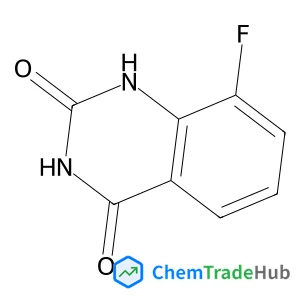
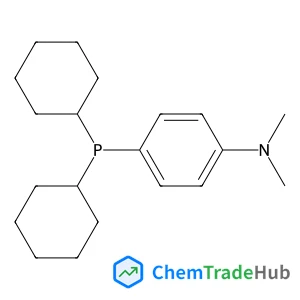
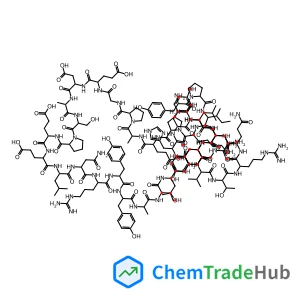
Recommended Compounds
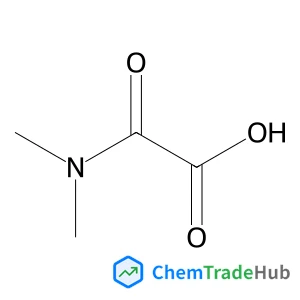
Recommended Suppliers




Disclaimer
This page provides academic journal information for reference and research purposes only. We are not affiliated with any journal publishers and do not handle publication submissions. For publication-related inquiries, please contact the respective journal publishers directly.
If you notice any inaccuracies in the information displayed, please contact us at support@chemtradehub.com. We will promptly review and address your concerns.