












Correction: Cesium and iodine release from fluoride-based molten salt reactor fuel
Literature Information
Publication Date
2021-06-30
DOI
10.1039/D1CP90125G
Impact Factor
3.676
Authors
View Original
Abstract
Correction for ‘Cesium and iodine release from fluoride-based molten salt reactor fuel’ by O. Beneš et al., Phys. Chem. Chem. Phys., 2021, 23, 9512–9523, DOI: 10.1039/D0CP05794K.
Recommended Journals
Related Literature
L. pneumophila CMP-5,7-di-N-acetyllegionaminic acid synthetase (LpCLS)-involved chemoenzymatic synthesis of sialosides and analogues
John B. McArthur, Abhishek Santra, Wanqing Li, Anoopjit S. Kooner, Ziqi Liu, Hai Yu, Xi Chen
2019-12-30
Paper
DOI: 10.1039/C9OB02476J
Metal-free synthesis of imino-disaccharides and calix-iminosugars by photoinduced radical thiol–ene coupling (TEC)
Renaud Zelli, Pascal Dumy, Alberto Marra
2020-02-21
Communication
DOI: 10.1039/D0OB00198H
p-TsOH-mediated synthesis of substituted 2,4-diaryl-3-sulfonylquinolines from functionalized 2-aminobenzophenones and aromatic β-ketosulfones under microwave irradiation
Chieh-Kai Chan, Chien-Yu Lai, Wei-Chih Lo, Yu-Ting Cheng, Cheng-Chung Wang
2019-12-11
Paper
DOI: 10.1039/C9OB02445J
Functionalised thermally induced phase separation (TIPS) microparticles enabled for “click” chemistry
João C. F. Nogueira, Ketevan Paliashvili, Alexandra Bradford, Francesco Di Maggio, Daniel A. Richards, Vijay Chudasama
2020-03-02
Communication
DOI: 10.1039/D0OB00106F
Biomimetic total syntheses of baefrutones A–D, baeckenon B, and frutescones A, D–F
Ji-Qin Hou, Jiang-Hong Yu, Heng Zhao, Ying-Ying Dong, Qiu-Shi Peng, Bao-Bao Zhang, Hao Wang
2020-01-14
Paper
DOI: 10.1039/C9OB02490E
Modular synthesis of oligoacetylacetones via site-selective silylation of acetylacetone derivatives
Parantap Sarkar, Yuya Inaba, Hayato Shirakura, Tomoki Yoneda
2020-04-08
Paper
DOI: 10.1039/D0OB00501K
Synthesis of monofluorooxazoles with quaternary C–F centers through photoredox-catalyzed radical addition of methylene-2-oxazolines
Chuan-Hua Qu, Jin-Hong Chen, Zhi-Gang Xu, Cheng-He Zhou, Zhong-Zhu Chen
2020-03-06
Communication
DOI: 10.1039/D0OB00267D
Synthesis of 3-fluoro-2,5-disubstituted furans through ring expansion of gem-difluorocyclopropyl ketones
Tsuyuka Sugiishi, Chihori Matsumura, Hideki Amii
2020-02-28
Communication
DOI: 10.1039/C9OB02713K
You might also like
Compound Q&A
What regulatory guidelines apply to 6-Bromo-2-methylimidazo[1,2-a]pyrimidine (CAS: 1111638-05-1)?
6-Bromo-2-methylimidazo[1,2-a]pyrimidine (CAS: 1111638-05-1) falls under various...
1111638-05-16-Bromo-2-methylimid...
Compound Q&A
Are there alternatives to 1-Pyrrolidineethanol, β-methyl-α-phenyl-, (αS,βR) (CAS: 123620-80-4) in synthesis?
While there are no direct alternatives, similar compounds like 1-Pyrrolidineetha...
123620-80-41-Pyrrolidineethanol...
Compound Q&A
Is 4-Methyl-2,6-bis(2-methyl-2-propanyl)phenyl methylcarbamate (CAS: 1918-11-2) safe?
4-Methyl-2,6-bis(2-methyl-2-propanyl)phenyl methylcarbamate (CAS: 1918-11-2) is ...
1918-11-24-Methyl-2,6-bis(2-m...
Compound Q&A
How should 2-(3-Bromo-4-fluorophenyl)-1,3-dioxolane (CAS: 77771-04-1) be stored?
2-(3-Bromo-4-fluorophenyl)-1,3-dioxolane (CAS: 77771-04-1) should be stored in a...
77771-04-12-(3-Bromo-4-fluorop...
Compound Q&A
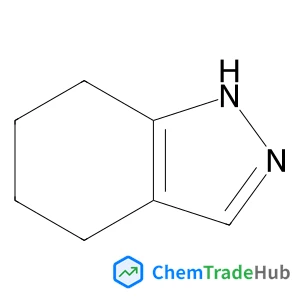
What are the physical and chemical properties of 4,5,6,7-Tetrahydro-1H-indazole hydrochloride (CAS: 18161-11-0)?
4,5,6,7-Tetrahydro-1H-indazole hydrochloride is a white crystalline solid with a...
18161-11-04,5,6,7-Tetrahydro-1...
Compound Q&A
What is (2R)-1-Methoxy-3-phenyl-2-propanamine (CAS: 59919-07-2)?
(2R)-1-Methoxy-3-phenyl-2-propanamine is a chiral organic compound with the CAS ...
59919-07-2(2R)-1-Methoxy-3-phe...
Compound Q&A
What industries use Ethyl 1-(1-phenylethyl)-1H-imidazole-5-carboxylate (CAS: 56649-47-9)?
Ethyl 1-(1-phenylethyl)-1H-imidazole-5-carboxylate is used in various industries...
56649-47-9Ethyl 1-(1-phenyleth...
Compound Q&A
What regulatory guidelines apply to 4-[(1E,3S)-1-(4-Hydroxyphenyl)-1,4-pentadien-3-yl]phenol (CAS: 17676-24-3)?
4-[(1E,3S)-1-(4-Hydroxyphenyl)-1,4-pentadien-3-yl]phenol (CAS: 17676-24-3) falls...
17676-24-34-[(1E,3S)-1-(4-Hydr...
Compound Q&A
What industries use (S)-3-Amino-5-phenylpentanoic acid hydrochloride (CAS: 331846-97-0)?
(S)-3-Amino-5-phenylpentanoic acid hydrochloride is primarily used in the pharma...
331846-97-0(S)-3-Amino-5-phenyl...
Compound Q&A
How is 7-methoxy-1-benzothiophene-2-carboxylic acid (CAS: 88791-07-5) typically synthesized?
7-Methoxy-1-benzothiophene-2-carboxylic acid is typically synthesized by reactin...
88791-07-57-methoxy-1-benzothi...
Source Journal
Physical Chemistry Chemical Physics

CiteScore:
5.5
Self-citation Rate:
10.3%
Articles per Year:
3036
Physical Chemistry Chemical Physics (PCCP) is an international journal co-owned by 19 physical chemistry and physics societies from around the world. This journal publishes original, cutting-edge research in physical chemistry, chemical physics and biophysical chemistry. To be suitable for publication in PCCP, articles must include significant innovation and/or insight into physical chemistry; this is the most important criterion that reviewers and Editors will judge against when evaluating submissions. The journal has a broad scope and welcomes contributions spanning experiment, theory, computation and data science. Topical coverage includes spectroscopy, dynamics, kinetics, statistical mechanics, thermodynamics, electrochemistry, catalysis, surface science, quantum mechanics, quantum computing and machine learning. Interdisciplinary research areas such as polymers and soft matter, materials, nanoscience, energy, surfaces/interfaces, and biophysical chemistry are welcomed if they demonstrate significant innovation and/or insight into physical chemistry. Joined experimental/theoretical studies are particularly appreciated when complementary and based on up-to-date approaches.
Recommended Compounds

Recommended Suppliers




Disclaimer
This page provides academic journal information for reference and research purposes only. We are not affiliated with any journal publishers and do not handle publication submissions. For publication-related inquiries, please contact the respective journal publishers directly.
If you notice any inaccuracies in the information displayed, please contact us at support@chemtradehub.com. We will promptly review and address your concerns.