












A four-band and polarization-independent BDS-based tunable absorber with high refractive index sensitivity
Literature Information
Publication Date
2021-11-10
DOI
10.1039/D1CP04568G
Impact Factor
3.676
Authors
Xianglong Wu, Ying Zheng, Yao Luo, Jianguo Zhang, Zao Yi, Xianwen Wu, Shubo Cheng, Wenxing Yang, Yang Yu, Pinghui Wu
View Original
Abstract
A four-band terahertz tunable narrow-band perfect absorber based on a bulk Dirac semi-metallic (BDS) metamaterial with a microstructure is designed. The three-layer structure of this absorber from top to bottom is the Dirac semi-metallic layer, the dielectric layer and the metal reflector layer. Based on the Finite Element Method (FEM), we use the simulation software CST STUDIO SUITE to simulate the absorption characteristics of the designed absorber. The simulation results show that the absorption rate of the absorber is over 93% at frequencies of 1.22, 1.822, 2.148 and 2.476 THz, and three of them have achieved a perfect absorption rate of more than 95%. We use the localized surface plasmon resonance (LSPR), impedance matching and other theories to analyze its physical mechanism in detail. The influence of the geometric structure parameters of the absorber and the incident angle of electromagnetic waves on the absorption performance has also been studied in detail. Due to the rotational symmetry of the structure, the designed absorber has excellent polarization insensitivity. In addition, the maximum adjustable range of absorption frequency is 0.051 THz, which can be achieved by changing the Fermi energy of BDS. We also define the refractive index sensitivity (S), which is 39.1, 75.4, 119.1 and 122.0 GHz RIU−1 for the four absorption modes when the refractive index varies in the range of 1 to 1.9. This high-performance absorber has a very good development prospect in the frontier fields of bio-chemical sensing and special environmental detection.
Related Literature
Computational strategies to probe CH activation in dioxo-dicopper complexes
Zhenzhuo Lan, Shaama Mallikarjun Sharada
2018-09-27
Paper
DOI: 10.1039/C8CP05096A
fvs-Si48: a direct bandgap silicon allotrope
Menglei Hu, Ziao Wang, Yanheng Xu, Jiechun Liang, Jiagen Li, Xi Zhu
2018-07-16
Paper
DOI: 10.1039/C8CP03165G
On the prediction of core level binding energies in molecules, surfaces and solids
Francesc Viñes, Carmen Sousa, Francesc Illas
2018-03-12
Perspective
DOI: 10.1039/C7CP08503F
Correction: Unravelling the impact of hydrocarbon structure on the fumarate addition mechanism – a gas-phase ab initio study
Vivek S. Bharadwaj, Stephanie M. Villano, C. Mark Maupin, Anthony M. Dean
2018-03-22
Correction
DOI: 10.1039/C8CP90064G
The RbSr 2Σ+ ground state investigated via spectroscopy of hot and ultracold molecules‡
Alessio Ciamei, Jacek Szczepkowski, Alex Bayerle, Vincent Barbé, Lukas Reichsöllner, Slava M. Tzanova, Chun-Chia Chen, Benjamin Pasquiou, Anna Grochola, Pawel Kowalczyk, Wlodzimierz Jastrzebski, Florian Schreck
2018-09-21
Paper
DOI: 10.1039/C8CP03919D
Reply to ‘Comment on “Angstrom-scale probing of paramagnetic centers location in nanodiamonds by 3He NMR at low temperatures”’ by A. Shames, V. Osipov and A. Panich, Phys. Chem. Chem. Phys. 2018, 20, DOI: 10.1039/c8cp03331e
Vyacheslav Kuzmin, Kajum Safiullin, Gleb Dolgorukov, Andrey Stanislavovas, Egor Alakshin, Sergei Orlinskii, Alexander Klochkov
2018-10-16
Comment
DOI: 10.1039/C8CP05801F
Multianalytical approach for surface- and tip-enhanced infrared spectroscopy study of a molecule–metal conjugate: deducing its adsorption geometry
E. Pięta, C. Paluszkiewicz, W. M. Kwiatek
2018-10-18
Paper
DOI: 10.1039/C8CP05587D
A neural network potential energy surface for the F + CH4 reaction including multiple channels based on coupled cluster theory
Xin Xu, Shu Liu, Dong H. Zhang
2018-03-02
Paper
DOI: 10.1039/C7CP08365C
You might also like
Compound Q&A
What are the main uses of 1-(3-Aminophenyl)-3-[(3R)-1-(3,3-dimethyl-2-oxobutyl)-2-oxo-5-(2-pyridinyl)-2,3-dihydro-1H-1,4-benzodiazepin-3-yl]urea (CAS: 155412-88-7)?
This compound is mainly used as an intermediate in the synthesis of antipsychoti...
155412-88-71-(3-Aminophenyl)-3-...
Compound Q&A
How should waste containing 1-(D-Ribofuranosyl)-1,4-dihydro-3-pyridinecarboxamide (CAS: 19132-12-8) be handled?
Waste containing 1-(D-Ribofuranosyl)-1,4-dihydro-3-pyridinecarboxamide (CAS: 191...
19132-12-81-(D-Ribofuranosyl)-...
Compound Q&A
What regulatory guidelines apply to 2-Methyl-2-propanyl 3-bromo-3-(hydroxymethyl)-1-azetidinecarboxylate (CAS: 2007919-81-3)?
2-Methyl-2-propanyl 3-bromo-3-(hydroxymethyl)-1-azetidinecarboxylate (CAS: 20079...
2007919-81-32-Methyl-2-propanyl ...
Compound Q&A
What is N-(4-Chloro-2-pyridinyl)acetamide (CAS: 245056-66-0)?
N-(4-Chloro-2-pyridinyl)acetamide (CAS: 245056-66-0) is a chemical compound with...
245056-66-0N-(4-Chloro-2-pyridi...
Compound Q&A
What is 5-Chloro-2-hydroxybenzoic acid (CAS: 321-14-2)?
5-Chloro-2-hydroxybenzoic acid, also known as 5-chlorosalicylic acid, is an arom...
321-14-25-Chloro-2-hydroxybe...
Compound Q&A
What precautions should be taken when handling 1,1-Dichloro-1-fluoroethane (CAS: 1717-00-6)?
When handling 1,1-Dichloro-1-fluoroethane (CAS: 1717-00-6), it is important to u...
1717-00-61,1-Dichloro-1-fluor...
Compound Q&A
What are the physical and chemical properties of Fmoc-(2S,3R)-3-phenylpyrrolidine-2-carboxylic acid (CAS: 281655-32-1)?
Fmoc-(2S,3R)-3-phenylpyrrolidine-2-carboxylic acid is a white crystalline solid ...
281655-32-1Fmoc-(2S,3R)-3-pheny...
Compound Q&A
What are the main uses of 4-Amino-5-bromo-2-pyridinecarboxylic acid (CAS: 1363381-01-4)?
4-Amino-5-bromo-2-pyridinecarboxylic acid is primarily used as a precursor in th...
1363381-01-44-Amino-5-bromo-2-py...
Compound Q&A
What precautions should be taken when handling (S)-tert-butyl 2-((2-(4-bromophenyl)-2-oxoethyl)carbamoyl)pyrrolidine-1-carboxylate (CAS: 1007881-98-2)?
Handling this compound should be done with personal protective equipment (PPE) i...
1007881-98-2(S)-tert-butyl 2-((2...
Compound Q&A
What precautions should be taken when handling 8-bromo-2,2-dimethyl-3,4-dihydro-2H-1,4-benzoxazin-3-one (CAS: 688363-73-7)?
When handling 8-bromo-2,2-dimethyl-3,4-dihydro-2H-1,4-benzoxazin-3-one, use prop...
688363-73-78-bromo-2,2-dimethyl...
Source Journal
Physical Chemistry Chemical Physics

CiteScore:
5.5
Self-citation Rate:
10.3%
Articles per Year:
3036
Physical Chemistry Chemical Physics (PCCP) is an international journal co-owned by 19 physical chemistry and physics societies from around the world. This journal publishes original, cutting-edge research in physical chemistry, chemical physics and biophysical chemistry. To be suitable for publication in PCCP, articles must include significant innovation and/or insight into physical chemistry; this is the most important criterion that reviewers and Editors will judge against when evaluating submissions. The journal has a broad scope and welcomes contributions spanning experiment, theory, computation and data science. Topical coverage includes spectroscopy, dynamics, kinetics, statistical mechanics, thermodynamics, electrochemistry, catalysis, surface science, quantum mechanics, quantum computing and machine learning. Interdisciplinary research areas such as polymers and soft matter, materials, nanoscience, energy, surfaces/interfaces, and biophysical chemistry are welcomed if they demonstrate significant innovation and/or insight into physical chemistry. Joined experimental/theoretical studies are particularly appreciated when complementary and based on up-to-date approaches.
Recommended Compounds

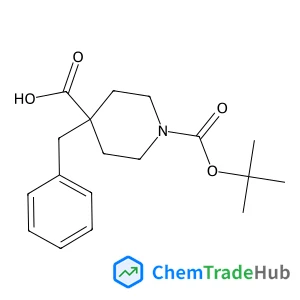
4-Benzyl-1-(tert-butoxycarbonyl)piperidine-4-carboxylic acid
CAS Number:
170838-87-6
Molecular Formula:
C18H25NO4
Recommended Suppliers






Disclaimer
This page provides academic journal information for reference and research purposes only. We are not affiliated with any journal publishers and do not handle publication submissions. For publication-related inquiries, please contact the respective journal publishers directly.
If you notice any inaccuracies in the information displayed, please contact us at support@chemtradehub.com. We will promptly review and address your concerns.