












Improving the analysis of biological ensembles through extended similarity measures
Literature Information
Publication Date
2021-11-29
DOI
10.1039/D1CP04019G
Impact Factor
3.676
Authors
Liwei Chang
View Original
Abstract
We present new algorithms to classify structural ensembles of macromolecules based on the recently proposed extended similarity measures. Molecular dynamics provides a wealth of structural information on systems of biological interest. As computer power increases, we capture larger ensembles and larger conformational transitions between states. Typically, structural clustering provides the statistical mechanics treatment of the system to identify relevant biological states. The key advantage of our approach is that the newly introduced extended similarity indices reduce the computational complexity of assessing the similarity of a set of structures from O(N2) to O(N). Here we take advantage of this favorable cost to develop several highly efficient techniques, including a linear-scaling algorithm to determine the medoid of a set (which we effectively use to select the most representative structure of a cluster). Moreover, we use our extended similarity indices as a linkage criterion in a novel hierarchical agglomerative clustering algorithm. We apply these new metrics to analyze the ensembles of several systems of biological interest such as folding and binding of macromolecules (peptide, protein, DNA–protein). In particular, we design a new workflow that is capable of identifying the most important conformations contributing to the protein folding process. We show excellent performance in the resulting clusters (surpassing traditional linkage criteria), along with faster performance and an efficient cost-function to identify when to merge clusters.
Related Literature
Synthesis of corrugated C-based nanostructures by Br-corannulene oligomerization
Marco Smerieri, Lara Ferrighi, Silvia Nappini, Luca Vaghi, Antonio Papagni, Cristiana Di Valentin, Federica Bondino, Letizia Savio
2018-09-25
Paper
DOI: 10.1039/C8CP04791J
Piezoelectric and polarized enhancement by hydrofluorination of penta-graphene
Hui-Min Mu, Jin-Peng Li, Xiao-Chun Wang
2018-10-03
Paper
DOI: 10.1039/C8CP04010A
fvs-Si48: a direct bandgap silicon allotrope
Menglei Hu, Ziao Wang, Yanheng Xu, Jiechun Liang, Jiagen Li, Xi Zhu
2018-07-16
Paper
DOI: 10.1039/C8CP03165G
Multianalytical approach for surface- and tip-enhanced infrared spectroscopy study of a molecule–metal conjugate: deducing its adsorption geometry
E. Pięta, C. Paluszkiewicz, W. M. Kwiatek
2018-10-18
Paper
DOI: 10.1039/C8CP05587D
Exploring non-adiabatic approximations to the exchange–correlation functional of TDDFT
Johanna I. Fuks, Lionel Lacombe, Søren E. B. Nielsen, Neepa T. Maitra
2018-10-02
Paper
DOI: 10.1039/C8CP03957G
On the prediction of core level binding energies in molecules, surfaces and solids
Francesc Viñes, Carmen Sousa, Francesc Illas
2018-03-12
Perspective
DOI: 10.1039/C7CP08503F
Time dependence of NMR observables reveals salient differences in the accumulation of early aggregated species between human islet amyloid polypeptide and amyloid-β
Anaïs R. F. Hoffmann, Lucie Caillon, Lilian Shadai Salazar Vazquez, Pierre-Alexandre Spath, Ludovic Carlier, Lucie Khemtémourian, Olivier Lequin
2018-03-20
Paper
DOI: 10.1039/C7CP07516B
What kind of neutral halogen bonds can be modulated by solvent effects?
Dan Shen, Peifeng Su, Wei Wu
2018-09-20
Paper
DOI: 10.1039/C8CP05358H
Fermi level equilibration of Ag and Au plasmonic metal nanoparticles supported on graphene oxide
Abhay N. Singh, Harsha Devnani, Shwetambara Jha, Pravin P. Ingole
2018-09-26
Paper
DOI: 10.1039/C8CP05170D
You might also like
Compound Q&A
What are the main uses of 1-(3-Aminophenyl)-3-[(3R)-1-(3,3-dimethyl-2-oxobutyl)-2-oxo-5-(2-pyridinyl)-2,3-dihydro-1H-1,4-benzodiazepin-3-yl]urea (CAS: 155412-88-7)?
This compound is mainly used as an intermediate in the synthesis of antipsychoti...
155412-88-71-(3-Aminophenyl)-3-...
Compound Q&A
How should waste containing 1-(D-Ribofuranosyl)-1,4-dihydro-3-pyridinecarboxamide (CAS: 19132-12-8) be handled?
Waste containing 1-(D-Ribofuranosyl)-1,4-dihydro-3-pyridinecarboxamide (CAS: 191...
19132-12-81-(D-Ribofuranosyl)-...
Compound Q&A
What regulatory guidelines apply to 2-Methyl-2-propanyl 3-bromo-3-(hydroxymethyl)-1-azetidinecarboxylate (CAS: 2007919-81-3)?
2-Methyl-2-propanyl 3-bromo-3-(hydroxymethyl)-1-azetidinecarboxylate (CAS: 20079...
2007919-81-32-Methyl-2-propanyl ...
Compound Q&A
What is N-(4-Chloro-2-pyridinyl)acetamide (CAS: 245056-66-0)?
N-(4-Chloro-2-pyridinyl)acetamide (CAS: 245056-66-0) is a chemical compound with...
245056-66-0N-(4-Chloro-2-pyridi...
Compound Q&A
What is 5-Chloro-2-hydroxybenzoic acid (CAS: 321-14-2)?
5-Chloro-2-hydroxybenzoic acid, also known as 5-chlorosalicylic acid, is an arom...
321-14-25-Chloro-2-hydroxybe...
Compound Q&A
What precautions should be taken when handling 1,1-Dichloro-1-fluoroethane (CAS: 1717-00-6)?
When handling 1,1-Dichloro-1-fluoroethane (CAS: 1717-00-6), it is important to u...
1717-00-61,1-Dichloro-1-fluor...
Compound Q&A
What are the physical and chemical properties of Fmoc-(2S,3R)-3-phenylpyrrolidine-2-carboxylic acid (CAS: 281655-32-1)?
Fmoc-(2S,3R)-3-phenylpyrrolidine-2-carboxylic acid is a white crystalline solid ...
281655-32-1Fmoc-(2S,3R)-3-pheny...
Compound Q&A
What are the main uses of 4-Amino-5-bromo-2-pyridinecarboxylic acid (CAS: 1363381-01-4)?
4-Amino-5-bromo-2-pyridinecarboxylic acid is primarily used as a precursor in th...
1363381-01-44-Amino-5-bromo-2-py...
Compound Q&A
What precautions should be taken when handling (S)-tert-butyl 2-((2-(4-bromophenyl)-2-oxoethyl)carbamoyl)pyrrolidine-1-carboxylate (CAS: 1007881-98-2)?
Handling this compound should be done with personal protective equipment (PPE) i...
1007881-98-2(S)-tert-butyl 2-((2...
Compound Q&A
What precautions should be taken when handling 8-bromo-2,2-dimethyl-3,4-dihydro-2H-1,4-benzoxazin-3-one (CAS: 688363-73-7)?
When handling 8-bromo-2,2-dimethyl-3,4-dihydro-2H-1,4-benzoxazin-3-one, use prop...
688363-73-78-bromo-2,2-dimethyl...
Source Journal
Physical Chemistry Chemical Physics

CiteScore:
5.5
Self-citation Rate:
10.3%
Articles per Year:
3036
Physical Chemistry Chemical Physics (PCCP) is an international journal co-owned by 19 physical chemistry and physics societies from around the world. This journal publishes original, cutting-edge research in physical chemistry, chemical physics and biophysical chemistry. To be suitable for publication in PCCP, articles must include significant innovation and/or insight into physical chemistry; this is the most important criterion that reviewers and Editors will judge against when evaluating submissions. The journal has a broad scope and welcomes contributions spanning experiment, theory, computation and data science. Topical coverage includes spectroscopy, dynamics, kinetics, statistical mechanics, thermodynamics, electrochemistry, catalysis, surface science, quantum mechanics, quantum computing and machine learning. Interdisciplinary research areas such as polymers and soft matter, materials, nanoscience, energy, surfaces/interfaces, and biophysical chemistry are welcomed if they demonstrate significant innovation and/or insight into physical chemistry. Joined experimental/theoretical studies are particularly appreciated when complementary and based on up-to-date approaches.
Recommended Compounds
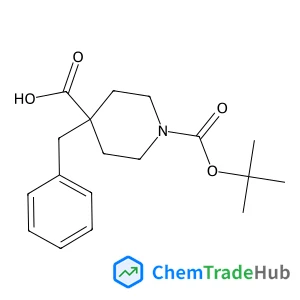
4-Benzyl-1-(tert-butoxycarbonyl)piperidine-4-carboxylic acid
CAS Number:
170838-87-6
Molecular Formula:
C18H25NO4
![4-Chloro-3-(trifluoromethyl)-1H-pyrrolo[2,3-b]pyridine structure](https://static.chemtradehub.com/structs/869/869335-75-1-a9d0.webp "4-Chloro-3-(trifluoromethyl)-1H-pyrrolo[2,3-b]pyridine structure")
4-Chloro-3-(trifluoromethyl)-1H-pyrrolo[2,3-b]pyridine
CAS Number:
869335-75-1
Molecular Formula:
C8H4ClF3N2
Recommended Suppliers





Disclaimer
This page provides academic journal information for reference and research purposes only. We are not affiliated with any journal publishers and do not handle publication submissions. For publication-related inquiries, please contact the respective journal publishers directly.
If you notice any inaccuracies in the information displayed, please contact us at support@chemtradehub.com. We will promptly review and address your concerns.