












Synthesis of corrugated C-based nanostructures by Br-corannulene oligomerization
Literature Information
Publication Date
2018-09-25
DOI
10.1039/C8CP04791J
Impact Factor
3.676
Authors
Marco Smerieri, Lara Ferrighi, Silvia Nappini, Luca Vaghi, Antonio Papagni, Cristiana Di Valentin, Federica Bondino, Letizia Savio
View Original
Abstract
The structure and electronic properties of carbon-based nanostructures obtained by metal surface assisted synthesis is highly dependent on the nature of the precursor molecule. Here, we report on a combined scanning tunneling microscopy, soft X-ray spectroscopy and density functional theory investigation on the surface assisted polymerization of Br-corannulene at Ag(110) and on the possibility of building a mesh of π-conjugated polymers starting from buckyball shaped molecules. Indeed, the corannulene units form one-molecule-wide ribbons in which the natural concavity of the precursor molecule is maintained. These C-based nanostructures are corrugated and merge into a covalent network on the surface.
Related Literature
The O, OH and OOH-assisted selective coupling of methanol on Au–Ag(111)
Wenhui Zhong, Jinxia Liang, Wei Hu, Xinrui Cao, Chuanyi Jia, Jun Jiang
2016-02-26
Paper
DOI: 10.1039/C6CP00336B
Switching between cis and trans anions of 2-(2′-hydroxyphenyl)benzimidazole: a molecular rotation perturbed by chemical stabilization‡
Saugata Sahu, Minati Das, G. Krishnamoorthy
2016-03-22
Paper
DOI: 10.1039/C5CP07949G
The use of the Rx spin label in orientation measurement on proteins, by EPR
M. A. Stevens, J. E. McKay, J. L. S. Robinson, H. EL Mkami, G. M. Smith, D. G. Norman
2015-09-25
Paper
DOI: 10.1039/C5CP04753F
Vibronic coupling in the excited-states of carotenoids
Takeshi Miki, Tiago Buckup, Marie S. Krause, June Southall, Richard J. Cogdell, Marcus Motzkus
2016-03-23
Paper
DOI: 10.1039/C5CP07542D
Molecular simulations of cytochrome c adsorption on positively charged surfaces: the influence of anion type and concentration
Chunwang Peng, Yun Xie, Jian Zhou
2016-03-04
Paper
DOI: 10.1039/C6CP00170J
Current transient and in situ AFM studies of initial growth stages of electrochemically deposited nickel cobalt hydroxide nanosheet films
Tuyen Nguyen, M. Fátima Montemor
2016-03-29
Paper
DOI: 10.1039/C6CP00709K
Giant strain geared to transformable H-bonded network in compressed β-d-mannose
Ewa Patyk, Anna Jenczak, Andrzej Katrusiak
2016-03-21
Paper
DOI: 10.1039/C6CP01286H
Effects of carbon vacancies on the structures, mechanical properties, and chemical bonding of zirconium carbides: a first-principles study
2016-03-30
Paper
DOI: 10.1039/C5CP07724A
Electronic transport properties of ultra-thin Ni and Ni–C nanowires
Leining Zhang, Weikang Wu, Yi Zhou, Hongru Ren, Jichen Dong, Hui Li
2016-01-21
Paper
DOI: 10.1039/C5CP07641B
Slowing and cooling of heavy or light (even with a tiny electric dipole moment) polar molecules using a novel, versatile electrostatic Stark decelerator
Qin Wang, Shunyong Hou, Liang Xu, Jianping Yin
2016-01-06
Paper
DOI: 10.1039/C5CP06392B
You might also like
Compound Q&A
What are the main uses of 1-(3-Aminophenyl)-3-[(3R)-1-(3,3-dimethyl-2-oxobutyl)-2-oxo-5-(2-pyridinyl)-2,3-dihydro-1H-1,4-benzodiazepin-3-yl]urea (CAS: 155412-88-7)?
This compound is mainly used as an intermediate in the synthesis of antipsychoti...
155412-88-71-(3-Aminophenyl)-3-...
Compound Q&A
How should waste containing 1-(D-Ribofuranosyl)-1,4-dihydro-3-pyridinecarboxamide (CAS: 19132-12-8) be handled?
Waste containing 1-(D-Ribofuranosyl)-1,4-dihydro-3-pyridinecarboxamide (CAS: 191...
19132-12-81-(D-Ribofuranosyl)-...
Compound Q&A
What regulatory guidelines apply to 2-Methyl-2-propanyl 3-bromo-3-(hydroxymethyl)-1-azetidinecarboxylate (CAS: 2007919-81-3)?
2-Methyl-2-propanyl 3-bromo-3-(hydroxymethyl)-1-azetidinecarboxylate (CAS: 20079...
2007919-81-32-Methyl-2-propanyl ...
Compound Q&A
What is N-(4-Chloro-2-pyridinyl)acetamide (CAS: 245056-66-0)?
N-(4-Chloro-2-pyridinyl)acetamide (CAS: 245056-66-0) is a chemical compound with...
245056-66-0N-(4-Chloro-2-pyridi...
Compound Q&A
What is 5-Chloro-2-hydroxybenzoic acid (CAS: 321-14-2)?
5-Chloro-2-hydroxybenzoic acid, also known as 5-chlorosalicylic acid, is an arom...
321-14-25-Chloro-2-hydroxybe...
Compound Q&A
What precautions should be taken when handling 1,1-Dichloro-1-fluoroethane (CAS: 1717-00-6)?
When handling 1,1-Dichloro-1-fluoroethane (CAS: 1717-00-6), it is important to u...
1717-00-61,1-Dichloro-1-fluor...
Compound Q&A
What are the physical and chemical properties of Fmoc-(2S,3R)-3-phenylpyrrolidine-2-carboxylic acid (CAS: 281655-32-1)?
Fmoc-(2S,3R)-3-phenylpyrrolidine-2-carboxylic acid is a white crystalline solid ...
281655-32-1Fmoc-(2S,3R)-3-pheny...
Compound Q&A
What are the main uses of 4-Amino-5-bromo-2-pyridinecarboxylic acid (CAS: 1363381-01-4)?
4-Amino-5-bromo-2-pyridinecarboxylic acid is primarily used as a precursor in th...
1363381-01-44-Amino-5-bromo-2-py...
Compound Q&A
What precautions should be taken when handling (S)-tert-butyl 2-((2-(4-bromophenyl)-2-oxoethyl)carbamoyl)pyrrolidine-1-carboxylate (CAS: 1007881-98-2)?
Handling this compound should be done with personal protective equipment (PPE) i...
1007881-98-2(S)-tert-butyl 2-((2...
Compound Q&A
What precautions should be taken when handling 8-bromo-2,2-dimethyl-3,4-dihydro-2H-1,4-benzoxazin-3-one (CAS: 688363-73-7)?
When handling 8-bromo-2,2-dimethyl-3,4-dihydro-2H-1,4-benzoxazin-3-one, use prop...
688363-73-78-bromo-2,2-dimethyl...
Source Journal
Physical Chemistry Chemical Physics

CiteScore:
5.5
Self-citation Rate:
10.3%
Articles per Year:
3036
Physical Chemistry Chemical Physics (PCCP) is an international journal co-owned by 19 physical chemistry and physics societies from around the world. This journal publishes original, cutting-edge research in physical chemistry, chemical physics and biophysical chemistry. To be suitable for publication in PCCP, articles must include significant innovation and/or insight into physical chemistry; this is the most important criterion that reviewers and Editors will judge against when evaluating submissions. The journal has a broad scope and welcomes contributions spanning experiment, theory, computation and data science. Topical coverage includes spectroscopy, dynamics, kinetics, statistical mechanics, thermodynamics, electrochemistry, catalysis, surface science, quantum mechanics, quantum computing and machine learning. Interdisciplinary research areas such as polymers and soft matter, materials, nanoscience, energy, surfaces/interfaces, and biophysical chemistry are welcomed if they demonstrate significant innovation and/or insight into physical chemistry. Joined experimental/theoretical studies are particularly appreciated when complementary and based on up-to-date approaches.
Recommended Compounds
![Pyrazolo[1,5-a]pyridine-3-carbothioamide structure](https://static.chemtradehub.com/structs/885/885275-44-5-aae0.webp "Pyrazolo[1,5-a]pyridine-3-carbothioamide structure")

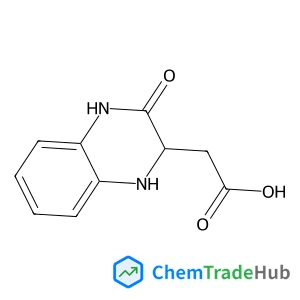
(3-Oxo-1,2,3,4-tetrahydro-2-quinoxalinyl)acetic acid
CAS Number:
136584-14-0
Molecular Formula:
C10H10N2O3
![tert-Butyl N-[(2-chloropyridin-4-yl)methyl]carbamate structure](https://static.chemtradehub.com/structs/916/916210-27-0-9f95.webp "tert-Butyl N-[(2-chloropyridin-4-yl)methyl]carbamate structure")
tert-Butyl N-[(2-chloropyridin-4-yl)methyl]carbamate
CAS Number:
916210-27-0
Molecular Formula:
C11H15ClN2O2
Recommended Suppliers





Disclaimer
This page provides academic journal information for reference and research purposes only. We are not affiliated with any journal publishers and do not handle publication submissions. For publication-related inquiries, please contact the respective journal publishers directly.
If you notice any inaccuracies in the information displayed, please contact us at support@chemtradehub.com. We will promptly review and address your concerns.