












Supercooled nano-droplets of water confined in hydrophobic rubber
Literature Information
Publication Date
2021-10-18
DOI
10.1039/D1CP03774A
Impact Factor
3.676
Authors
J. Rault
View Original
Abstract
Hydrophobic elastomers are capable of absorbing a small amount of water that forms droplets around hydrophilic sites. These systems allow the study of confinement effects by a hydrophobic environment on the dynamics and thermodynamic behaviour of water molecules. The freezing–melting properties and the dynamics of water inside nano-droplets in butyl rubber are affected, as revealed by differential scanning calorimetry (DSC) and deuterium nuclear magnetic resonance (2H-NMR). Upon cooling down, all water crystalizes with a bimodal droplet population (da = 3.4 nm and db = 4.4 nm) in a temperature range associated with the droplet size distribution. However, the melting temperature is not shifted according to the Gibbs–Thomson equation. The relative decrease of the 2H-NMR longitudinal magnetization is not a single exponential and, by inverse Laplace transformation, it was deduced to be bimodal in agreement with the DSC measurements (T1,a ∼ 10 ms and T1,b ∼ 200 ms). The deduced correlation time of molecular reorientation is longer than that of bulk water and the behaviour with temperature follows the Vogel-Fulcher-Tammann (VFT) equations with a changing fragility as the droplet size is reduced when reducing hydration.
Related Literature
The formation of colloidal coppernanoparticles stabilized by zinc stearate: one-pot single-step synthesis and characterization of the core–shell particles
André Rittermeier, Shaojun Miao, Xiaoning Zhang, Maurits W. E. van den Berg, Shankhamala Kundu, Yuemin Wang, Sabine Schimpf, Elke Löffler, Roland A. Fischer, Martin Muhler
2009-07-13
Paper
DOI: 10.1039/B908034A
On the photoluminescence behavior of samarium-doped strontium titanatenanostructures under UV light. A structural and electronic understanding
Valéria Moraes Longo, Maria das Graça Sampaio Costa, Alexandre Zirpole Simões, Ieda Lúcia Viana Rosa, Carlos Oliveira Paiva Santos, Juan Andrés, Elson Longo, José Arana Varela
2010-06-03
Paper
DOI: 10.1039/B923281H
Molecular configuration transitions of a nematic liquid crystal encapsulated in organically modified silicas
Erick Castellón, Marcos Zayat, David Levy
2009-05-20
Paper
DOI: 10.1039/B903926K
A kinetic study of reactions of calcium-containing molecules with O and H atoms: implications for calcium chemistry in the upper atmosphere
Sarah L. Broadley, John M. C. Plane
2010-06-08
Paper
DOI: 10.1039/C004451B
Vacancy-mediated diffusion of carbon in cobalt and its influence on COactivation
Qiuju Zhang, Liang Chen, Ping Cui, Xiaoqing Pan
2010-05-24
Paper
DOI: 10.1039/B925764K
Ab initio prediction of low-temperature phase diagrams in the Al–Ga–In–As system, MAs–M′As (M, M′ = Al, Ga or In) and AlAs–GaAs–InAs, via the global study of energy landscapes
Ilya V. Pentin, J. Christian Schön, Martin Jansen
2010-07-05
Paper
DOI: 10.1039/C004040C
Electron attachment to trinitrotoluene (TNT) embedded in He droplets: complete freezing of dissociation intermediates in an extended range of electron energies
Eugen Illenberger
2009-06-30
Paper
DOI: 10.1039/B908192E
DFT calculations on the deprotonation site of the one-electron oxidised guanine–cytosinebase pair
Steen Steenken, Jóhannes Reynisson
2010-06-08
Paper
DOI: 10.1039/C002528C
You might also like
Compound Q&A
What precautions should be taken when handling 2-Methyl-2-propanyl 5-amino-2-thiophenecarboxylate (CAS: 1498311-57-1)?
When handling 2-Methyl-2-propanyl 5-amino-2-thiophenecarboxylate (CAS: 1498311-5...
1498311-57-12-Methyl-2-propanyl ...
Compound Q&A
What are the physical and chemical properties of 5-Bromo-1,2-dichloro-3-fluorobenzene (CAS: 1000572-93-9)?
5-Bromo-1,2-dichloro-3-fluorobenzene (CAS: 1000572-93-9) is a crystalline solid ...
1000572-93-95-Bromo-1,2-dichloro...
Compound Q&A
How should (2R)-2-Amino-2-(4-bromophenyl)ethanol (CAS: 354153-64-3) be stored?
(2R)-2-Amino-2-(4-bromophenyl)ethanol (CAS: 354153-64-3) should be stored in a c...
354153-64-3(2R)-2-Amino-2-(4-br...
Compound Q&A
What regulatory guidelines apply to Methyl 4-(aminomethyl)tetrahydro-2H-pyran-4-carboxylate hydrochloride (CAS: 362707-24-2)?
Methyl 4-(aminomethyl)tetrahydro-2H-pyran-4-carboxylate hydrochloride (CAS: 3627...
362707-24-2Methyl 4-(aminomethy...
Compound Q&A
What are the main uses of 1,4-dimethyl-1H-pyrazole-5-sulfonyl chloride (CAS: 1174834-52-6)?
1,4-Dimethyl-1H-pyrazole-5-sulfonyl chloride is primarily used as an intermediat...
1174834-52-61,4-dimethyl-1H-pyra...
Compound Q&A
Is Dinaphtho[1,2-b:2',1'-d]furan (CAS: 239-69-0) safe?
Dinaphtho[1,2-b:2',1'-d]furan is generally safe when handled with appropriate pe...
239-69-0Dinaphtho[1,2-b:2',1...
Compound Q&A
What is the market or research trend for 7-Methyl-7,9-dihydro-1H-purine-2,6,8(3H)-trione (CAS: 612-37-3)?
The market for 7-Methyl-7,9-dihydro-1H-purine-2,6,8(3H)-trione (CAS: 612-37-3) i...
612-37-37-Methyl-7,9-dihydro...
Compound Q&A
What are the physical and chemical properties of 2-(4-Chlorophenyl)malonaldehyde (CAS: 205676-17-1)?
2-(4-Chlorophenyl)malonaldehyde (CAS: 205676-17-1) is a colorless or light yello...
205676-17-12-(4-Chlorophenyl)ma...
Compound Q&A
How is 2-Methylchrysene (CAS: 3351-32-4) typically synthesized?
2-Methylchrysene (CAS: 3351-32-4) is typically synthesized via the reaction of c...
3351-32-42-Methylchrysene
Compound Q&A
Is N-(6-aminopyrimidin-4-yl)acetamide (CAS: 89533-23-3) safe?
N-(6-aminopyrimidin-4-yl)acetamide (CAS: 89533-23-3) is generally considered saf...
89533-23-3N-(6-aminopyrimidin-...
Source Journal
Physical Chemistry Chemical Physics

CiteScore:
5.5
Self-citation Rate:
10.3%
Articles per Year:
3036
Physical Chemistry Chemical Physics (PCCP) is an international journal co-owned by 19 physical chemistry and physics societies from around the world. This journal publishes original, cutting-edge research in physical chemistry, chemical physics and biophysical chemistry. To be suitable for publication in PCCP, articles must include significant innovation and/or insight into physical chemistry; this is the most important criterion that reviewers and Editors will judge against when evaluating submissions. The journal has a broad scope and welcomes contributions spanning experiment, theory, computation and data science. Topical coverage includes spectroscopy, dynamics, kinetics, statistical mechanics, thermodynamics, electrochemistry, catalysis, surface science, quantum mechanics, quantum computing and machine learning. Interdisciplinary research areas such as polymers and soft matter, materials, nanoscience, energy, surfaces/interfaces, and biophysical chemistry are welcomed if they demonstrate significant innovation and/or insight into physical chemistry. Joined experimental/theoretical studies are particularly appreciated when complementary and based on up-to-date approaches.
Recommended Compounds
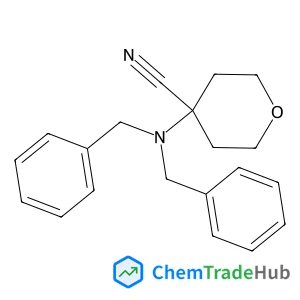
4-(Dibenzylamino)tetrahydro-2H-pyran-4-carbonitrile
CAS Number:
1630906-81-8
Molecular Formula:
C20H22N2O
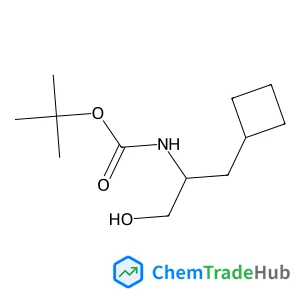
2-Methyl-2-propanyl (1-cyclobutyl-3-hydroxy-2-propanyl)carbamate
CAS Number:
816429-99-9
Molecular Formula:
C12H23NO3
![L-Lysine,N6-[2-[[(1,1-dimethylethoxy)carbonyl]amino]benzoyl]-N2-[(9H-fluoren-9-ylmethoxy)carbonyl]- structure](https://static.chemtradehub.com/structs/159/159322-59-5-c046.webp "L-Lysine,N6-[2-[[(1,1-dimethylethoxy)carbonyl]amino]benzoyl]-N2-[(9H-fluoren-9-ylmethoxy)carbonyl]- structure")
L-Lysine,N6-[2-[[(1,1-dimethylethoxy)carbonyl]amino]benzoyl]-N2-[(9H-fluoren-9-ylmethoxy)carbonyl]-
CAS Number:
159322-59-5
Molecular Formula:
C33H37N3O7
Recommended Suppliers






Disclaimer
This page provides academic journal information for reference and research purposes only. We are not affiliated with any journal publishers and do not handle publication submissions. For publication-related inquiries, please contact the respective journal publishers directly.
If you notice any inaccuracies in the information displayed, please contact us at support@chemtradehub.com. We will promptly review and address your concerns.