












Tunable ionic conductivity and photoluminescence in quasi-2D CH3NH3PbBr3 thin films incorporating sulphur doped graphene quantum dots
Literature Information
Publication Date
2021-09-20
DOI
10.1039/D1CP03621A
Impact Factor
3.676
Authors
Ramesh Kumar, Jitendra Kumar, Priya Srivastava, Gaurav Manik
View Original
Abstract
Ion migration in hybrid halide perovskites is ubiquitous in all conditions. However, the ionic conductivity can be manipulated by changing the material composition, operating temperature, light illumination, and applied bias as well as the nature of the interfaces of the devices. There have been various reports on electron ion coupling in hybrid perovskite semiconductors which gives rise to anomalous charge transport behavior in these devices under an applied bias. In this investigation, we have synthesized a mixture of 2D/3D perovskites by incorporating sulphur-doped graphene quantum dots (SGQDs) and demonstrated that the optical and electrical properties of the hybrid system can be tuned by controlling the ion conductivity through the active layer. It has been observed that the recombination resistance in undoped CH3NH3PbBr3 perovskites follows an anomalous behavior while the doped CH3NH3PbBr3 perovskite shows a monotonic increase with increasing applied bias due to reduced ionic conductivity. SGQDs at the grain boundaries of 2D/3D perovskites prohibit ion migration through the active layer, and therefore the electronic-ionic coupling is reduced. This results in increased recombination resistance with increasing applied bias.
Related Literature
On the scaling behavior of electric conductivity in [C4mim][NTf2]
J. Pionteck, J. Jacquemin
2014-08-12
Paper
DOI: 10.1039/C4CP02253J
Directions of chemical change: experimental characterization of the stereodynamics of photodissociation and reactive processes
Dock-Chil Che, Michio Okada, Federico Palazzetti, Vincenzo Aquilanti
2014-04-14
Perspective
DOI: 10.1039/C4CP00464G
Ultrafast charge separation and nongeminate electron–hole recombination in organic photovoltaics
Samuel L. Smith, Alex W. Chin
2014-06-03
Communication
DOI: 10.1039/C4CP01791A
Temperature-dependent dynamics of water in aqueous NaPF6 solution
Dayoung Nam, Chiho Lee
2014-08-21
Paper
DOI: 10.1039/C4CP02823F
Nanoporous molybdenum carbide wires as an active electrocatalyst towards the oxygen reduction reaction
Xiaojun Bian, Jingjing Xiao, Baohong Liu, Micheál D. Scanlon, Hubert H. Girault
2014-02-12
Paper
DOI: 10.1039/C3CP54754J
Biomolecular structure manipulation using tailored electromagnetic radiation: a proof of concept on a simplified model of the active site of bacterial DNA topoisomerase
Daungruthai Jarukanont, João T. S. Coimbra, Bernd Bauerhenne, Pedro A. Fernandes, Shekhar Patel, Maria J. Ramos, Martin E. Garcia
2014-09-08
Paper
DOI: 10.1039/C4CP02289K
Molecular structure and stability of dissolved lithium polysulfide species
M. Vijayakumar, Niranjan Govind, Eric Walter, Sarah D. Burton, Anil Shukla, Arun Devaraj, Jie Xiao, Jun Liu, Chongmin Wang, Ayman Karim, S. Thevuthasan
2014-03-24
Paper
DOI: 10.1039/C4CP00889H
Atomic partitioning of M–H2 bonds in [NiFe] hydrogenase – a test case of concurrent binding
Swaminathan Angeline Vedha, Rajadurai Vijay Solomon, Ponnambalam Venuvanalingam
2014-04-10
Paper
DOI: 10.1039/C4CP00526K
You might also like
Compound Q&A
Is 4-Benzyl-2,2-dimethylmorpholine (CAS: 84761-04-6) safe?
4-Benzyl-2,2-dimethylmorpholine is generally considered safe when handled under ...
84761-04-64-Benzyl-2,2-dimethy...
Compound Q&A
What is (5,6-Dimethoxy-3-pyridinyl)boronic acid (CAS: 1346526-61-1)?
(5,6-Dimethoxy-3-pyridinyl)boronic acid is a chemical compound with the molecula...
1346526-61-1(5,6-Dimethoxy-3-pyr...
Compound Q&A
How is 1,1,3,3-Tetramethyl-1,3-bis(2-methyl-2-propanyl)disiloxane (CAS: 67875-55-2) typically synthesized?
1,1,3,3-Tetramethyl-1,3-bis(2-methyl-2-propanyl)disiloxane is synthesized throug...
67875-55-21,1,3,3-Tetramethyl-...
Compound Q&A
What are the main uses of (2R,4S)-1-Boc-4-methylpyrrolidine-2-carboxylic acid (CAS: 1018818-04-6)?
(2R,4S)-1-Boc-4-methylpyrrolidine-2-carboxylic acid is primarily used as a build...
1018818-04-6(2R,4S)-1-Boc-4-meth...
Compound Q&A
What precautions should be taken when handling 2,3-Dichloroacrylonitrile (CAS: 22410-58-8)?
When handling 2,3-Dichloroacrylonitrile, it is crucial to wear appropriate perso...
22410-58-82,3-Dichloroacryloni...
Compound Q&A
How should (S)-1-(o-Tolyl)ethanamine hydrochloride (CAS: 1332832-16-2) be stored?
(S)-1-(o-Tolyl)ethanamine hydrochloride should be stored in a cool, dry place to...
1332832-16-2(S)-1-(o-Tolyl)ethan...
Compound Q&A
What are the physical and chemical properties of Benzyl [1-(hydroxyamino)-1-imino-2-methyl-2-propanyl]carbamate (CAS: 518047-98-8)?
Benzyl [1-(hydroxyamino)-1-imino-2-methyl-2-propanyl]carbamate (CAS: 518047-98-8...
518047-98-8Benzyl [1-(hydroxyam...
Compound Q&A
What industries use 2-Methyloxazole-5-carbaldehyde (CAS: 885273-42-7)?
2-Methyloxazole-5-carbaldehyde is used in the pharmaceutical industry for the sy...
885273-42-72-Methyloxazole-5-ca...
Compound Q&A
What is the market or research trend for 2-Methyl-2-propanyl 4-[(1S)-1-hydroxyethyl]-1-piperidinecarboxylate (CAS: 389889-82-1)?
The market for 2-Methyl-2-propanyl 4-[(1S)-1-hydroxyethyl]-1-piperidinecarboxyla...
389889-82-12-Methyl-2-propanyl ...
Compound Q&A
Is 1-Butyl-3-methylpyridinium bromide (CAS: 26576-85-2) safe?
1-Butyl-3-methylpyridinium bromide is generally considered safe for laboratory u...
26576-85-21-Butyl-3-methylpyri...
Source Journal
Physical Chemistry Chemical Physics

CiteScore:
5.5
Self-citation Rate:
10.3%
Articles per Year:
3036
Physical Chemistry Chemical Physics (PCCP) is an international journal co-owned by 19 physical chemistry and physics societies from around the world. This journal publishes original, cutting-edge research in physical chemistry, chemical physics and biophysical chemistry. To be suitable for publication in PCCP, articles must include significant innovation and/or insight into physical chemistry; this is the most important criterion that reviewers and Editors will judge against when evaluating submissions. The journal has a broad scope and welcomes contributions spanning experiment, theory, computation and data science. Topical coverage includes spectroscopy, dynamics, kinetics, statistical mechanics, thermodynamics, electrochemistry, catalysis, surface science, quantum mechanics, quantum computing and machine learning. Interdisciplinary research areas such as polymers and soft matter, materials, nanoscience, energy, surfaces/interfaces, and biophysical chemistry are welcomed if they demonstrate significant innovation and/or insight into physical chemistry. Joined experimental/theoretical studies are particularly appreciated when complementary and based on up-to-date approaches.
Recommended Compounds
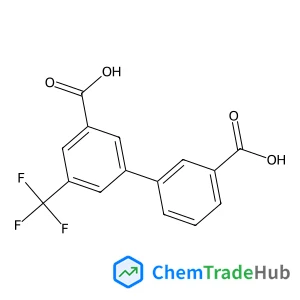
3-(3-Carboxyphenyl)-5-(trifluoromethyl)benzoic acid
CAS Number:
1261930-96-4
Molecular Formula:
C15H9F3O4
![2-Methyl-2-propanyl 4-[3-(aminomethyl)phenyl]-1-piperazinecarboxylate structure](https://static.chemtradehub.com/structs/889/889948-55-4-5c12.webp "2-Methyl-2-propanyl 4-[3-(aminomethyl)phenyl]-1-piperazinecarboxylate structure")
2-Methyl-2-propanyl 4-[3-(aminomethyl)phenyl]-1-piperazinecarboxylate
CAS Number:
889948-55-4
Molecular Formula:
C16H25N3O2
Recommended Suppliers






Disclaimer
This page provides academic journal information for reference and research purposes only. We are not affiliated with any journal publishers and do not handle publication submissions. For publication-related inquiries, please contact the respective journal publishers directly.
If you notice any inaccuracies in the information displayed, please contact us at support@chemtradehub.com. We will promptly review and address your concerns.