












![[3-Formyl-5-(trifluoromethoxy)phenyl]boronic acid structure](https://static.chemtradehub.com/structs/145/1451393-39-7-aebb.webp "[3-Formyl-5-(trifluoromethoxy)phenyl]boronic acid structure")
[3-Formyl-5-(trifluoromethoxy)phenyl]boronic acid
CAS Number:
1451393-39-7
Molecular Formula:
C8H6BF3O4
Henri Bachau, Fabrice Catoire
Recent experiments in gas-phase molecules have shown the versatility of using attosecond pulse trains combined with IR femtosecond pulses to track and control excitation and ionization yields on the attosecond timescale. The interplay between electron and nuclear motions drives the light-induced transitions favoring specific reaction paths, so that the time delay between the pulses can be used as the tracking parameter or as a control knob to manipulate the molecular dynamics. Here, we present ab initio simulations on the hydrogen molecule to demonstrate that by filtering the high harmonics in an attosecond pulse train one can quench or enhance specific quantum paths thus dictating the outcome of the reaction. It is then possible to discriminate the dominant sequential processes in two-photon ionization, as for example molecular excitation followed by ionization or the other way around. More interestingly, frequency filters can be employed to steer the one- and two-photon yields to favor electron emission in a specific direction.
Xiaojun Bian, Jingjing Xiao, Baohong Liu, Micheál D. Scanlon, Hubert H. Girault
DOI: 10.1039/C3CP54754J
Hans v. Berlepsch, Kai Ludwig, Christoph Böttcher
DOI: 10.1039/C4CP00967C
Yuming Chen, Lijuan Meng, Weiwei Zhao, Zheng Liang, Xing Wu, Haiyan Nan, Zhangting Wu, Shan Huang, Litao Sun, Jinlan Wang, Zhenhua Ni
DOI: 10.1039/C4CP03386H
Dongliang Jin, Xiaoqing Lu, Mingmin Zhang, Shuxian Wei, Qing Zhu, Xiaofan Shi, Yang Shao, Weili Wang, Wenyue Guo
DOI: 10.1039/C3CP55107E
Xinde Wang, Qiuxia Cai, Guilin Zhuang, Xing Zhong, Donghai Mei, Xiaonian Li, Jianguo Wang
DOI: 10.1039/C4CP03069A
Abhishek Chaudhary, Abhishek Gupta, Syamantak Khan, Chayan Kanti Nandi
DOI: 10.1039/C4CP01515K
Mritunjoy Maity, Supriya Das, Nakul C. Maiti
DOI: 10.1039/C4CP02649G
Kensaku Nagasawa, Shinobu Takao, Kotaro Higashi, Shin-ichi Nagamatsu, Gabor Samjeské, Yoshiaki Imaizumi, Oki Sekizawa, Takashi Yamamoto
DOI: 10.1039/C3CP54457E
R. Graf, K. Muennemann, H. W. Spiess
DOI: 10.1039/C3CP54614D
M. Vijayakumar, Niranjan Govind, Eric Walter, Sarah D. Burton, Anil Shukla, Arun Devaraj, Jie Xiao, Jun Liu, Chongmin Wang, Ayman Karim, S. Thevuthasan
DOI: 10.1039/C4CP00889H
4-Benzyl-2,2-dimethylmorpholine is generally considered safe when handled under ...
(5,6-Dimethoxy-3-pyridinyl)boronic acid is a chemical compound with the molecula...
1,1,3,3-Tetramethyl-1,3-bis(2-methyl-2-propanyl)disiloxane is synthesized throug...
(2R,4S)-1-Boc-4-methylpyrrolidine-2-carboxylic acid is primarily used as a build...
When handling 2,3-Dichloroacrylonitrile, it is crucial to wear appropriate perso...
(S)-1-(o-Tolyl)ethanamine hydrochloride should be stored in a cool, dry place to...
Benzyl [1-(hydroxyamino)-1-imino-2-methyl-2-propanyl]carbamate (CAS: 518047-98-8...
2-Methyloxazole-5-carbaldehyde is used in the pharmaceutical industry for the sy...
The market for 2-Methyl-2-propanyl 4-[(1S)-1-hydroxyethyl]-1-piperidinecarboxyla...
1-Butyl-3-methylpyridinium bromide is generally considered safe for laboratory u...

Physical Chemistry Chemical Physics (PCCP) is an international journal co-owned by 19 physical chemistry and physics societies from around the world. This journal publishes original, cutting-edge research in physical chemistry, chemical physics and biophysical chemistry. To be suitable for publication in PCCP, articles must include significant innovation and/or insight into physical chemistry; this is the most important criterion that reviewers and Editors will judge against when evaluating submissions. The journal has a broad scope and welcomes contributions spanning experiment, theory, computation and data science. Topical coverage includes spectroscopy, dynamics, kinetics, statistical mechanics, thermodynamics, electrochemistry, catalysis, surface science, quantum mechanics, quantum computing and machine learning. Interdisciplinary research areas such as polymers and soft matter, materials, nanoscience, energy, surfaces/interfaces, and biophysical chemistry are welcomed if they demonstrate significant innovation and/or insight into physical chemistry. Joined experimental/theoretical studies are particularly appreciated when complementary and based on up-to-date approaches.
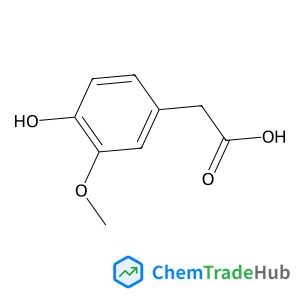
![2-[1-(4-Chlorobenzyl)-1H-indol-3-yl]-2-oxo-N-(6-quinolinyl)acetamide structure](https://static.chemtradehub.com/structs/501/501921-61-5-756a.webp "2-[1-(4-Chlorobenzyl)-1H-indol-3-yl]-2-oxo-N-(6-quinolinyl)acetamide structure")
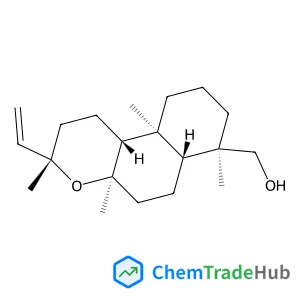
![5,10-Dihydro-11H-dibenzo[b,e][1,4]diazepin-11-one structure](https://static.chemtradehub.com/structs/581/5814-41-5-0b01.webp "5,10-Dihydro-11H-dibenzo[b,e][1,4]diazepin-11-one structure")




